
Dayu Electronics: How Temperature Changes Affect the Frequency of Ultrasonic Ranging Transducers
In numerous fields such as industrial automation, robot navigation, and level detection, Dayu Electronics' ultrasonic ranging sensors are highly favored for their non-contact operation, high reliability, and ability to adapt to complex environments. As the core sound-emitting and receiving components of the sensor, the performance stability of the transducer directly determines the accuracy and reliability of the entire measurement system. In practical applications, changes in ambient temperature are a factor that cannot be ignored. How temperature affects the operating frequency of the transducer, and in turn the ranging accuracy, is a technical concern for many engineers. Recently, a customer raised a very professional question regarding our DYA-70-03A ranging transducer, which is widely used in air: what is its specific temperature frequency deviation specification?
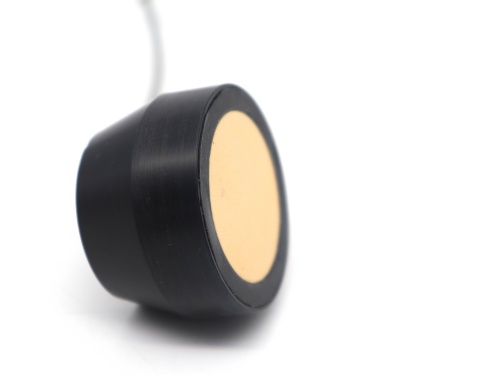
This is a key question that touches on the core physical characteristics of ultrasonic transducers. First, it must be clarified that for ultrasonic transducers made of piezoelectric ceramic materials, the resonant frequency does shift with temperature, which is determined by the temperature characteristics of parameters such as the piezoelectric constant and elastic modulus of the material itself.
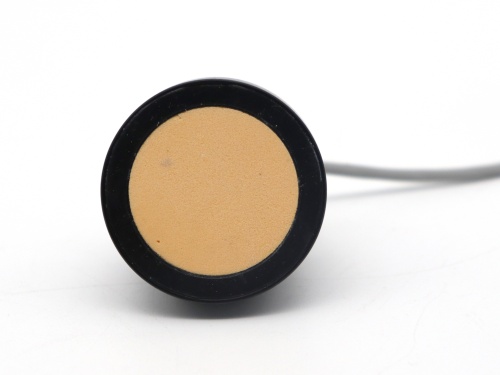
However, due to microstructural differences in the piezoelectric ceramic material during production, slight variations in the poling process, and incomplete uniformity in assembly stress distribution, even transducers of the same model and batch exhibit individual differences in their frequency-temperature curves (i.e., the temperature frequency deviation coefficient). This means that, unlike providing a static resistance value, we cannot offer a unified, precise "temperature frequency deviation specification" (in terms of specific Hz/°C) for products such as the DYA-70-03A.
Based on in-depth materials research and extensive product testing data, Dayu Electronics can clearly reveal the variation pattern: using the resonant frequency measured under standard room temperature conditions (+20°C to +25°C) as a reference, when the ambient temperature decreases, the resonant frequency of the transducer increases; when the ambient temperature increases, the resonant frequency decreases. This pattern is highly universal and consistent.
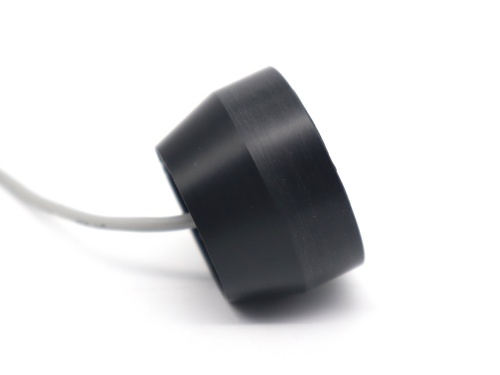
This pattern is a macroscopic manifestation of the physical properties of piezoelectric materials. Temperature changes affect the internal lattice structure, internal stress, and dielectric properties of the material, thereby altering its mechanical resonance characteristics. Understanding this deterministic pattern is of great significance for system designers. It indicates the correction direction for temperature compensation algorithms: in low-temperature environments, the actual operating frequency may be higher than the nominal value, so the system needs to adjust timing judgments accordingly; in high-temperature environments, the opposite is true.
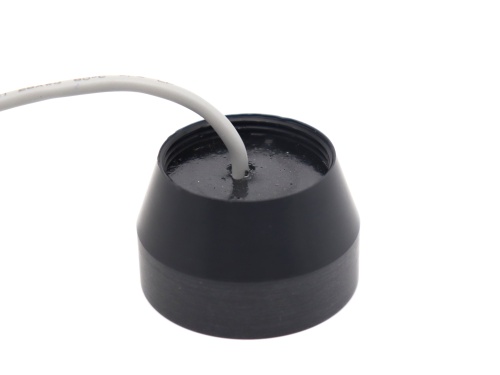
Dayu Electronics is committed to providing transparent and professional technical information. We honestly inform customers of the existence of individual differences, avoiding giving a single parameter that could cause misunderstanding; at the same time, we clearly explain the universal physical laws, providing a solid and reliable theoretical basis for customers to build high-precision, high-stability ranging systems. We are dedicated to being a trustworthy technical partner for our customers, working together to overcome environmental challenges and achieve precise, stable distance sensing.