
Dayu Electronics: Application Practice of Ultrasonic Level Meters in Full-Process Water Treatment at Wastewater Treatment Plants
In the field of municipal wastewater treatment, the accuracy and stability of level monitoring are key to ensuring the efficient and safe operation of the entire process. Facing common industry pain points such as highly corrosive wastewater media and complex, ever-changing operating conditions, traditional measurement methods often fall short. This article takes the successful renovation of a municipal wastewater treatment plant in Sanming, Fujian, as an example to explain how Dayu Electronics' ultrasonic level meter, with non-contact measurement at its core, provides a reliable and intelligent level monitoring solution.
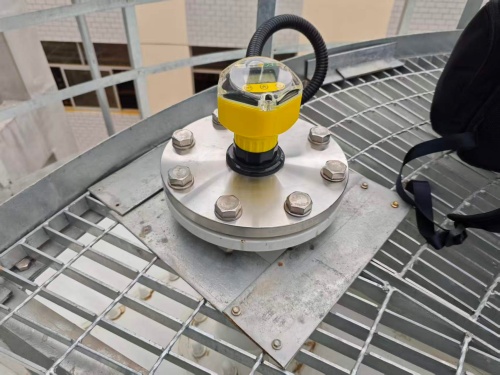
I. Facing Complex Challenges Directly: The Dilemma of Traditional Measurement
This wastewater treatment plant has a daily processing capacity of 50,000 tons. Before the upgrade, its level monitoring system faced severe challenges. The acidic and alkaline components, oils, suspended solids, and thick foam layers in the wastewater caused severe corrosion, clogging, and scaling on contact-type instruments, leading to extremely frequent maintenance. At locations such as aeration tanks and equalization tanks, strong surface fluctuations and foam interference caused frequent loss of measurement signals or data jumps. Additionally, electromagnetic interference generated by the dense array of frequency converters and pumps on site often corrupted measurement data. Over-reliance on manual inspections and manual control not only resulted in slow response times and risks of overflow or equipment dry-running, but also incurred high maintenance costs.
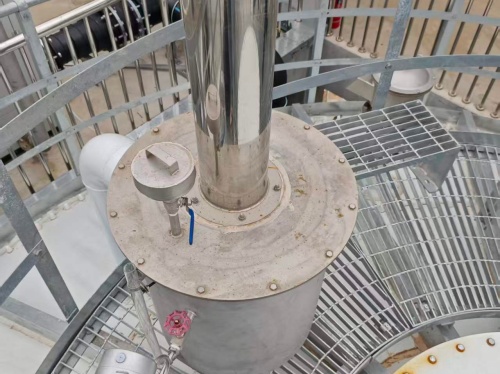
II. Customized Solution: Targeted Response at Each Measurement Point
In response to the different operating conditions at a total of 18 monitoring points, from the influent pumping station to the disinfection effluent tank, the project adopted a strategy of combining remote-type and integral-type ultrasonic level meters to achieve precise measurement at key points:
Influent and Pretreatment Units (Influent Pumping Station, Screen Channel): At the influent pumping station, an integral-type ultrasonic level meter with strong corrosion resistance and foam resistance was selected to achieve stable non-contact measurement. At the screen channel, a remote-type ultrasonic level meter was used to monitor the level difference, successfully linking the automatic operation of the cleaning machine and effectively preventing clogging.
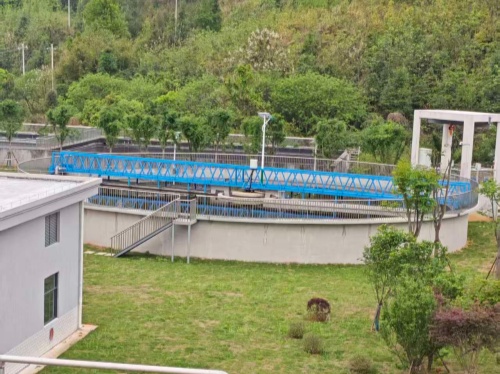
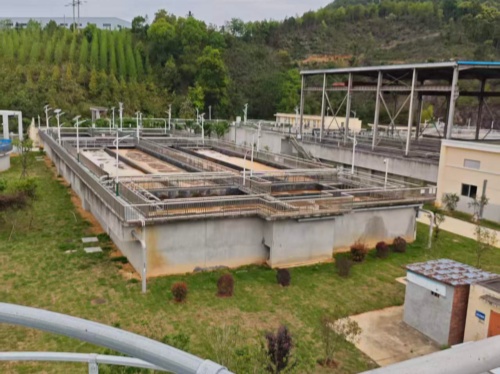
Core Process Units (Equalization Tank, Biological Tank, Sludge Tank): For the level fluctuations, foam, and corrosion issues in the equalization and biological tanks, remote-type ultrasonic level meters equipped with corrosion-resistant transducers and special signal processing algorithms were provided to effectively filter out interference. For the sludge thickening tank, where the echo signal is weak, a high-power transducer with dedicated algorithms was selected to ensure stable recognition of the sludge interface.
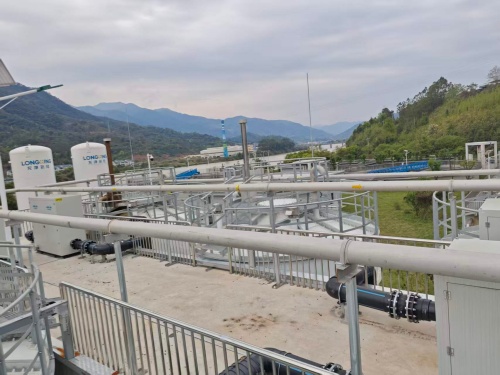
Effluent Unit: At points with relatively better conditions, such as the disinfection effluent tank, low-power, high-accuracy integral-type ultrasonic level meters were adopted to meet the requirements for long-distance signal transmission and maintenance-free operation.
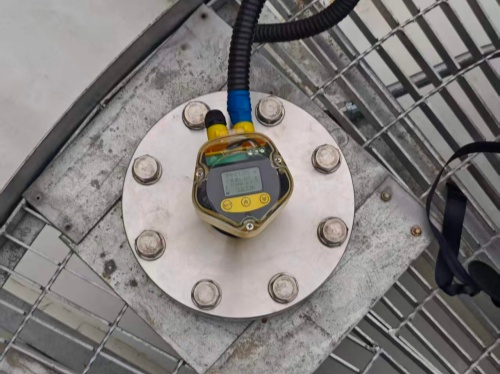
III. Overcoming Core Difficulties: Comprehensive Guarantee from Installation to Anti-Interference
To ensure the long-term stable operation of the system, the project implemented a series of rigorous engineering measures:
Scientific Installation: Installation positions were strictly selected to be away from water inlets and obstacles, ensuring that the transducer is vertically aligned with the liquid surface. In aeration tanks with severe foam interference, an innovative approach was adopted using a full-length guide pipe with a smooth inner wall to provide a stable channel for sound wave propagation.
Enhanced Anti-Interference: Comprehensive measures such as providing separate grounding for the instruments, strictly separating signal cables from power cables, and using metal shielding conduits with grounding when necessary were implemented to completely eliminate the impact of the complex electromagnetic environment on site, ensuring signal purity.
Intelligent Configuration: Using the device's convenient commissioning functions, parameter configuration was quickly completed, making the output signal (such as 4-20mA) precisely correspond to actual level changes, and seamlessly integrating with the plant's SCADA system for remote centralized monitoring.
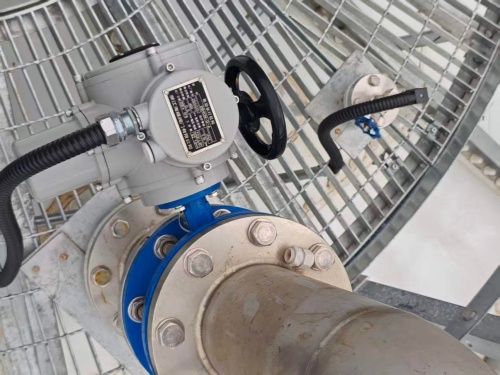
IV. Outstanding Application Results: Comprehensive Value of Safety, Efficiency, and Cost Reduction
Since the system was put into operation, significant optimization effects have been achieved:
Accurate and Stable Measurement: At all operating points across the plant, the ultrasonic level meters have achieved continuous and stable measurement, with errors controlled within an extremely small range, completely resolving the problems of data jumps and signal loss.
Significantly Improved Automation Level: Based on real-time and accurate level data, automatic start/stop of pumps and high/low level interlock protection, automatic operation of screen cleaning machines, and optimized linkage of aeration and sludge discharge processes were successfully realized, greatly enhancing the timeliness and stability of process control.
Substantially Reduced Operation and Maintenance Costs: Non-contact measurement fundamentally avoids transducer corrosion, scaling, and clogging. The maintenance interval for the instruments has been significantly extended, and the overall maintenance workload has been reduced by approximately 80% compared to before the renovation. The automated system operation has reduced manual inspection frequency by about 60%, and through optimized equipment operation, has achieved annual energy savings and consumption reduction benefits of tens of thousands of yuan.
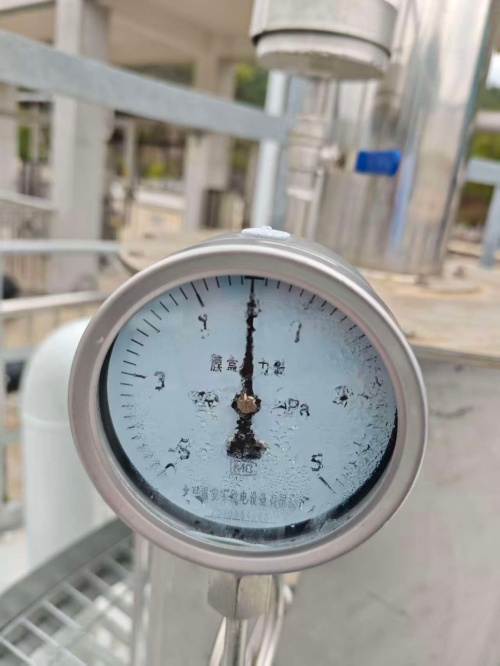
This case fully demonstrates that Dayu ultrasonic level meters, with their outstanding features of non-contact measurement, strong corrosion resistance, intelligent anti-interference, and easy integration, can perfectly adapt to the complex operating conditions of the entire process in municipal wastewater treatment plants, from influent to effluent. They not only solve the many pain points of traditional level monitoring but also, by providing a reliable data foundation, drive the intelligent upgrade of the entire treatment process, bringing customers multiple values of operational safety, efficiency improvement, and cost savings, making them a reliable choice for level monitoring in the wastewater treatment field.