
Dayu Electronics: Application of Externally Mounted Level Sensor on Thick-Wall Vessels and Blind Zone Analysis
In the chemical, food, and pharmaceutical industries, non-contact, contamination-free, and highly reliable level monitoring of closed vessels is a common requirement. The externally mounted ultrasonic level sensor from Dayu Electronics (external ultrasonic level sensor) offers the unique advantage of measuring the liquid level inside the tank from outside, making it an ideal choice for such applications. It transmits and receives ultrasonic waves through the vessel wall and calculates the liquid level based on the echo time, completely avoiding media contact, requiring no tank openings, and eliminating leakage risks, thus playing a crucial role in safeguarding process safety and media purity.
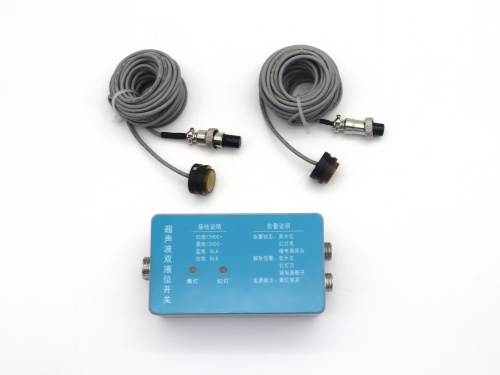
Recently, we received a specific technical inquiry: a customer needs to measure the water level in a 304 stainless steel tank with a height of 50 cm, where the wall thickness ranges from 18 to 20 mm. However, the challenge is that the measurement blind zone must be kept within 5 cm.
To understand this requirement, it is essential to first clarify the operating principle of the external level sensor and the concept of the "blind zone." The sensor is mounted on the outside of the tank wall. The ultrasonic pulse must penetrate the wall, propagate through the container, reflect off the liquid surface, and then pass back through the wall to be received. In the region near the probe and the top space of the tank, due to the residual vibration interference after signal transmission and the complex reflections at the solid/gas interface, a segment of distance cannot be accurately measured. This distance is known as the "blind zone."
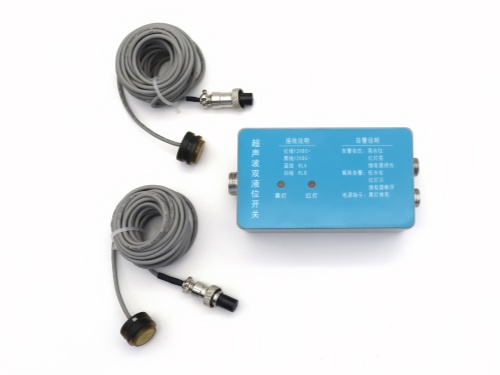
For such thick-wall stainless steel vessels, the typical blind zone of a standard external level sensor is around 25 cm, which is far greater than the customer's requirement. To reduce the blind zone, the key is to shorten the duration of the detection pulse. One effective method is to use a higher-frequency probe, such as increasing the frequency to 2 MHz, and specifically optimizing the driving and receiving circuits. This approach significantly compresses the acoustic pulse, thereby greatly reducing the system's blind zone, which is expected to improve to approximately 10 cm. Reality gap: Despite the significant progress achievable through the above optimizations, under current technical conditions, achieving an ultra-small blind zone within 5 cm for vessels of this thickness remains fundamentally difficult. This is primarily limited by the physical characteristics of ultrasonic propagation in metal and the timing resolution limits of the circuitry.
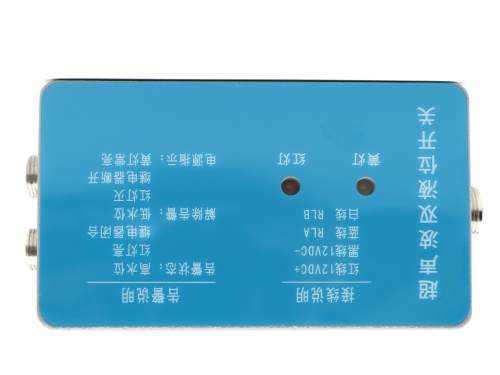
In summary, for a 304 stainless steel tank with a wall thickness of 18-20 mm, requiring an external level sensor to achieve a 5 cm blind zone is difficult to achieve with the current state of technology commonly in use. Even with higher frequencies (e.g., 2 MHz) and optimized circuits, the blind zone can typically only be improved to the order of 10 cm.
Therefore, when facing such demands with strict near-end measurement requirements, we recommend simultaneously evaluating other more suitable technical approaches. Dayu Electronics focuses on providing professional level measurement solutions. We suggest that during the initial project selection phase, detailed operating conditions be fully communicated with us, so that we can recommend the most balanced solution in terms of technology, cost, and reliability.