
Field Practice on the Yangtze River in Wuhan: How Professional Installation of Underwater Echo Sounders Ensures Accurate Waterway Data
In the fields of waterway maintenance, hydrographic surveying, and maritime safety assurance, obtaining accurate and reliable water depth data is the foundation of all operations. As the core detection equipment on navigation mark vessels, the performance of an underwater echo sounder depends not only on the precision of the device itself but also on professional installation. Recently, Dayu Electronics successfully provided installation guidance for underwater echo sounders on navigation mark vessels in the Wuhan section of the Yangtze River, Hubei Province. This case profoundly demonstrates the decisive role of professional installation in ensuring data accuracy and long-term equipment performance.
I. Core Application: Supporting Full-Cycle Waterway Operations
The underwater echo sounder installed on navigation mark vessels serves as a key sensing unit for modern, intelligent waterway management. Its main application value is reflected in:
1. Waterway depth monitoring and maintenance: It provides real-time, accurate depth data for the scientific placement, relocation, and adjustment of navigation marks, effectively reducing the risk of vessel grounding. It also continuously monitors changes in shoals, reefs, and siltation, providing data support for waterway dredging decisions.
2. Underwater topography and obstruction detection: Whether using single-beam for waterway cross-section inspection or multi-beam for large-scale underwater 3D terrain mapping, it efficiently identifies potential obstructions such as sunken ships and submerged rocks, ensuring navigation safety.
3. Emergency response and data management: In emergency handling of waterway accidents, it can quickly detect underwater conditions. Routine data, after fusion processing, can form standardized depth charts and databases, providing a solid foundation for waterway planning, safety assessment, and maritime supervision.
II. Professional Installation: The Key to the Success of the Echo Sounder System
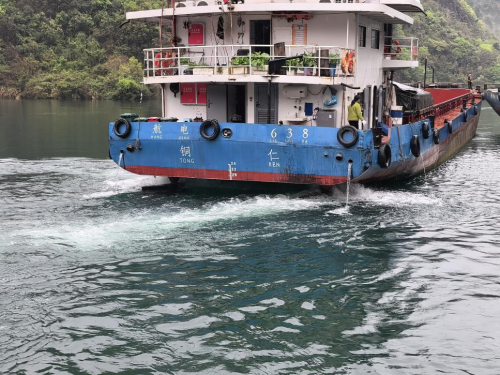
The implementation of this case highlights the rigor and professionalism required in installing an underwater echo sounder system. The core points include:
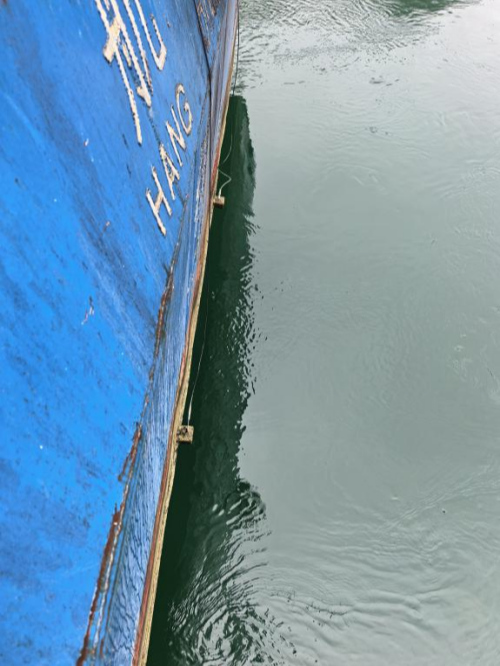
1. Transducer installation—the source of accuracy: As the "eye" of acoustic measurement, its placement is critical. We guided the positioning of the transducer in a suitable area at the center of the hull bottom, ensuring proper immersion depth, complete submersion, and avoidance of hull-generated bubbles and turbulence. A sturdy mounting base was used, and the working surface was ensured to be perpendicular to the water surface, with strict control of installation angle deviation. A flow deflector was specially added to reduce the influence of water flow and bubbles, and rigorous sealing and anti-corrosion measures were implemented, physically ensuring the stability of the measurement reference and equipment safety.
2. System integration and calibration—the core of data: The installation positions of the main unit, GNSS/BeiDou antenna, and attitude sensor must be scientifically planned. The antenna should be kept as close as possible to the same vertical line as the transducer, and the attitude sensor should be installed close to the transducer to accurately compensate for vessel motion attitude. All cable routing must be standardized, with separation of power and signal cables, and proper waterproof sealing. Post-installation system calibration is indispensable, including offset calibration between the transducer and attitude sensor, on-site sound velocity profile calibration, and positioning-depth measurement delay calibration—these are key steps in converting raw measurements into reliable water depth data.
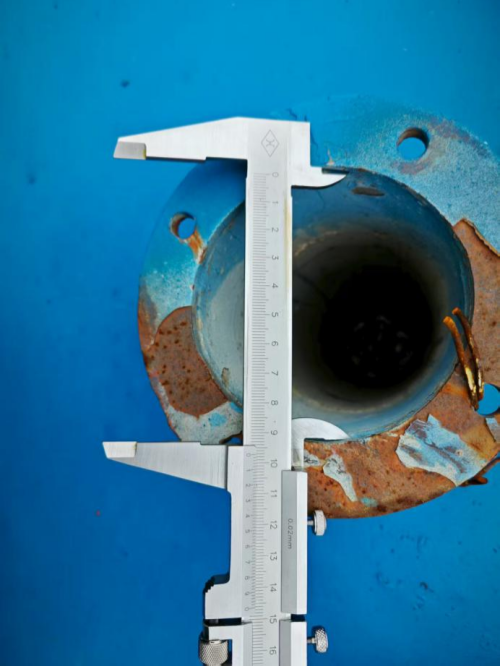
3. Maintenance and troubleshooting—the foundation of long-term performance: A standardized routine maintenance and fault diagnosis mechanism was established. After operations, the transducer surface must be cleaned, and the status of seals and fasteners must be regularly inspected. For common issues such as false depth readings, data jumps, and excessive errors, the document provides clear troubleshooting procedures, such as checking for bubble interference, calibration status, and installation angle, ensuring continuous and stable system operation.
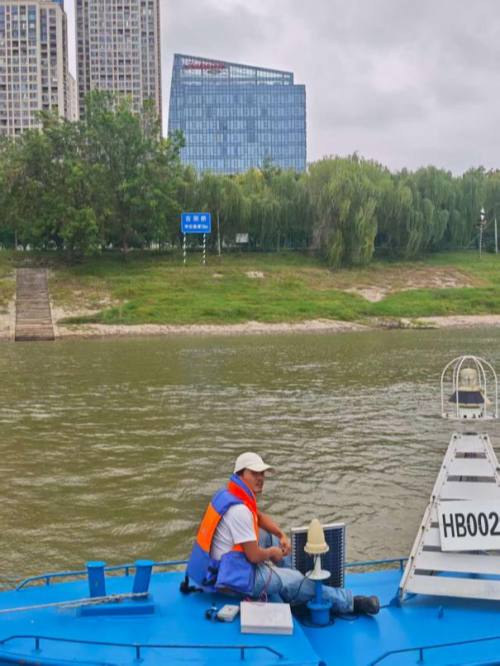
This successful practice in the Wuhan section of the Yangtze River demonstrates that maximizing the value of an underwater echo sounder depends on full-process professional services, from solution design and precision installation to system calibration and maintenance support. Dayu Electronics not only provides high-performance echo sounding equipment but is also committed to offering customers overall solutions covering installation guidance, technical calibration, and after-sales support, ensuring that every customer can obtain and trust every depth measurement made by our equipment, jointly safeguarding water safety and operational efficiency.