
Dayu Electronics: Developing an Integrated Transducer Combining Water Depth Detection and Temperature Sensing
In the fields of hydrological monitoring, underwater exploration, and marine survey, the synchronized acquisition of water depth and temperature data holds significant scientific value and engineering importance. As a result, users frequently request the integration of temperature sensors into ultrasonic depth sounder transducers, aiming to achieve a "multi-function in one device" solution that simplifies system deployment and ensures source consistency and synchronization between depth and temperature data. From a technical standpoint, this requirement is entirely feasible; however, the core of its engineering implementation lies not in simple functional stacking, but in the precise balance among structural space, sealing reliability, and signal integrity.
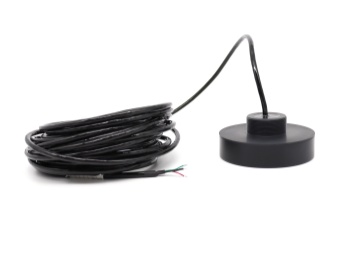
The internal structure of a standard ultrasonic depth sounder is highly compact, with its cavity primarily occupied by the core piezoelectric ceramic element, acoustic matching layer, damping backing, and necessary cable connectors. Adding a temperature sensing element (such as a PT100 or thermistor) means carving out additional physical space within the original design and planning new routing paths. If the existing transducer housing has sufficient dimensional allowance, integration is relatively straightforward; if space is constrained, the mechanical structure must be redesigned, potentially involving housing enlargement, internal layout optimization, and re-evaluation of the sealing solution.
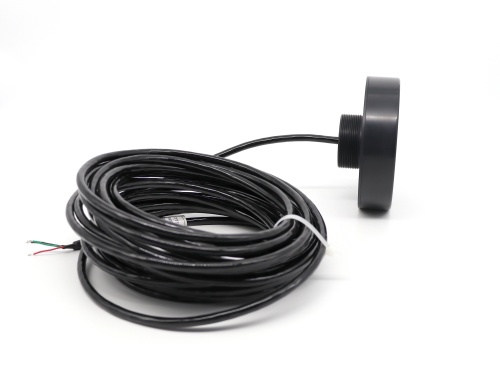
Successful integration is a systematic engineering effort that requires comprehensive consideration of the following:
1. Thermal coupling and response speed: The temperature sensor must achieve good thermal conduction with the external water body; its mounting position and contact method directly affect measurement accuracy and response time.
2. Signal isolation and anti-interference: The high-frequency ultrasonic drive signal used for depth measurement is a strong interference source; independent filtering and shielding paths must be designed for the weak temperature signal to prevent cross-interference.
3. Long-term sealing reliability: Every additional lead-through interface or structural joint tests the transducer's long-term underwater sealing reliability. The integrated design must adopt higher-standard sealing processes.
4. Calibration and accuracy assurance: The integrated temperature sensor must be individually calibrated, with its accuracy class meeting the application requirements, and must be effectively correlated with depth data at the output stage.
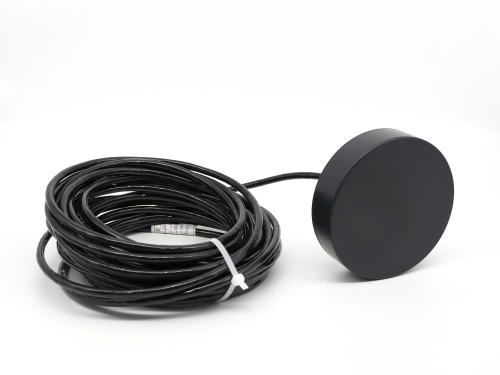
Therefore, the first step in determining whether temperature sensing can be added to an existing transducer is to conduct a detailed structural assessment. Leveraging extensive experience in transducer customization, Dayu Electronics can provide customers with professional technical feasibility analysis. Whether it is a modification based on an existing model or the initiation of a completely new integrated design, our goal is to deliver an all-in-one solution that withstands scrutiny in acoustic performance, temperature measurement accuracy, and long-term underwater reliability, empowering customers to acquire multi-dimensional underwater information more efficiently.