
From Water Level to Flow Rate: Formation of the Complete Data Chain in Doppler Flowmeters [Dayu Electronics]
Doppler flowmeters are widely used in fluid measurement scenarios such as open channels and pipelines due to their non-contact operation and easy installation. Their basic measurement logic is clear: water level depth is obtained via a level sensor and converted into the cross-sectional area of flow; flow velocity is measured by a Doppler probe; and ultimately, the flow rate is calculated by multiplying the cross-sectional area by the average flow velocity. Therefore, when the on-site installation is complete but only water level data is available without velocity or flow rate data, it indicates a disruption in the data chain at the critical "flow velocity" stage.
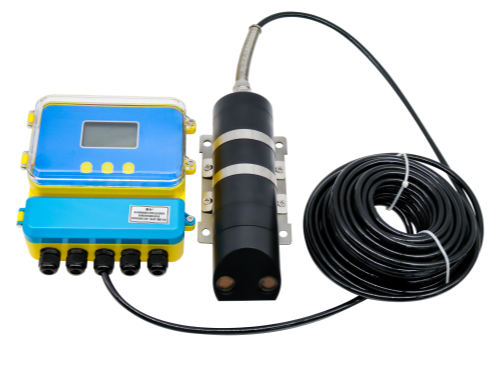
The working principle of a Doppler flowmeter inherently defines a minimum measurable flow velocity threshold (typically 0.03 m/s, i.e., 3 cm/s). When the flow velocity falls below this threshold, the movement of suspended particles or bubbles in the water is too slow, causing the frequency shift (Doppler shift) of the ultrasonic wave reflected back to the probe to be extremely weak, making it difficult for the detection circuit to effectively identify and calculate. In such cases, even though the water level sensor operates normally, the velocity output will show zero or an invalid value, thereby preventing flow rate calculation.
On-Site Troubleshooting and Solutions
In this situation, the following troubleshooting steps can be taken:
1. Verify Flow Velocity: First, assess the actual flow velocity on site. If it is confirmed that the velocity is consistently below the equipment's lower limit, consider switching to a more sensitive measurement technology (such as the area-velocity method with weirs or flumes) or evaluate whether process conditions allow for increasing the flow velocity.
2. Check Installation Status: Ensure that the transmitting surface of the probe sensor is parallel to the water surface and fully submerged. Improper installation angle or exposure above the water surface will directly affect signal transmission and reception.
3. Confirm Fluid Conditions: The Doppler principle relies on suspended solids or bubbles in the water as reflectors. If the water is exceptionally clear (e.g., pure water), insufficient signal reflection may occur. Ensure that the measured medium contains an adequate amount of scattering particles.
4. Check Signal and Wiring: Verify that the connection between the probe and the main unit is secure, the wiring is correct, and there is no signal interference.
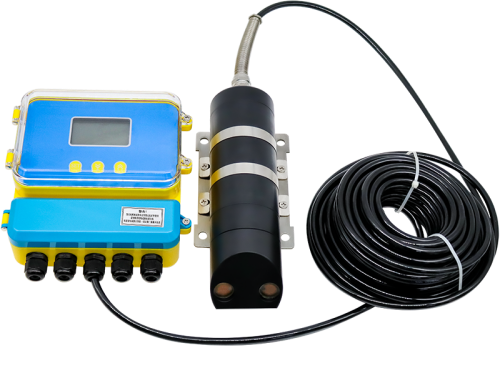
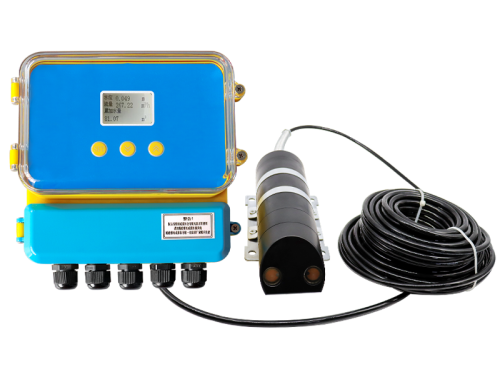
Understanding the dependency chain of "water level – flow velocity – flow rate" is key to the effective use and maintenance of Doppler flowmeters. The technical support team at Dayu Electronics can assist customers in diagnosing on-site conditions, providing comprehensive analysis from fluid characteristics and installation conditions to equipment selection, ensuring that the flow measurement system operates at optimal performance under suitable conditions and outputs stable, reliable complete data sets.