
Dayu Electronics: Testing and Application of Underwater Obstacle Avoidance Sensors in Confined Spaces
Underwater robots, autonomous submarines, and other equipment face unique challenges in the performance of their obstacle avoidance sensors during pipeline inspections, hull surveys, or narrow waterway operations. A typical engineering problem is: Can reliable distance measurement be achieved when a sensor is placed in a vertical cylindrical pipe with a diameter of 0.2 meters and a height of 0.8 meters? The answer is yes, but this involves precise installation methods and a deep understanding of the acoustic environment.
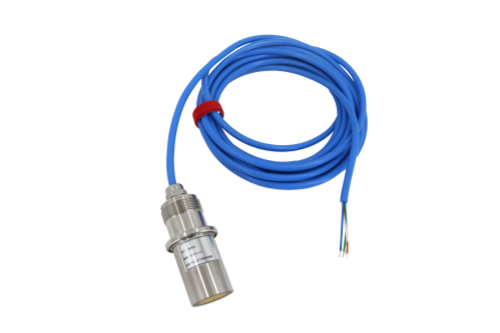
In such confined cylindrical spaces, to ensure effective measurement, the primary principle is to install the sensor vertically beneath the water surface, with the acoustic emission face parallel to the pipe's axis. This aims to direct the main energy of the ultrasonic beam along the axial direction of the pipe, minimizing side reflections from the pipe wall at close range, thereby avoiding early echo interference that could mask the true pipe bottom or obstacle signals.
Environmental Requirements: Smooth Inner Walls and Blind Zone Management
A smooth inner pipe wall is another key prerequisite. A smooth surface ensures that the few unavoidable side reflections have a relatively uniform direction, reducing the likelihood of complex reverberation fields. If the inner wall is rough, it will generate significant diffuse reflections, severely interfering with the receiving circuit's ability to identify target echoes. Additionally, the sensor's blind zone (minimum ranging distance) must be strictly considered. In the limited 0.8-meter-deep space, it is necessary to ensure that the distance between the sensor installation position and the pipe bottom or nearest obstacle exceeds the blind zone range; otherwise, a detection dead zone will occur.
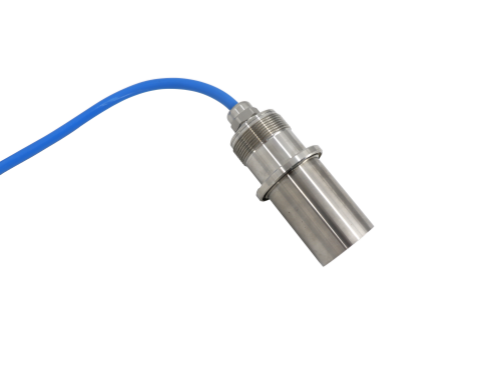
This pipe test scenario encapsulates the common challenges faced by underwater obstacle avoidance sensors in various confined environments (such as narrow ship compartments, hydraulic culverts, and industrial tanks): complex multipath reflections, limited installation space, and demanding acoustic conditions.
The M36 series underwater obstacle avoidance sensors are designed specifically to address such complexity. Its optimized beam angle and signal processing algorithms can suppress interference from fixed background reflections to a certain extent, improving the signal-to-noise ratio in structured environments. Meanwhile, its robust sealed design and corrosion-resistant materials ensure reliability during long-term underwater operation.
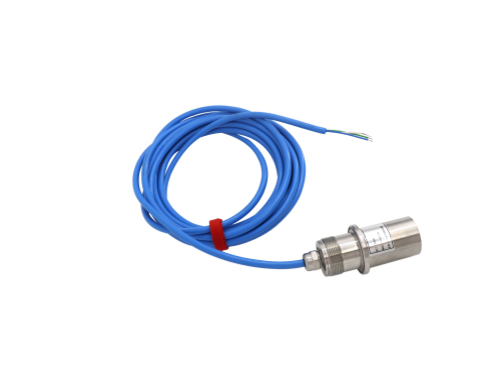
Therefore, testing and application in pipes or similar confined spaces is not only feasible but also an effective means of validating a sensor's environmental adaptability. Dayu Electronics recommends that, before actual deployment, the real acoustic environment should be simulated as closely as possible for evaluation, and through professional installation and commissioning, the sensor should be optimally matched to the specific working scenario, ensuring that underwater equipment can "see clearly, judge accurately, and navigate steadily."