
Dayu Electronics: Relationship Between Equivalent Circuit and Admittance Curves of Ultrasonic Liquid Transducers
In precision measurement systems for ultrasonic liquid flowmeters, the transducer plays the role of the "heart" that converts electrical signals to acoustic signals and vice versa. Its performance directly determines the stability, sensitivity, and accuracy of flow measurement. Therefore, a deep understanding and precise characterization of the transducer's internal properties are the foundation for optimized design and fault diagnosis. In this process, the equivalent circuit model and admittance curve diagrams are two key tools that engineers use to gain insight into its essence.
Equivalent Circuit: Abstracting Physical Devices into Circuit Language
For ease of analysis and calculation, the complex piezoelectric ceramic vibrator (the core of the transducer) is often abstracted into a lumped-parameter equivalent circuit. Among these, the dynamic inductance (L1), dynamic capacitance (C1), and dynamic resistance (R1) collectively simulate the mechanical vibration characteristics of the vibrator, while the static capacitance (C0) represents the inherent capacitance of the vibrator as a dielectric. This circuit model cleverly links mechanical vibration to electrical properties.
The admittance curve diagram is a graphical representation of the transducer's admittance (or impedance) varying with frequency, obtained through actual frequency sweep measurements. It intuitively reflects the transducer's electrical response at different frequencies. Characteristic points on the curve, such as the resonance and anti-resonance peaks, directly correspond to the optimal operating state of its mechanical vibration.
The core point is that the theoretical component parameters in the equivalent circuit diagram — L1, C1, R1, and C0 — correspond exactly to the parameters extracted by computational fitting from the actual admittance curve. This correspondence forms a bridge connecting theory and practice. It means:
1. Design Guidance: Initial design based on target equivalent circuit parameters allows prediction of the transducer's basic performance.
2. Performance Diagnosis: Comparing parameters fitted from the measured admittance curve with design values enables precise evaluation of product consistency or diagnosis of potential defects such as adhesive layer aging or ceramic cracking.
3. System Matching: Accurate equivalent circuit parameters are the absolute basis for designing front-end drive circuits and receiving amplifier circuits to achieve efficient energy transfer and optimal signal matching.
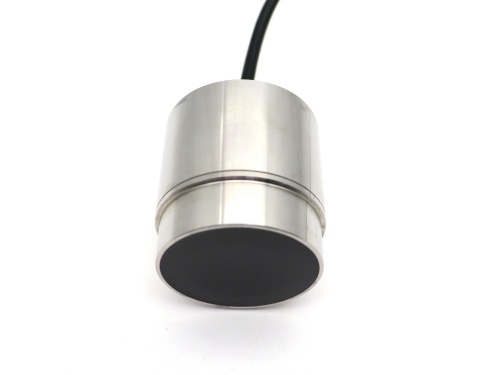
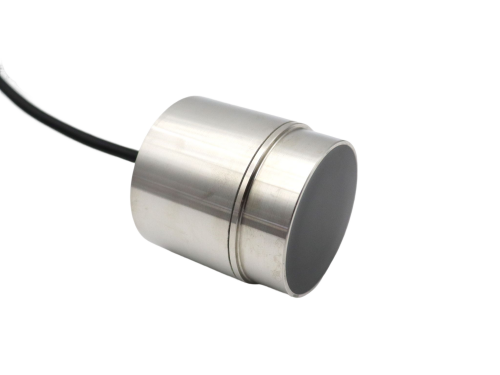
For Dayu Electronics, mastering and applying this complete analysis system — from "circuit model" to "measured curve" — is the cornerstone of providing customers with high-performance, high-reliability liquid flowmeter transducers. Whether for standard product selection or custom development, this precise analysis capability based on the electroacoustic essence ensures that the final product integrates perfectly with your measurement system, achieving stable, long-term, and accurate metering.