
Dayu Electronics: Solution for Development Board Handling Instantaneous High Power of Transducers
In the development and integration of industrial ultrasonic sensing systems, a common technical concern is whether the core driving and control unit (development board) is capable of driving larger-size, higher-power transducers. This directly determines whether the system can adapt to applications requiring longer measuring distances, stronger penetration, or more demanding environments. Dayu Electronics' development board, from its initial design, has fully considered power matching and driving compatibility with its series of transducers. The answer is clear and reliable: it can drive large transducers, and its design is capable of properly handling instantaneous high-power demands.
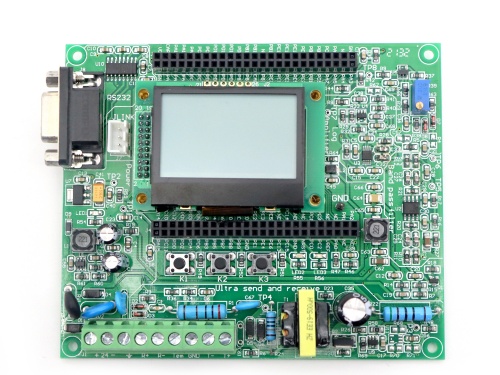
Large-size or special-purpose transducers (commonly referred to as "large transducers") often require higher instantaneous voltage and current at the moment of excitation due to their larger internal piezoelectric elements or special structures, in order to generate ultrasonic signals of sufficient intensity. This indeed places higher demands on the driving circuit. However, the vast majority of ultrasonic transducers (whether for distance measurement, flow measurement, or level measurement) do not operate continuously. They typically operate with an extremely low duty cycle, emitting only a few to dozens of times per second. Each emission duration is very short, and although the instantaneous power at that moment is high, when this brief power consumption is averaged over the entire operating cycle (such as one second), the average power remains at a relatively low level. During the design of our development board, the selection and design of its power supply circuit, energy storage components, and power devices have fully reserved margin to handle such periodic instantaneous power peaks, ensuring stable system power supply, sufficient signal excitation, and no overheating or damage caused by instantaneous loads when driving large transducers.
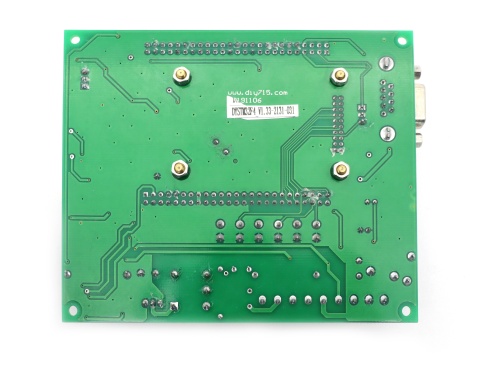
Of course, the key step to achieving reliable driving is parameter matching. Different transducer models have different core electrical parameters (such as peak driving voltage, resonant frequency, static capacitance, etc.). To ensure driving efficiency and transducer safety, users must consult the specific transducer's product manual before actual connection, and clarify its recommended peak driving voltage parameters. Then, refer to the development board manual regarding driving output modes (such as push-pull, half-bridge, etc.) and voltage range instructions, and perform proper configuration or jumper settings. Our development board typically provides flexible driving voltage options or external driver stage interfaces to accommodate the needs of different transducers.
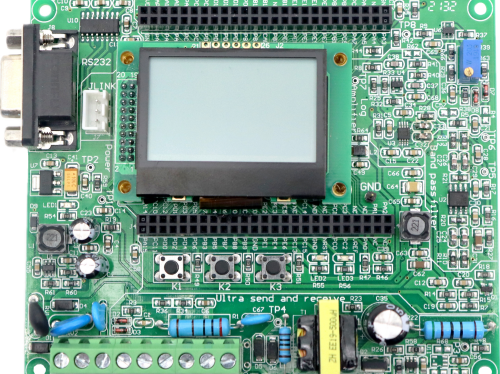
Therefore, customers need not worry about the development board's "driving capability." It is more like a finely tuned "intelligent engine" that can burst out the instantaneous energy required to drive large transducers, while maintaining overall low power consumption and stability through scientific operating cycles. By following the process of "consult transducer parameters -> reference development board configuration -> connect and set up correctly," you can fully leverage the performance advantages of large transducers in specific applications and quickly build a stable, reliable ultrasonic sensing system. Whether used for long-distance measurement, thick-wall material testing, or large-diameter flow measurement, this driving combination provides a solid hardware foundation.