
Ultrasonic Multibeam Underwater Obstacle Avoidance Sensor: Achieving Panoramic Perception and Real-Time Data Analysis
In the development of underwater robots, autonomous underwater vehicles (AUVs), and various underwater work platforms, precise, real-time perception of the surrounding environment is the core to ensuring navigation safety and operational efficiency. The ultrasonic multibeam underwater obstacle avoidance sensor, by simultaneously transmitting sound waves in multiple directions and receiving echoes, greatly expands the coverage of a single detection, acting like a "panoramic eye" for underwater equipment, effectively eliminating detection blind spots and significantly enhancing obstacle avoidance capability in complex underwater environments.
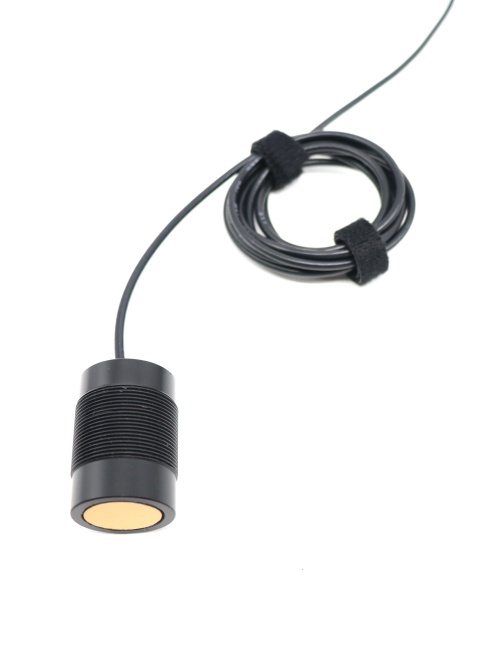
The core advantage of the ultrasonic multibeam underwater obstacle avoidance sensor lies in its ability to synchronously transmit multiple sound waves via an array and receive echoes from different directions, thereby generating a profile of the forward environment in a single pass. This makes it a key component for AUVs, ROVs, and various underwater vehicles to achieve intelligent obstacle avoidance and terrain following. However, its value goes far beyond outputting a set of processed distance and bearing data.
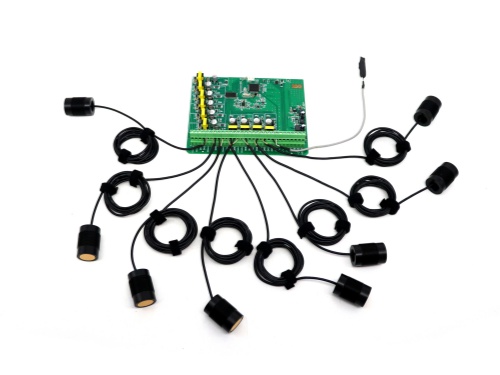
Regarding the question posed by professional users about "whether waveforms can be read via a 485 serial port connected to a computer," this reflects the forward-looking and open design of this sensor series. The sensor is equipped with a standard RS-485 communication interface, which is not only used for receiving commands and uploading processed results but also supports transmitting raw or preliminarily processed acoustic waveform data streams to a host computer (e.g., a PC).
This feature breaks the limitation of the sensor as a "black box" and opens the door for users to deeply optimize and customize development:
Advanced algorithm development and validation: Researchers can access raw acoustic echoes to develop and test more advanced signal processing, target recognition, and feature extraction algorithms, thereby improving perception accuracy and robustness in various hydrological environments.
In-depth system debugging and performance evaluation: Engineers can visually observe and analyze actual waveform characteristics at different distances, for different target materials, and in different turbidity levels in the laboratory or before field deployment. This helps to precisely calibrate the system, optimize installation positions, and diagnose abnormal detection issues in complex environments.
Scientific research and data acquisition: The sensor can serve as a cost-effective underwater acoustic data acquisition front-end for scientific applications such as underwater acoustic propagation studies, target acoustic signature analysis, or ecological monitoring.
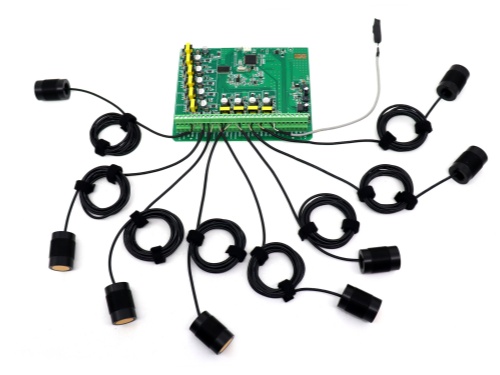
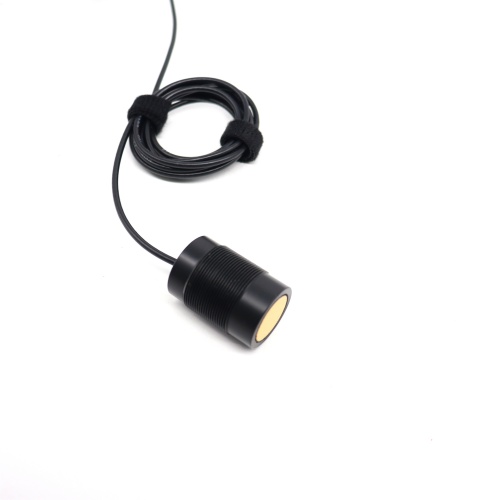
The implementation is simple and efficient. Users only need to connect the sensor to a computer via a common RS-485-to-USB cable and run the accompanying configuration and data acquisition software to observe dynamic waveforms in real time on a graphical interface, as well as record, replay, and perform in-depth analysis. The sensor firmware responds to host computer commands and continuously sends specific data packets containing waveform information.
Therefore, Dayu Electronics' ultrasonic multibeam underwater obstacle avoidance sensor is not only a reliable "underwater guardian" but also an open "underwater acoustic data source." Through the standardized RS-485 interface, it provides users with valuable raw acoustic information, helping them break through performance bottlenecks, deepen their understanding of the underwater world, and ultimately build smarter, more reliable underwater work platforms.