
Ensuring Underwater Navigation Safety: How to Reduce the Impact of Bubbles on Obstacle Avoidance Sensors
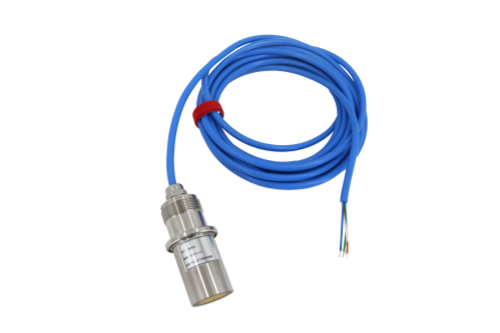
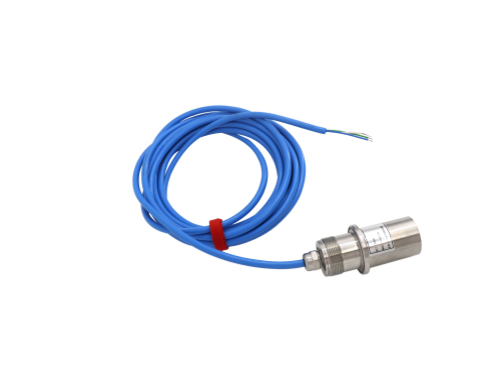
The widespread application of intelligent equipment such as autonomous underwater vehicles (AUVs) and remotely operated vehicles (ROVs) has placed extremely high demands on their precise perception of the surrounding environment and safe obstacle avoidance capabilities. Ultrasonic underwater obstacle avoidance sensors, such as the M36 model, serve as the "underwater eyes" of such equipment, detecting the distance to obstacles ahead by transmitting and receiving acoustic signals. Their performance is directly related to the safety and efficiency of underwater operations. However, the real underwater environment is complex and variable, and the presence of bubbles is an important environmental factor affecting the stability and reliability of acoustic ranging.
The primary mechanisms by which bubbles affect underwater acoustic signals are absorption and scattering. When the acoustic wave emitted by the sensor encounters bubble groups along its propagation path, the wave energy is absorbed and scattered by the numerous bubbles, causing significant attenuation of the signal strength. The degree of attenuation is closely related to the density, size distribution, and spatial distribution of bubbles in the water column. In regions with extremely high bubble concentration, the acoustic signal may be severely weakened or even completely depleted before reaching the actual obstacle (such as rocks or structures), resulting in the sensor being unable to receive an effective echo, thereby creating detection blind spots or ranging failures. Theoretically, if a single bubble's size and position happen to form a strong reflective surface and the echo signal is sufficiently strong, the sensor might measure the distance to the bubble; however, this is typically not the desired target distance but rather a form of environmental interference.
It should be clarified that the specific quantitative impact of bubbles on signal attenuation (such as the attenuation coefficient) cannot be given as a universal absolute value, as it is highly dependent on the specific on-site environment, including the degree of water turbulence, aquatic biological activity, air entrainment from surface waves near the water surface, and cavitation generated by the equipment's own thrusters. These factors collectively determine the generation rate and distribution state of bubbles.
To cope with bubble interference and enhance the reliability of sensors such as the M36 in complex environments, optimization can be carried out from both measurement strategies and system design perspectives:
Reasonable sensor deployment depth: Deploying the sensor in deeper water layers is an effective strategy when the mission permits. Generally, as depth increases, bubbles generated by surface wind and waves significantly decrease, and the water environment becomes relatively stable, which is conducive to stable acoustic wave propagation.
Optimized installation position: Avoid placing the sensor directly in front of the robot's thrusters or components where water flow is turbulent and prone to cavitation, so as to reduce the direct impact of self-generated bubbles on detection.
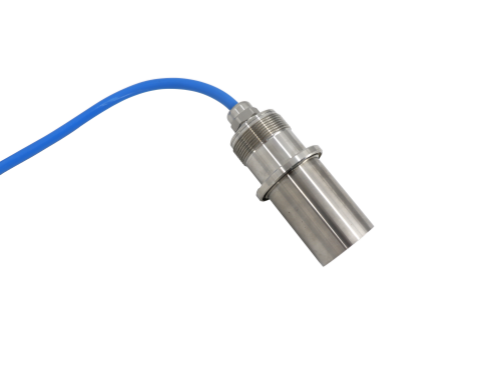
The M36 underwater obstacle avoidance sensor from Dayu Electronics has been designed with full consideration for adaptability to complex underwater environments. In the face of real-world challenges such as bubbles, correct application understanding and scientific deployment schemes are key to fully leveraging its performance and ensuring the safe operation of underwater equipment. We recommend that users fully consider the environmental characteristics of the operating waters during the early stages of system integration and mission planning. Through reasonable sensor configuration and deployment strategies, users can maximize its sensing effectiveness and ensure the safety and smoothness of underwater navigation and operations.