
Dayu Electronics: External-Mount Liquid Level Monitoring Solutions for Various Tanks
In industries such as chemical, pharmaceutical, food and beverage, reliable liquid level monitoring in closed containers is essential for production safety and process automation. Traditional invasive level gauges pose leakage risks, may contaminate the medium, or require shutdown for installation. Ultrasonic external-mount liquid level sensors (switches) provide a non-contact, non-invasive solution by mounting the sensor on the outer wall of the container to detect the presence or absence of liquid, fully addressing the above pain points. They are especially suitable for applications requiring high cleanliness, corrosive media, or difficult installation access.
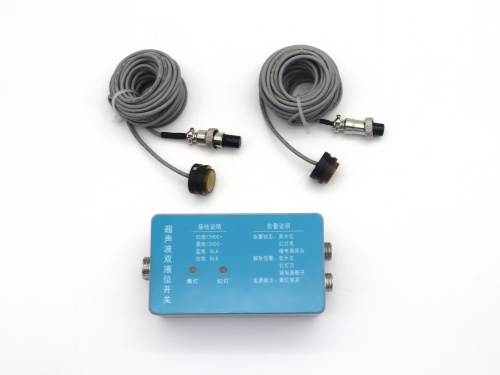
The working principle is based on ultrasonic echo reflection. The sensor (transducer) emits ultrasonic signals that penetrate the container wall and propagate through the internal medium. When the ultrasonic wave encounters the inner wall of the container (i.e., the gas-liquid or liquid-liquid interface), a strong echo is generated due to the significant change in acoustic impedance. By analyzing the characteristics of the received echo signal, the sensor can accurately determine whether liquid is present at the sensor mounting location, thereby enabling point-level alarm or control.
Regarding the commonly asked question, "How thick a steel wall can this measure?", the answer is not a fixed value but a systematic engineering choice that must consider both the container wall thickness and the internal height (liquid depth) at the sensor mounting point.
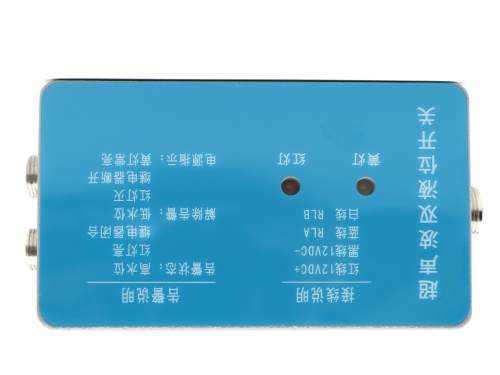
First, the container wall thickness directly affects the ultrasonic penetration capability. The thicker the wall, the greater the energy attenuation of the acoustic wave during penetration. This product is suitable for containers within a certain wall thickness range. For containers with excessive wall thickness, the ultrasonic signal may attenuate too much, making effective detection impossible. Secondly, the internal height (distance from the sensor mounting point to the expected liquid level interface) is equally critical. This distance determines the path length of the acoustic wave in the medium; the longer the path, the greater the signal attenuation. Therefore, both thicker container walls and larger internal heights impose higher requirements on signal strength and signal-to-noise ratio.
To ensure reliable detection, on-site evaluation is crucial before actual application selection and installation. Typically, it is necessary to identify the container material, wall thickness, internal medium characteristics (such as liquid type, presence of bubbles or solid particles), and the internal space dimensions at the intended sensor mounting point. For specific applications, on-site testing may be required to verify signal usability.
The installation method also affects performance. Clamps (with coupling agent to ensure acoustic transmission) or adhesive bonding can be used. Regardless of the method, ensuring a tight, stable contact between the sensor and the container outer wall, minimizing acoustic loss at the interface, is the foundation for successful application.
In summary, Dayu Electronics ultrasonic external-mount liquid level sensors provide a safe, clean, and flexible solution for liquid level monitoring in closed containers. Whether they can be successfully applied to steel containers of a specific thickness depends on a comprehensive evaluation of two core factors—"wall thickness" and "internal height"—along with proper installation practices. Through scientific pre-assessment and standardized installation, this product can be widely used in tanks, pipes, and cavities of various materials, ensuring stable and reliable liquid level monitoring.