
From Development to Application: Frequency Coordination Between Transducers and Development Boards
In the development, testing, and application of ultrasonic transducers, the excitation signal frequency generated by the driving circuit (development board) is one of the core factors determining whether the entire system can operate efficiently and stably. A common question is: "Does the specific frequency (e.g., 200 kHz) generated by the development board, serving only as an excitation signal, have no influence on the transducer's own frequency?" Dayu Electronics here clarifies a key principle: the operating frequency of the driving development board must be strictly consistent with the resonant frequency of the target transducer to achieve optimal performance. Our service commitment is: whatever frequency transducer you select at the factory, the development board we provide will be matched to that corresponding frequency.
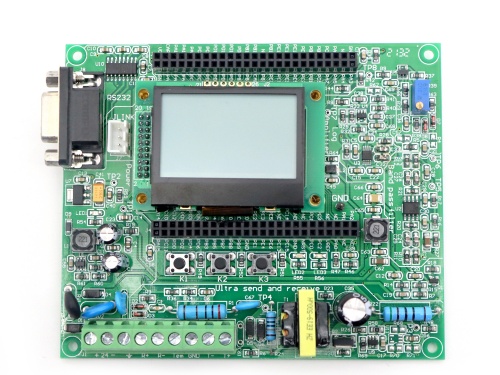
The core of an ultrasonic transducer is the piezoelectric ceramic chip, which has an inherent mechanical resonant frequency. When the frequency of the applied electrical signal matches this resonant frequency, the transducer exhibits a "resonance" effect. At this point, the efficiency of converting electrical energy into acoustic energy (mechanical vibration energy) is highest, and the transducer can output the strongest acoustic signal. Conversely, if the driving frequency deviates from the transducer's frequency, it will lead to:
1. A sharp drop in output energy: The transducer cannot operate in its optimal state, and the intensity of the emitted ultrasonic waves is greatly reduced.
2. Increased heat generation and low efficiency: A large amount of electrical energy is not effectively converted but is dissipated as heat, which may affect the equipment's lifespan and stability.
3. Waveform distortion and unreliable performance: The quality of the generated acoustic signal degrades, directly affecting the final application results in ranging, imaging, cleaning, or communication.
Therefore, the excitation signal frequency is by no means a parameter that can be arbitrarily set and is unrelated to the transducer; it directly determines whether the transducer can be "correctly driven" and achieve its designed performance.
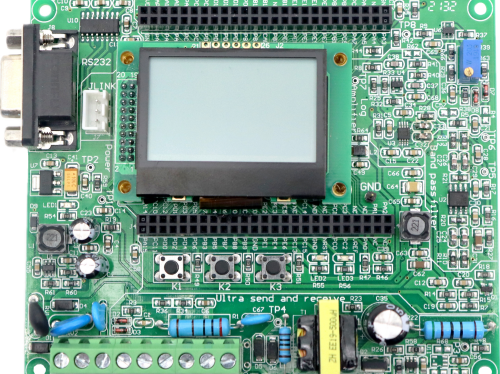
Understanding this principle, matching the driving circuit with the transducer yourself often presents a technical challenge for developers, involving fine impedance analysis and circuit adjustments. To lower your development threshold and ensure plug-and-play operation, Dayu Electronics provides a seamless matching service:
? Customized configuration: After you select a transducer at a specific frequency (e.g., 200 kHz, 1 MHz, etc.), the accompanying development board we provide has been pre-configured and calibrated at the factory, with its core driving frequency precisely matched to the resonant point of your transducer.
? Out-of-the-box usability and guaranteed performance: This deep matching ensures that when your transducer is connected to the development board, it operates immediately at its optimal resonant point, without the need for complex frequency search and adjustment, giving you the expected strong signal output and high conversion efficiency, greatly simplifying your prototyping and system integration process.
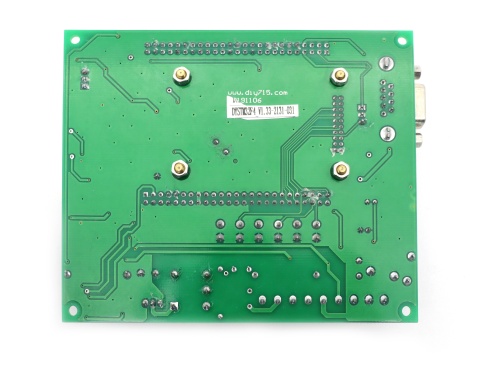
Dayu Electronics' transducer development board is not just a simple driving power supply, but a "performance amplifier" tailored specifically for a particular transducer. Through precise frequency matching at the front end, we help you bypass the complex aspects of underlying tuning, allowing you to focus more on the development and innovation of upper-level application logic. Whether you use the transducer for ultrasonic ranging, underwater detection, cleaning, or medical research, a matching development board is a solid cornerstone for stable, reliable, high-performance results. Choosing us means choosing a one-stop precision solution from core components to driving support.