
Dayu Electronics: A Convenient Solution for Rapidly Verifying Underwater Communication Sensor Performance
Before deploying underwater robot coordination, diver communication, or hydrological monitoring networks, users often need to verify the basic functionality of communication equipment in a real aquatic environment. Regarding the common need of "if I purchase two sensors, can I conduct point-to-point message exchange tests via a laptop," the answer is yes. This is exactly an efficient and intuitive method for equipment verification and solution pre-research.
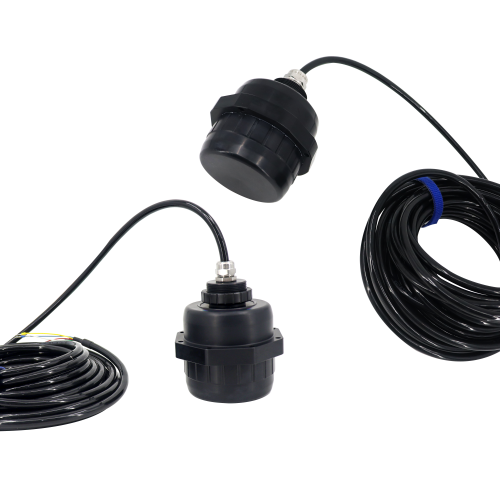
The customer only needs to connect two ultrasonic underwater communication sensors to a laptop via USB interfaces, and with the aid of a common serial port debugging tool, they can establish a simple bidirectional communication link in a water tank that simulates a realistic underwater acoustic environment. Through this link, customers can send custom test commands or data packets in real time, intuitively verifying signal transmission/reception quality, communication stability, and bit error conditions. In this mode, the measured maximum transmission rate can reach 96bps. Although this rate is not suitable for large file transfers, it fully meets the testing requirements of most application scenarios such as command control, status feedback, or short-message communication, making it an ideal choice for verifying link reliability and latency characteristics.
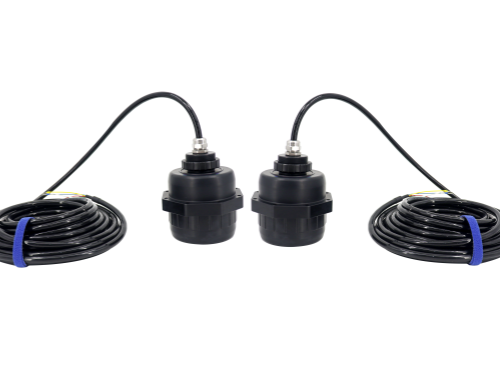
The advantage of this testing method lies in its high flexibility and realism. It allows you to quickly evaluate device performance in an actual underwater acoustic channel, rather than in a theoretical environment. By adjusting the sent content, intervals, and distances, you can gain a deep understanding of the real-time and reliability boundaries of underwater communication, providing valuable field data for subsequent system integration and deployment planning.
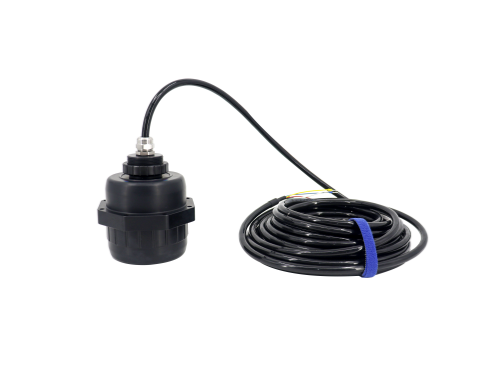
Dayu Electronics is committed to making complex underwater sensing and communication technologies easier to apply. We not only provide reliable hardware but also advocate this practical and efficient verification approach, helping you gain critical insights at minimal cost in the early stages of your project, ensuring the smooth implementation of your technical solution.