
Resolving Measurement Mysteries: When Ultrasonic Open Channel Flowmeter Data Shows Deviations of Tens of Thousands of Cubic Meters
In online monitoring scenarios such as municipal wastewater drainage, industrial effluent discharge, and agricultural irrigation, the ultrasonic open channel flowmeter serves as a key metering device, and the long-term stability and accuracy of its data are of paramount importance. However, in actual operation, users occasionally report that when comparing cumulative flow over a period of time, the system data shows a discrepancy of up to tens of thousands of cubic meters compared to physical estimates or other reference values. Faced with such significant data reliability concerns, how can the root cause be quickly identified?
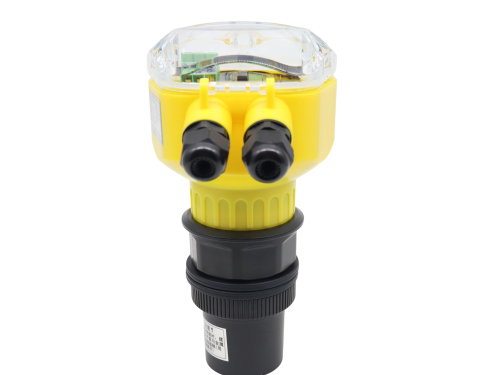
When a significant deviation such as "a difference of over 10,000 cubic meters after a period of measurement" occurs, this is typically not a signal of a single sensor failure, but rather a warning pointing to the fundamental conditions or core parameters of the measurement system. Based on extensive field service experience, our technical experts have developed a rigorous troubleshooting logic: first conduct an on-site inspection to verify the basic installation conditions, then review and verify the core calculation parameters. In the vast majority of cases, the root cause is not equipment damage, but rather the two fundamental aspects of "site conditions" and "parameter settings."
Systematic Four-Step Troubleshooting Approach: From Site to Software
Step 1: Re-verify the On-Site Installation Foundation—Does the Measurement Have a Correct "Starting Point"?
The prerequisite for all accurate measurements is the creation of a standard, stable hydraulic condition. First, it must be confirmed that the Parshall flume or weir plate is installed strictly level as required. Any tilt will cause a systematic distortion of the water level-flow relationship. Second, check whether there is any debris or sediment accumulation inside the flume and upstream of it, as these obstructions can severely disrupt the flow regime and affect the stability of water level measurement. Finally, manually verify whether the water level value displayed by the instrument matches the actual liquid level—this is a direct method to validate the measurement accuracy of the ultrasonic transducer itself.
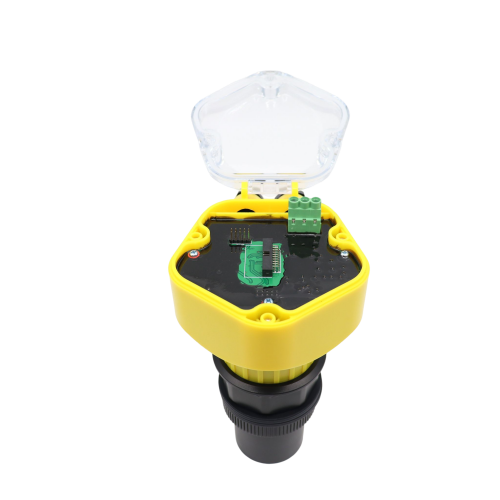
Step 2: In-Depth Review of Core Parameters—Does the Device "Recognize" Your Measurement Channel?
After completing the on-site basic inspection, the focus should shift to the internal settings of the instrument. Historical data indicates that the vast majority of major cumulative deviations stem from incorrect parameter settings, particularly the mis-selection of the Parshall flume model and its corresponding coefficients. The ultrasonic open channel flowmeter does not directly measure flow; instead, it measures the water level and then calculates the flow rate based on a standard hydraulic model (formula). The key to this model lies in the two coefficients—C value (flow coefficient) and n value (exponent)—which must correspond strictly to the precise model of the Parshall flume you have installed (e.g., No. 3 flume, No. 5 flume).
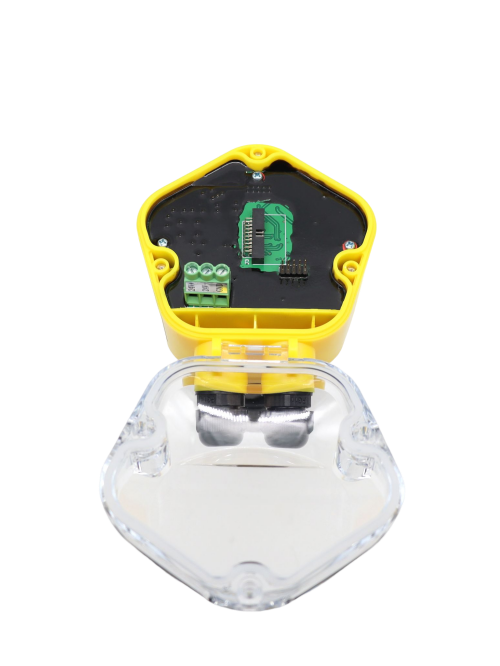
Step 3: Perform the Critical Operation—Correctly Enter the "Identity Passcode"
Each standard flume type has a unique set of C and n values, which act as the "identity passcode" and "calculation rule" for that flume type. You need to refer to the last page of our product manual or the parameter table to find the flume type number that exactly matches the identification on the nameplate of your on-site flume, and then accurately input the corresponding C and n values into the flowmeter's settings menu. An error in this step will directly lead to a fundamental error in the entire flow calculation model, resulting in a continuous and substantial cumulative deviation.
Step 4: Thoroughly Review Other Settings
After confirming the core parameters, you should also check other settings, such as measurement units, pipe diameter (if applicable), and the totalizer reset records, to ensure there are no other oversights.
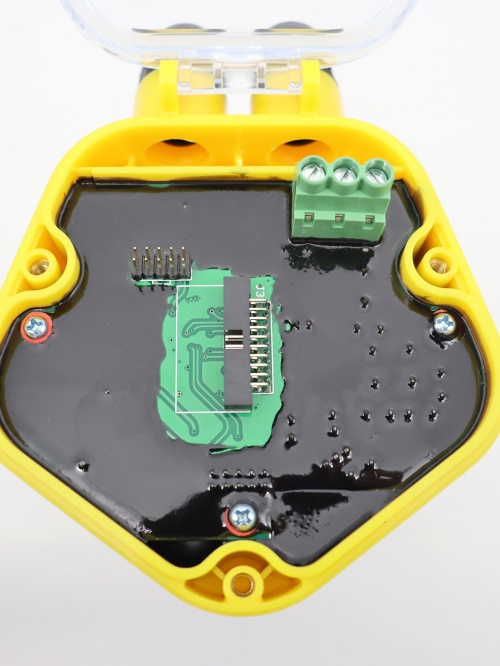
The high accuracy of the ultrasonic open channel flowmeter is the result of the combined effect of four factors: precision sensors, a standard weir/flume, correct installation, and accurate parameters. It is a systematic engineering endeavor, and failure in any one link will be amplified over time into a huge data gap.
Dayu Electronics not only provides highly reliable hardware, but is also committed to conveying the systematic knowledge and rigorous methodology that ensure its reliable operation. Through such professional explanations, we hope to help customers establish a scientific understanding that moves from relying on equipment to understanding the system, and from focusing on data to focusing on the entire process that generates the data.