
Multibeam Underwater Obstacle Avoidance Sensor: Technical Solution Selection for Dredging and Pipe Wall Damage Detection
In integrated pipeline dredging and inspection operations, customers often wish to maximize the efficiency of a single underwater mission. A typical requirement is: "While the dredging robot is working, can its onboard multibeam underwater obstacle avoidance sensor simultaneously detect and locate pipe wall damage, cracks, or corrosion?"
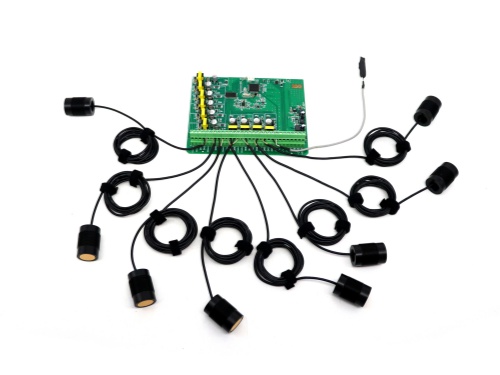
This is a highly practical engineering concept. It touches on the specialization differences among various acoustic sensors in their core tasks. In response, we provide an objective and professional assessment: In clear water conditions, a multibeam obstacle avoidance sensor can perceive the general outline and unevenness of the pipe wall, allowing preliminary identification of obvious abnormal protrusions or depressions. However, for precise quantitative mapping of pipe wall damage (such as crack width, corrosion pit depth, and area), higher-resolution specialized equipment is required.
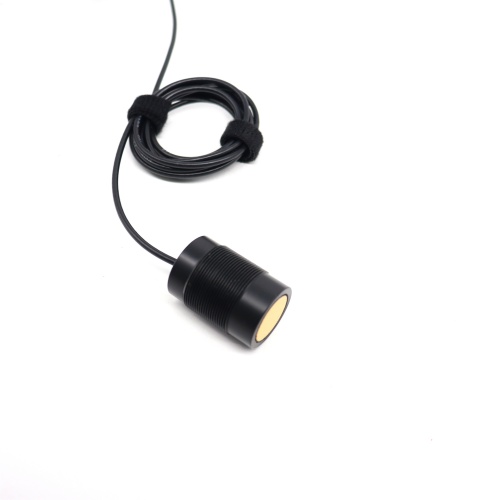
Why is there a difference between "obstacle avoidance sensors" and "mapping sonar"? Although both are based on acoustic principles, their design goals determine their performance boundaries:
1. Different core missions lead to divergent design optimizations:
? Multibeam obstacle avoidance sensor: Its primary goal is to quickly and reliably detect the presence and approximate distance of obstacles within a certain forward sector to enable collision avoidance or navigation. Its optimization focuses on response speed, the breadth and reliability of multibeam simultaneous scanning, while fine target resolution is not a primary consideration.
? High-resolution imaging sonar: Specifically designed for fine mapping. Its core lies in emitting acoustic waves with extremely short wavelengths and very narrow beams, and receiving/processing ultra-high-density echo information to generate detail-rich two-dimensional or even three-dimensional acoustic images, enabling clear identification of fine features such as cracks, rust spots, and bolts on pipe wall surfaces.
2. Magnitude difference in accuracy and resolution: This is directly reflected in the data output. An obstacle avoidance sensor outputs a series of points indicating "an object at distance X meters in a certain direction," whereas an imaging sonar outputs "acoustic images" comparable to optical photographs, clearly depicting the geometric shape and fine texture of damage. This precision difference makes the latter irreplaceable in assessing damage severity and guiding repair strategies.
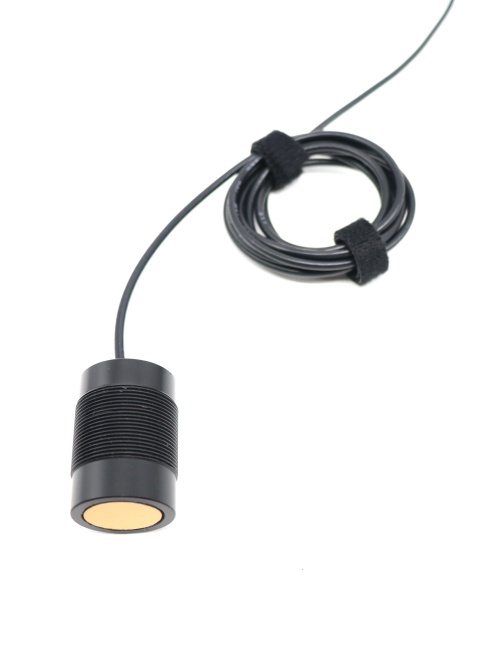
If your requirement is to conduct a rapid health survey of the pipeline during dredging, aiming to identify major defects such as obvious collapses, large missing sections, or severe deformation, our multibeam obstacle avoidance sensor can serve as an efficient auxiliary screening tool in clear water conditions. It can provide added value beyond obstacle avoidance without requiring additional equipment.
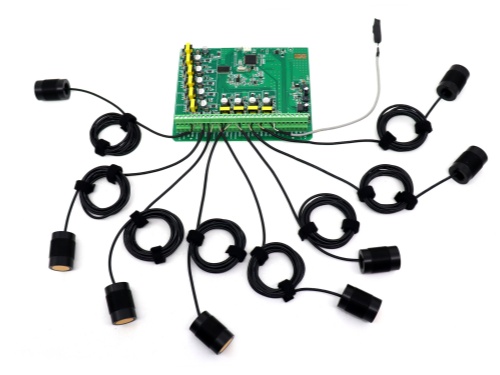
The professional spirit of Dayu Electronics is reflected not only in providing reliable sensors, but also in helping customers select the most suitable tool for their specific tasks. We do not overstate the versatility of any product; instead, we communicate its capability boundaries honestly. We are committed to being a trusted technical advisor, not just an equipment supplier.