
Why We Strongly Recommend Separating Sensor and Power Cable Routing?[Dayu Electronics]
When deploying a multibeam underwater obstacle avoidance sensor system, engineers not only focus on the sensor's performance but also demonstrate high professionalism by delving into installation details. Recently, a specific question about system integration has been frequently raised: "If the signal cable of this multibeam sensor is bundled together with the device's power cable for routing convenience, will it cause interference?"
This is a crucial and highly relevant engineering concern. It directly affects the stability and reliability of the final measurement data of the entire system. Based on our engineering practice and electromagnetic compatibility principles, the answer is clear and pragmatic: Yes, there is a risk of introducing interference if the signal cable is routed in parallel over a long distance with the power cable, especially with cables supplying power to motors, pumps, and other equipment. Although technical measures such as isolators can be used to mitigate this, based on our extensive field experience, the isolation effect often falls short of ideal. Therefore, the most reliable and fundamental recommendation is to plan a separate routing path for the sensor's signal cable.
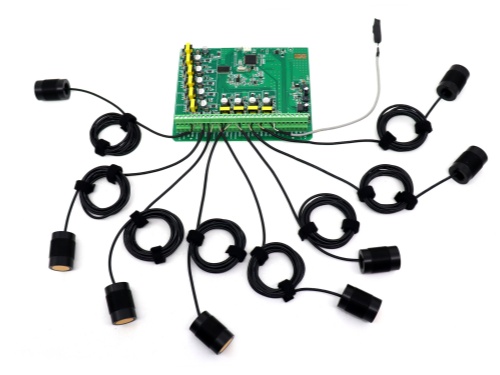
Multibeam underwater sensors rely on weak nanosecond-level ultrasonic echo ranging, and communication lines such as RS485 are highly sensitive to noise. When signal cables are routed in parallel over long distances with high-current power cables, interference can easily be introduced through electromagnetic field coupling (alternating magnetic fields induce noise, causing bit errors and data jumps) and ground loop interference (potential differences intruding into the signal loop), affecting measurement and communication.
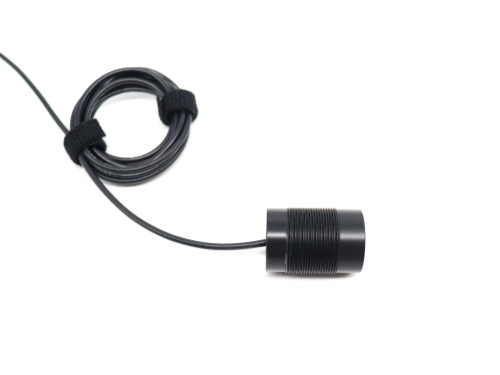
Although adding an isolator can suppress some interference, its effectiveness is limited in complex underwater environments: high-frequency interference is difficult to completely filter out, and it also increases system complexity and potential failure points. In strong interference scenarios, data instability may still occur.
As verified through projects, the most reliable solution is independent routing: physically separate the signal cable from the power cable (with a spacing of at least 30 cm, using separate conduits or cable trays), use shielded twisted pair cables with single-point grounding, and strictly adhere to the separation specification for low-voltage and high-voltage lines during the design phase.
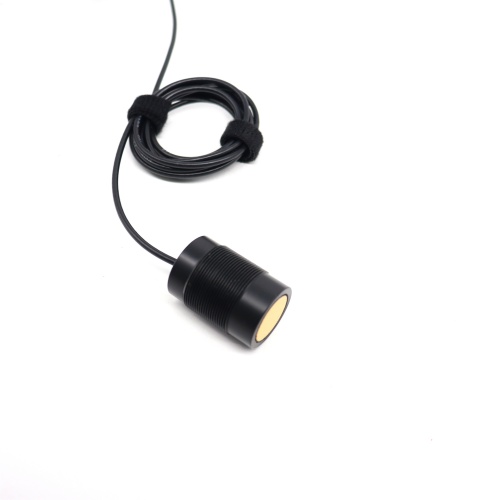
In underwater high-precision sensing systems, excellent performance not only comes from advanced sensors but also depends on every rigorous engineering detail. We candidly inform you of the interference risks of "bundled routing" and the limitations of "isolation," and we insist on recommending "independent routing"—a solution that may be slightly more complex but is the most reliable. This reflects Dayu Electronics' responsible attitude toward the long-term stable operation of our customers' projects.