
Defining Boundaries, Precise Selection: On the Core Functional Positioning of Wood Panel Bulge Detection Sensors
In quality control for wood composite materials, high-end furniture, and custom wood structures, customers often face complex internal condition detection requirements. Recently, a customer raised a very specific and challenging question: their panels have a structural skeleton of thin steel tubes embedded inside, and they hoped to use sensors to detect the bonding degree between the filler material and the internal skeleton. This directly affects the overall strength, sound insulation performance, and long-term stability of the product.
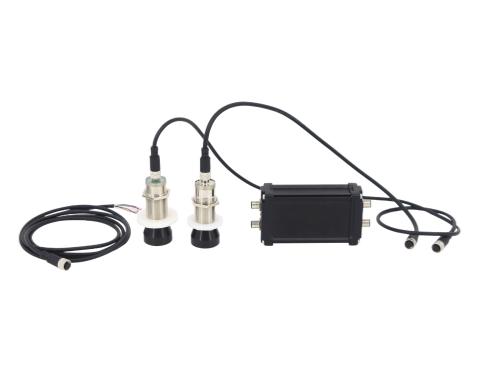
This is a highly representative deep inspection requirement. After thoroughly evaluating the physical principles and technical feasibility, we provided a professional and responsible response: this wood panel bulge detection sensor is primarily designed to detect defects such as voids, decay, and delamination inside wood or similar homogeneous media, and is not suitable for evaluating the "bonding degree" at the interface between two different materials (e.g., filler and metal skeleton).
The customer's requirement essentially falls under the category of "interface bonding quality" or "adhesive integrity" detection. This requires sensor technology that can sensitively identify possible debonding, micro-gaps, or poor contact at the microscopic interface between two different materials. Such defects are often very subtle and have complex acoustic characteristics.
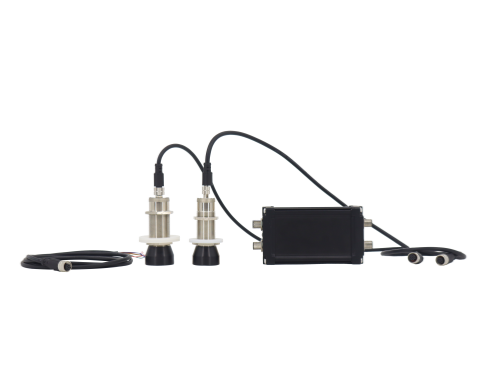
Our existing wood defect sensor operates based on analyzing the sound velocity, attenuation, and waveform changes of ultrasonic waves propagating through relatively homogeneous wood media. When encountering regions with significantly different density (such as voids or decay), these parameters undergo drastic and characteristic changes, allowing effective identification.
The acoustic properties of the materials differ greatly: the acoustic impedance of wood (or filler) and metal are vastly different. Ultrasonic waves naturally experience strong reflection and refraction at the interface between the two, which is an "expected signal" that is difficult to separate from the "abnormal debonding" signals that need to be detected.
Defect size and characteristics differ: poor bonding may manifest as nano- or micro-scale tiny gaps, producing acoustic responses that are completely different from the algorithm models optimized for detecting voids or delamination above millimeter scale.
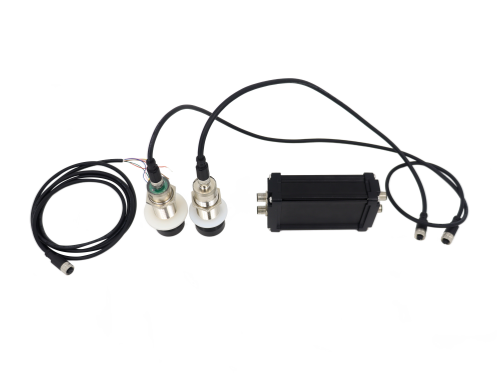
The core value of our sensor: focused on "defects" and "voids"
Clarifying its inapplicability is precisely to more clearly define its excellent application value. This sensor specializes in:
Internal defect detection in wood materials: accurately locating decay, insect damage, large cracks, etc., inside wood.
Composite delamination and void identification: effectively detecting delamination or debonding (voids) in plywood, veneer panels, etc., caused by process issues or aging.
In these scenarios, it acts like a "wooden ultrasound," non-destructively revealing internal damage invisible to the naked eye, becoming a powerful tool for wood structure safety assessment, product quality grading, and process control.
For the customer's "skeleton bonding degree" detection, techniques based on ultrasonic guided waves, laser speckle, or more specialized interface detection may need to be explored. We appreciate the customer's pursuit of product excellence and always maintain professionalism and transparency to help customers clarify their requirements and technical paths.
Dayu Electronics is deeply engaged in the field of non-destructive testing. We not only provide reliable specialized sensors but are also committed to offering precise technical consultation based on rich practical experience. If you encounter other challenges in internal material condition detection, we welcome in-depth discussion with us, and we will assist you in finding the most suitable solution.