
Dayu Electronics Ultrasonic Tree Testing Sensor: Explanation of Tree Cavity Detection Function
In forestry inspection, ancient tree maintenance, wood quality assessment, and other tasks, detecting internal cavities in trees is a key step in ensuring tree safety and rational utilization. Ultrasonic tree testing sensors, as non-destructive testing devices, are widely used to determine whether structural defects exist inside trees. Recently, some users have asked: when using a tree testing sensor to inspect trees, can the size of a cavity be accurately determined? Dayu Electronics, based on the product's working principle and practical application, provides a professional and objective official explanation.
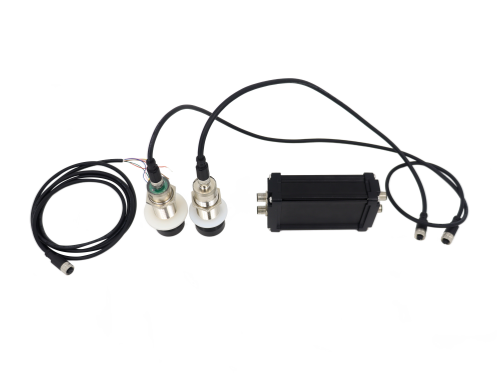
The basic principle of ultrasonic tree testing relies on the uniform propagation of ultrasonic waves through the wood medium of the tree. The integrity of the internal structure is determined by the signal strength and propagation time at the receiving end. When the wood is dense and defect-free, the sound waves penetrate steadily and are received by the opposing probe. When structural changes such as cracks or cavities occur, the medium undergoes abrupt changes, causing reflection, attenuation, and scattering of the ultrasonic waves, resulting in abnormal signals at the receiving end.
Regarding the user's question about whether the cavity size can be determined, Dayu Electronics states clearly: the current product design can detect the presence of cavities or cracks inside trees, but it cannot precisely determine the specific dimensions of the cavity. When the cavity is large, the wood medium is interrupted, ultrasonic waves cannot penetrate, and the receiving end cannot obtain effective signals. Therefore, it is only possible to confirm the existence of a cavity, but not to calculate its size, depth, or extent.
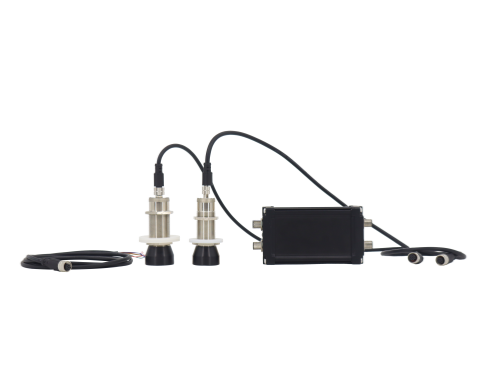
To achieve cavity size measurement, it is necessary to upgrade and optimize the detection circuit, and pair it with higher-precision, wider-frequency-band dedicated transducers. Only by using more complex algorithms to analyze signal attenuation and reflection models can quantitative detection be accomplished. This type of function belongs to the next-generation research direction, and our company will continue to advance technological iterations.
Dayu Electronics always adheres to truthful and rigorous product descriptions, providing users with accurate usage expectations. For more details on tree testing sensor applications, please contact our technical team for professional support.