
Dayu Electronics: How Do Wood Defect Detection Sensors Assess the Internal Structure of Trees?
In the fields of ancient and notable tree protection, forestry management, landscape safety assessment, and wood processing, whether defects such as cavities or decay exist inside trees or logs is a critical issue concerning safety, value, and scientific management. Traditional methods such as tapping and listening or visual inspection rely on experience and lack precision, while drilling cores, though direct, cause irreversible damage to trees. So, is there a method that can accurately detect internal conditions up to 50 cm deep, like performing a "non-destructive CT scan" on a tree?
The answer is yes. To address the specific requirement of "detecting cavities 50 cm deep inside trees," the wood defect detection sensor based on ultrasonic propagation principles provides an excellent solution.
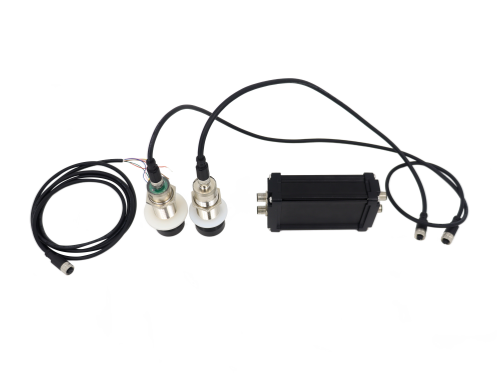
Core Principle: Using sound waves to see through the wood interior. The core of this technology lies in analyzing the physical characteristics of ultrasonic waves as they propagate through the wood medium. When the sensor probe is coupled to the tree trunk surface, it emits high-frequency ultrasonic pulses. As the sound waves travel inside the wood, their propagation speed, signal strength, and waveform change due to variations in material density and elastic modulus uniformity.
?Healthy wood: Uniform and dense structure, relatively stable ultrasonic propagation speed, and regular signal attenuation.
?Cavities or decay present: These areas have significantly reduced density or are hollow, forming acoustic "discontinuity interfaces." Ultrasonic waves encounter strong reflection, scattering, or diffraction here, complicating propagation paths, manifesting as abnormal propagation time (sound velocity), sharp attenuation of signal energy (amplitude), and waveform distortion.
By capturing and intelligently analyzing these subtle acoustic parameter changes with professional instruments, the system can construct an internal structural image of the tree's cross-section or longitudinal profile, thereby non-destructively determining the location, size, and even degree of decay of any cavities.
Compared with traditional methods, the wood defect detection sensor offers significant advantages:
1. Completely non-destructive: It only inspects the bark surface without causing any harm to the tree's growth or structural integrity, making it especially suitable for safety monitoring of ancient and rare tree species.
2. Strong depth penetration: Optimized low-frequency sensor design enables effective detection depths of up to 50 cm or more, meeting the inspection needs of most tree trunks and large logs.
3. Objective and visual results: Detection data processed by software can generate 2D or 3D sound velocity distribution maps or defect imaging, making internal conditions "clear at a glance" and providing more scientific and intuitive assessment conclusions.
4. Efficient and convenient: Fast on-site detection allows multi-point, multi-angle surveys of trees, suitable for large-scale forest stands or garden tree health screening.
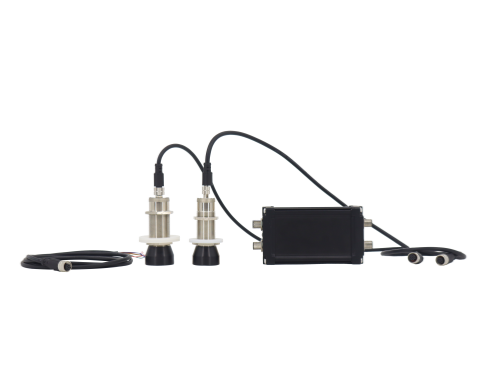
Wide Applications: From resource conservation to risk management. This technology has been successfully applied in multiple scenarios:
?Health diagnosis and protection of ancient and notable trees: Regular monitoring to assess cavity development trends, providing a basis for developing scientific support or restoration plans.
?Safety risk assessment of urban street trees and landscape trees: Timely identification of hidden hazards to prevent toppling accidents caused by internal decay, ensuring public safety.
?Forestry and wood industry: Quality assessment of standing trees and internal defect screening of high-value logs, enabling optimal use and enhancing economic benefits.
Dayu Electronics specializes in ultrasonic sensing technology, and our wood defect detection sensor is a mature application of this cutting-edge technology. We are committed to providing customers with reliable, precise non-destructive testing tools, using the power of technology to protect green resources, identify every hidden risk, and provide solid technical support for forestry management, garden safety, and cultural heritage protection.