
A Reliable Data Bridge: Information Upload Methods for Ultrasonic Underwater Communication Sensors
In advanced applications such as collaborative underwater robot operations and ocean observation networks, ultrasonic underwater communication sensors play a key role as an "underwater local area network." Their core value lies in enabling information exchange and data aggregation among underwater devices. After information perception is completed, how to stably and reliably upload data to a surface control center or data platform is the final step in closing the system value loop. We are often asked: "What upload methods are currently available for underwater communication sensors?" At present, industrial-grade ultrasonic underwater communication sensors generally adopt the mature and reliable RS-485 digital interface as the core data upload channel.
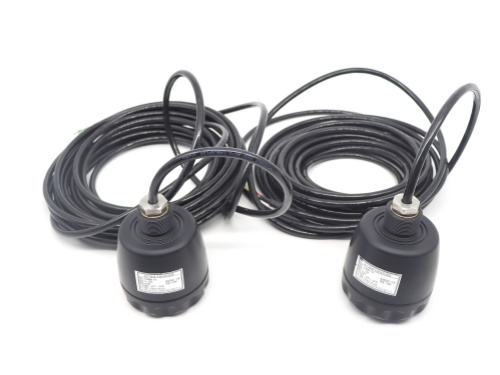
Why the RS-485 interface? This choice is not accidental, but rather the optimal solution based on the stringent requirements of the harsh underwater environment and the extreme reliability demanded by industrial systems.
Strong anti-interference and long-distance transmission capability: The underwater working environment is complex, and cables often need to be laid over tens or even hundreds of meters, while being susceptible to electrical noise interference. The RS-485 interface uses differential signal transmission, offering excellent common-mode interference rejection, effectively suppressing noise introduced along the cable run, and ensuring the integrity and accuracy of data signals over long cable lengths. This is the physical foundation for stable communication.
Support for bus-type network topology, facilitating system integration: The RS-485 standard supports bus-type connections. This means that a master station (such as a surface control cabinet or data acquisition unit) can connect multiple underwater communication sensors as slave stations via a single bus. This structure greatly simplifies system wiring, making it highly suitable for monitoring networks composed of multiple underwater nodes, and facilitates centralized data acquisition, reflecting a high degree of engineering friendliness.
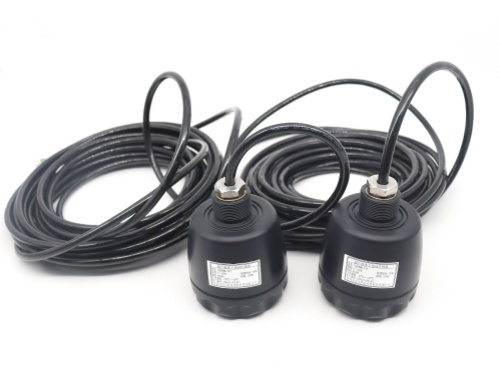
Universal language in the industrial field: RS-485 is a de facto standard communication interface in industrial automation. Its electrical specifications and protocol frameworks (often carrying standard protocols such as Modbus RTU) are widely recognized and accepted. This allows our underwater communication sensors to easily and seamlessly integrate with the vast majority of existing surface control units, PLCs, industrial computers, or edge computing gateways, significantly reducing the difficulty and cycle time of system integration and development.
Therefore, a typical data flow path is: underwater sensors complete information exchange or data collection among underwater devices via ultrasonic carrier waves; subsequently, the data is processed and packaged by the device's internal processor and output as digital signals through the RS-485 interface. The signals are transmitted to the surface via dedicated waterproof armored cables, connected to a data gateway or industrial RTU (Remote Terminal Unit) on deck, and finally aggregated into higher-level monitoring systems or cloud platforms via Ethernet, 4G/5G, or satellite communication for user analysis and decision-making.
In short, the RS-485 interface provides ultrasonic underwater communication sensors with a stable, universal, and efficient "information outlet." It firmly connects the underwater acoustic communication network with the vast surface and shore-based information systems, forming a complete data chain from underwater perception to cloud intelligence. Dayu Electronics has always prioritized system integration and engineering reliability in product design; choosing RS-485 is a reflection of this philosophy, ensuring that our products become a solid and trustworthy component in your underwater system construction.