
Decoding Dayu Electronics' Ultrasonic Anemometer: The Core Principle of Wind Measurement with Transducers
Wind, as the most common meteorological element in the natural environment, requires precise monitoring of its speed and direction, which plays an irreplaceable role in fields such as meteorological observation, marine monitoring, wind power generation, and bridge and tunnel operation and maintenance. Fuzhou Dayu Electronics has deep expertise in sensing technology, and its ultrasonic anemometer has become the preferred equipment for wind field monitoring across industries, thanks to its precise measurement performance and excellent environmental adaptability. Many users are curious about how the core component of this device—the transducer—captures the trajectory of wind and achieves precise wind speed and direction measurement. Today, we will detail the technical principles behind it.
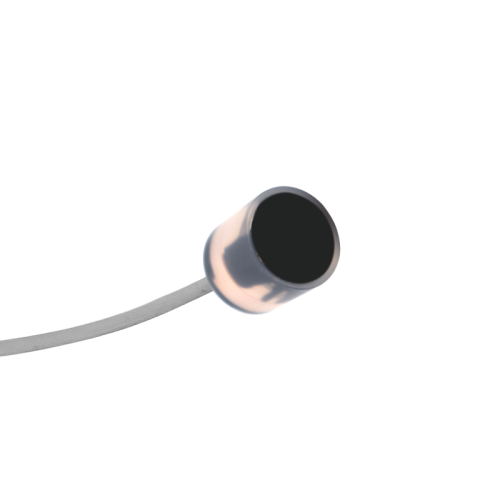
Before answering the core question, we must first clarify a key concept: the wind measurement core of the ultrasonic anemometer lies in the innovative application of the ultrasonic time-difference method, and the transducer, as the 'transmitting and receiving terminal' of ultrasonic waves, is the core carrier that implements this principle. It acts as the device's 'sensory antenna,' responsible for capturing the subtle effects of wind on ultrasonic propagation, which are then converted into quantifiable wind speed and direction data.
Some users may ask: 'What principle does the anemometer transducer use to measure wind speed and direction?' In fact, the answer is not complicated; the core logic is hidden in the 'interaction between sound wave propagation and wind'—the speed of sound in air is relatively fixed (about 343 m/s at 20°C), but when airflow (wind) exists, it creates a superposition effect with the propagation speed of ultrasonic waves, and the difference in this effect is the key basis for calculating wind speed and direction.
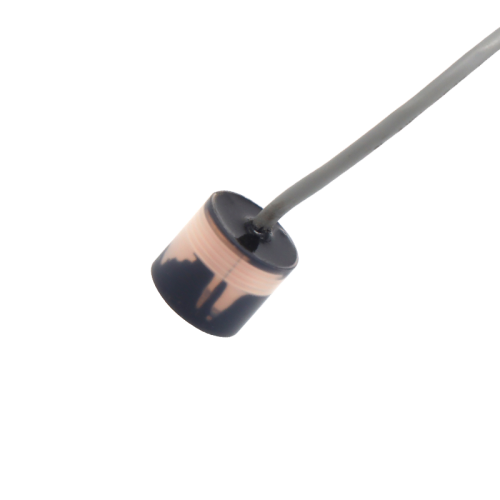
Specifically, the transducers in Dayu Electronics' ultrasonic anemometer typically adopt a layout of multiple mutually perpendicular groups (adapted for X, Y, and even Z-axis measurements), with each group capable of transmitting and receiving ultrasonic signals in both directions. When the propagation direction of the ultrasonic wave aligns with the wind direction, the airflow 'pushes' the sound wave, accelerating its propagation speed; conversely, when the propagation direction opposes the wind direction, the airflow 'hinders' the sound wave, slowing it down. To put it simply, just as running with the wind is easier and faster, while running against the wind is harder and slower, ultrasonic propagation follows this same basic physical law.
Under fixed detection conditions (with fixed transducer spacing and controllable environmental parameters), the propagation speed of ultrasonic waves in air shows a clear functional relationship with wind speed. Our equipment uses high-precision timing circuits to accurately capture the tiny time differences between ultrasonic waves propagating with and against the wind direction, and then, by combining the transducer spacing, environmental compensation algorithms (such as temperature compensation to offset the effect of temperature on sound speed), and professional formulas, it calculates and derives the precise wind speed value.
For wind direction measurement, the system relies on multiple groups of vertically arranged transducers working in coordination. By measuring the wind speed components in different directions (e.g., X-axis and Y-axis) separately, and using trigonometric function algorithms, it synthesizes the actual wind direction angle over a full 360° range, enabling omnidirectional and precise wind direction monitoring. For example, when there is a difference between the wind speed components measured by the X-axis and Y-axis transducers, calculating the ratio of the two determines the specific wind direction, with errors controlled to within ±2°, meeting industrial-grade monitoring requirements.
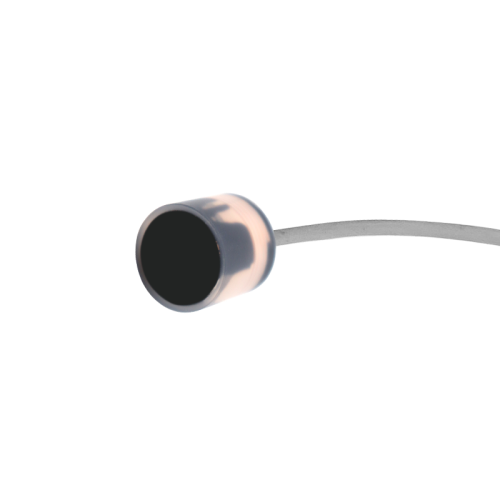
It is worth mentioning that Dayu Electronics' innovative upgrades in transducer technology have taken wind measurement accuracy and environmental adaptability to a higher level. Our transducers use high-quality piezoelectric ceramic materials and operate at optimized resonant frequencies, coupled with automatic frequency tracking technology that compensates in real time for errors caused by temperature changes and component aging, ensuring stable signal output. Additionally, the transducers feature a corrosion-resistant structural design with IP65 or higher protection ratings, ensuring stable operation even in harsh environments such as coastal salt spray, extreme heat or cold, heavy rain, and sandstorms—just like our DYA-200-01DJ-CTY transducer, which, when applied in coastal marine environmental monitoring stations in Fuzhou, accurately recorded wind speed and direction changes even during strong typhoons, providing reliable data support for disaster prevention and mitigation.
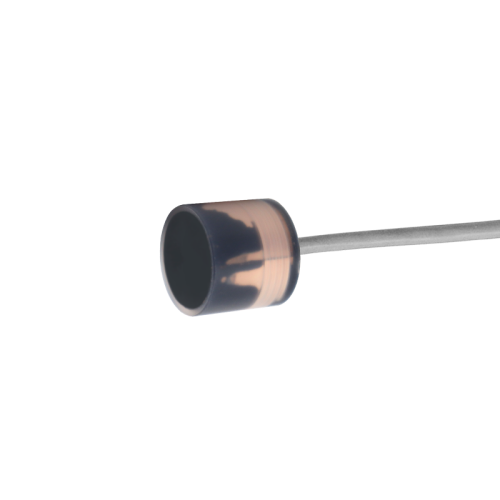
Compared with traditional mechanical anemometers, the transducers of Dayu Electronics' ultrasonic anemometer have no mechanical rotating parts, which not only avoids the accuracy degradation caused by mechanical wear but also achieves 'zero starting wind speed,' capable of capturing micro-wind changes at the 0.1 m/s level, with faster response and no need for regular on-site calibration, significantly reducing maintenance costs. This non-contact measurement method allows the device to maintain stable measurement performance in long-term unattended monitoring scenarios, such as weather stations, wind farms, and marine monitoring points.
From the core principle to practical applications, Dayu Electronics always takes technological innovation as the core, maximizing the advantages of the ultrasonic time-difference method. By optimizing transducer design and improving compensation algorithms, every ultrasonic anemometer can accurately capture wind dynamics. Whether providing data support for marine monitoring, optimizing power generation efficiency for wind farms, or safeguarding urban environmental monitoring, Dayu Electronics will continue to deliver more accurate and reliable wind field monitoring solutions for various industries with professional sensing technology, using technology to sense the power of wind and empower high-quality industrial development.