
Dayu Electronics: How to Choose a “Long-Life” Level Gauge for Leachate Collection Tanks?
With increasingly stringent environmental regulations and intelligent operation becoming the standard, precise level monitoring in landfill leachate collection tanks has become a critical step for safety, compliance, and cost control. However, the complex composition and strong corrosiveness of leachate often cause traditional level instruments to fail—probes are quickly corroded, sensors become clogged by media adhesion, resulting in inaccurate data, frequent equipment damage, and high maintenance costs.
Recently, a customer facing this exact issue consulted us: What kind of level monitoring equipment should be selected for a landfill leachate collection tank?
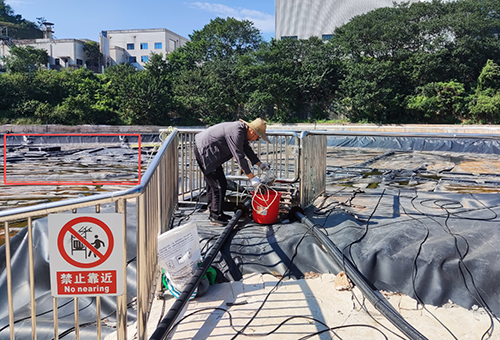
1. Understanding the Challenge: The Harsh Environment of Leachate Collection Tanks
Before selecting equipment, it is essential to fully understand the "enemy situation" of its working environment. Leachate is a highly concentrated organic wastewater produced during the decomposition of landfill waste, rich in humic acid, heavy metal ions, salts, and ammonia nitrogen, and is highly corrosive. Although the tank body may be made of corrosion-resistant materials, the instrument probes immersed in the liquid over the long term must directly withstand this chemical attack. Additionally, foam, suspended solids, and crystalline deposits that may form in leachate can easily cause clogging and scaling on contact-type instrument sensing elements, leading to measurement failure.
Therefore, level gauges suitable for ordinary clean water tanks often prove inadequate here. Frequent replacement and maintenance not only impose an economic burden but can also lead to interruptions in monitoring data, potentially causing environmental safety risks.
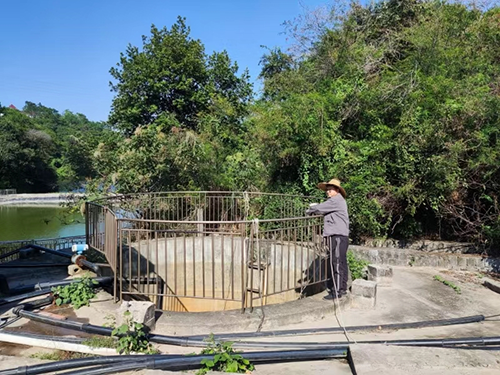
2. The Solution: Combining Non-Contact Measurement with Ultimate Corrosion Resistance
To address the above pain points, our core solution is to use a corrosion-resistant, remote-type ultrasonic level gauge.
Why an ultrasonic level gauge?
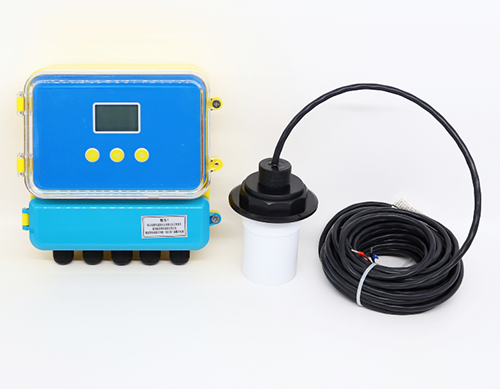
The ultrasonic level gauge uses a non-contact measurement principle. The instrument probe is installed at the top of the tank, emitting ultrasonic pulses toward the liquid surface and receiving the echoes. By calculating the time difference, it obtains the precise level. Throughout the process, the probe never comes into contact with the corrosive leachate, fundamentally avoiding direct corrosion of the probe and clogging issues—this is the primary prerequisite for its long-term stable operation.
Why must it be "corrosion-resistant" and "remote-type"?
Corrosion-resistant probe, facing the harsh gas environment: Although the probe does not contact the liquid, the space above the collection tank is filled with highly corrosive gases. To this end, we recommend probes made of special corrosion-resistant materials, such as PTFE (polytetrafluoroethylene) coating or fully sealed packaging processes. PTFE is known as the "king of plastics" due to its excellent chemical inertness, providing long-term resistance to various strong acids, bases, and organic solvents, ensuring the probe remains unharmed in corrosive atmospheres.
Remote-type design for optimal layout and maintenance: The remote-type structure separates the ultrasonic transducer (probe) from the main display unit. The probe is responsible for sending and receiving signals and is connected to the display via a dedicated cable. This design offers two core advantages:
Installation flexibility: The compact probe can be installed at the optimal measurement point at the top of the tank, while the display unit can be installed in an inspection platform or control box away from the tank opening, making it easy to observe and operate, thereby protecting core electronic components from the harsh environment.
Maintenance convenience: Routine inspections, adjustments, and data viewing do not require approaching the tank opening, ensuring personnel safety. The probe and display unit are relatively independent, making maintenance and repairs simpler.
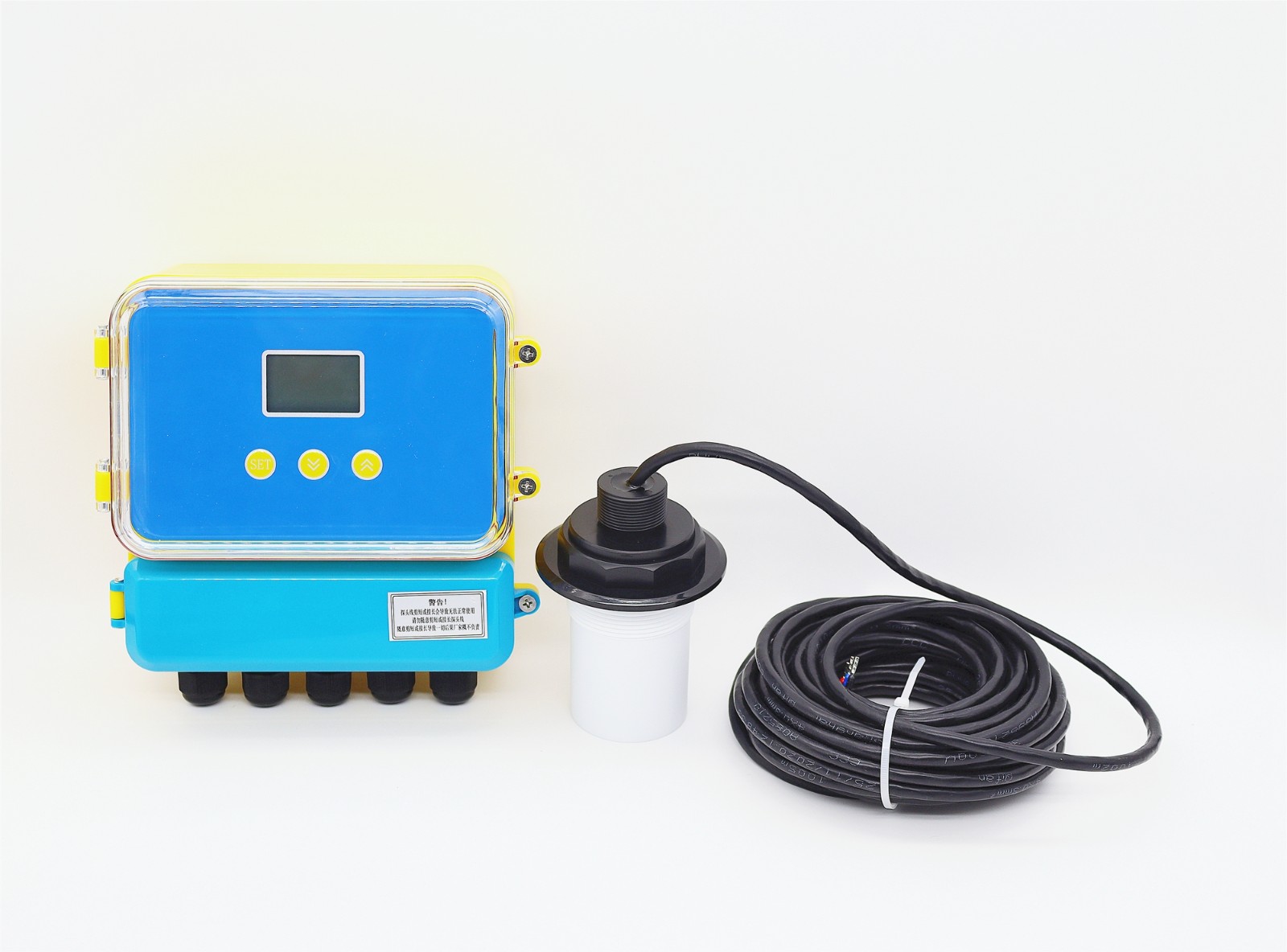
3. Core Advantages of the Solution: Stable, Long-Lasting, and Economical
Extended service life, significantly reducing replacement costs: The combination of corrosion-resistant materials and non-contact principles increases the equipment's lifespan in leachate tanks several times over compared to traditional contact-type instruments (such as submersible hydrostatic or capacitive types), achieving "one installation, long-term benefits."
Continuous, stable, and reliable data: It avoids signal attenuation or measurement drift caused by probe corrosion or scaling, providing continuous, true, and accurate level data, which serves as a reliable basis for automatic leachate pumping control, inventory accounting, and safety warnings.
Extremely low overall maintenance costs: It virtually eliminates routine cleaning and calibration, greatly reducing personnel exposure to hazardous environments, thereby lowering safety risks and labor costs.
Simple installation and commissioning, strong adaptability: It imposes no special requirements on tank structure, requires no drilling or hot work, making it particularly suitable for retrofitting existing older tanks.
4. Professional Selection Recommendations
In actual selection, specific working conditions should be considered, such as:
Range: Determined by the actual depth of the collection tank.
Probe material: Different levels of corrosion protection can be selected based on the concentration of corrosive gases.
Output signal: Match interfaces such as 4-20mA or RS485 according to control system requirements.
Additional functions: Such as on-site display, relay alarm output, etc.
Fuzhou Dayu Electronic Technology Co., Ltd. has been focused on the R&D and application of ultrasonic level gauges for 17 years. We understand that when facing severe challenges like leachate monitoring, the right choice means long-term peace of mind and value.
If you are troubled by level measurement for corrosive media such as leachate, chemical wastewater, or acid/alkali storage tanks, please feel free to contact us. Our technical engineers will provide one-on-one, precise, and free selection guidance based on your specific working conditions, tailoring the most economical and reliable level monitoring solution for you.