
Dayu Electronics: How Ultrasonic Sensors Become the 'Underwater Eye' for Aluminum Rod Water-Immersion Flaw Detection?
In the field of industrial automation and non-destructive testing, precise positioning is the first step to ensure the reliability of the inspection process. Especially in high-precision inspection processes such as 'water-immersion flaw detection', the accurate positioning of the workpiece is the basis for all subsequent precise analysis. Recently, we successfully assisted a customer in solving a key positioning challenge in their automated aluminum rod water-immersion flaw detection line. This article fully presents the entire process from requirement analysis to solution implementation, demonstrating the reliable application of ultrasonic sensors in harsh underwater environments.
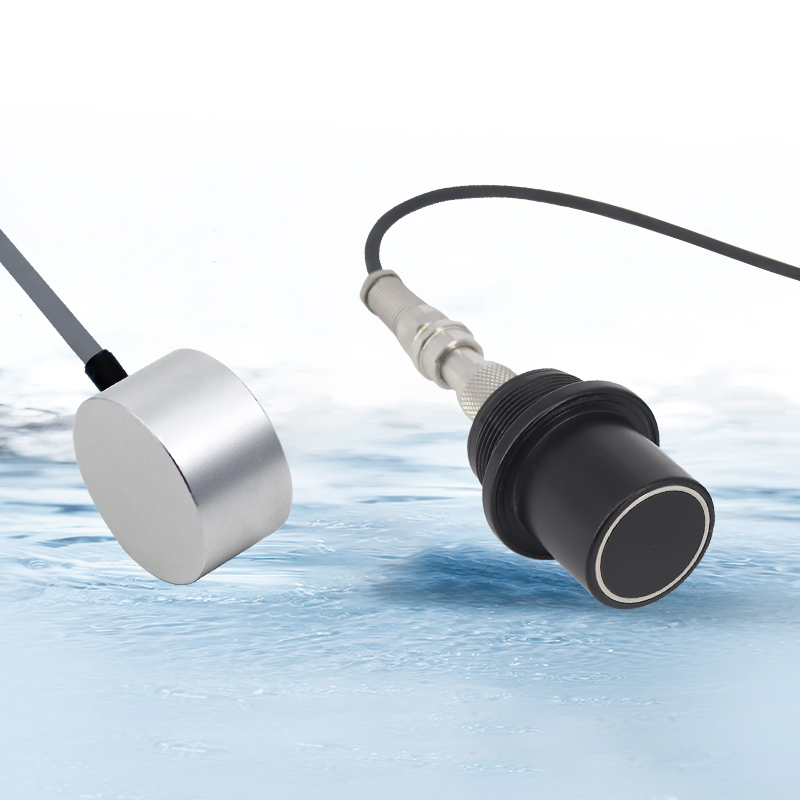
1. Customer Requirement: Seeking 'Precise Touch' Underwater
The customer's core requirement was clear and challenging: on their fully automated aluminum rod water-immersion flaw detection line, they needed a proximity switch that could work stably underwater. Specifically, when the mechanical conveying device pushes the aluminum rod toward a circular backing roller, the sensor needed to precisely detect whether the rod end had reached the preset position, thereby triggering the subsequent clamping and flaw detection process. Traditional photoelectric or inductive proximity switches are ineffective underwater. The customer urgently needed a non-contact detection solution that could adapt to underwater environments and remain unaffected by water color, transparency, and air bubbles.
2. Operating Condition Analysis: The Harsh Challenges of Underwater, Precision, and High Speed
To meet the requirement, it was essential to thoroughly understand the on-site environment.
Process Background: Water-immersion flaw detection is a highly sensitive non-destructive testing method. It immerses both the transducer and the aluminum rod in water, using water as a coupling medium to allow ultrasonic waves to enter the rod uniformly and stably, thereby detecting internal defects such as cracks and porosity. This process demands extremely high positional repeatability of the aluminum rod.
On-Site Conditions: The entire detection action occurs underwater. As shown in the figure:
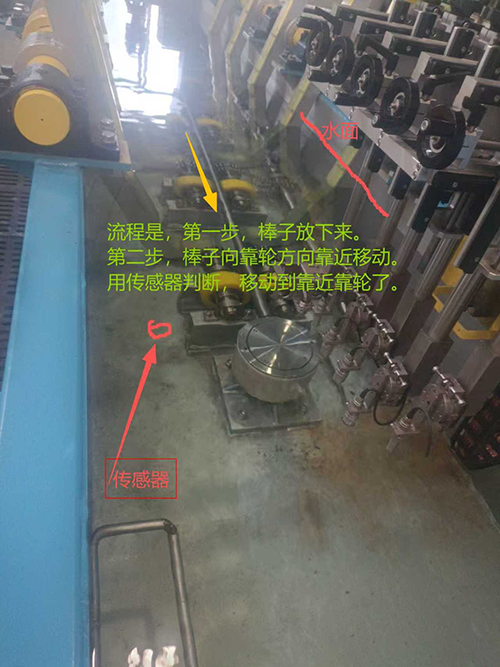
The mechanical device pushes the aluminum rod horizontally toward a fixed circular backing roller. The sensor needs to be installed laterally, and just before the rod end contacts the backing roller, it must precisely determine the 'in-position' status. The installation space is compact, with minimal clearance between the rod and the backing roller, and the site also has vibration and electrical interference from other mechanical equipment.
3. Core Challenges and Selection Logic: Why This One?
Based on in-depth analysis of the operating conditions, we identified four critical thresholds the sensor had to overcome:
Underwater Survival: The sensor must operate stably underwater over the long term, with excellent sealing and corrosion resistance.
Precision Sensing: The installation distance is short, and the detection target is clear. The sensor must have high frequency and a narrow beam angle to ensure concentrated acoustic energy, responding only to the target area to avoid false triggers.
Fast Response: As a 'switch' triggering subsequent automated processes, the response speed must be extremely fast to meet high-speed production cycles.
Strong Anti-Interference: Industrial sites are full of various interferences; the sensor must have robust noise suppression capability.
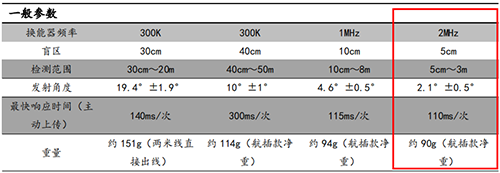
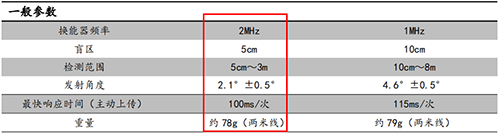
Our Selection: Based on the above four points, we quickly focused on the high-frequency underwater obstacle avoidance sensor series. After comparing the parameters (such as beam angle, blind zone, and response time) of the M33 and M36 models at 2MHz frequency, we ultimately recommended the 2MHz M36 model underwater obstacle avoidance sensor to the customer. The reasons are as follows:
High Frequency 2MHz: The higher the frequency, the shorter the wavelength, the better the directivity, and the narrower the beam angle, enabling precise lateral ranging with 'point-and-shoot' accuracy, perfectly suited for narrow gaps.
M36 Structure: Its form factor and mounting method better fit the customer's on-site installation space, making integration easier.
Underwater Specialization: Designed specifically for underwater environments with IP68 protection rating, completely unaffected by prolonged submersion.
4. Professional Deployment: The 'Finishing Touch' of Installation and Commissioning
Correct selection is only half the success; professional deployment is equally critical. We provided the customer with detailed installation and setup guidance:
Precise Positioning to Avoid Interference: We guided the customer to install the sensor at a distance slightly greater than its blind zone. This ensures immediate measurement effectiveness while minimizing the ultrasonic radiation diameter at that point, effectively preventing sound waves from hitting adjacent backing rollers or other structures and causing false signals.
Mode Optimization for Maximum Speed: We emphasized that when using this sensor as a switch, its communication mode must be set to 'active upload'. In this mode, the sensor continuously sends distance data to the host controller at its fastest update cycle (i.e., its fastest response time), achieving near-real-time monitoring and eliminating the communication delay of the query-response mode.
Signal Isolation for Stable Operation: Given the complex interference in industrial environments, we recommended necessary shielding and isolation measures for the sensor's power supply and RS485 communication lines to ensure absolute stability of the data link.
5. Application Value: Reliable Assurance Beyond a Switch
After implementation, the sensor acted like a reliable 'underwater eye', successfully resolving the customer's pain points:
Precise Triggering: Every time the aluminum rod reached the preset position, the sensor instantly and stably output a signal to trigger the clamping mechanism, providing an absolutely consistent positional starting point for subsequent flaw detection.
Stable and Reliable: Completely unaffected by water flow or color changes, it achieved 'zero' false alarms during long-term underwater operation, ensuring continuous and stable production line performance.
Improved Efficiency: The high-speed response ensured that the production cycle was not impacted, and the automated process ran smoothly without obstruction.
Summary
This case is not just a successful product application but also a model of reverse selection and solution design based on specific scenarios. In a scenario like aluminum rod water-immersion flaw detection, which demands high precision, environmental adaptability, and speed, generic solutions often fail. Dayu Electronics, leveraging its deep understanding of ultrasonic technology and thorough awareness of industrial site complexity, successfully transformed an underwater obstacle avoidance sensor into a highly reliable 'underwater precision proximity switch' through precise model selection (2MHz M36) and professional application guidance (precise installation, fast mode).
This once again proves that in the field of industrial sensing, there is no such thing as the best sensor—only the most suitable solution. We remain committed to working with customers to delve into scenarios and solve challenges.