
Fuzhou Dayu Electronics Ultrasonic Doppler Flowmeter On-Site Guidance in Anhui
When urban sewage pipeline networks face complex challenges such as sediment accumulation, acid-alkali corrosion, and mixed rainwater-sewage flow, the clogging, wear, and data drift problems of traditional flowmeters become "roadblocks" to water utility management. The ultrasonic Doppler flowmeter uses innovative technology to solve these industry pain points, serving as the core for precise monitoring in urban sewage drainage systems, providing comprehensive data support for refined pipeline management, environmental supervision, and flood control dispatch.
Based on the Doppler effect principle, the device uses sediment, bubbles, and suspended solids in sewage as natural signal carriers. It eliminates direct mechanical contact with sewage, fundamentally avoiding clogging and wear issues. Instead, impurities become a "helper" for measurement, ensuring stable and accurate measurement even in high-turbidity, high-impurity sewage. Its industrial-grade heavy-duty configuration provides exceptional environmental adaptability: the 316L stainless steel + PTFE composite probe resists acid-alkali corrosion and sediment wear, with IP68 protection rating for long-term submerged operation; the industrial-grade ruggedized transmitter is dustproof, waterproof, and resistant to electromagnetic interference, with a wide temperature range of -40°C to 85°C suitable for both northern and southern climates, perfectly handling harsh environments such as underground pipelines and humid sewage treatment plant workshops.
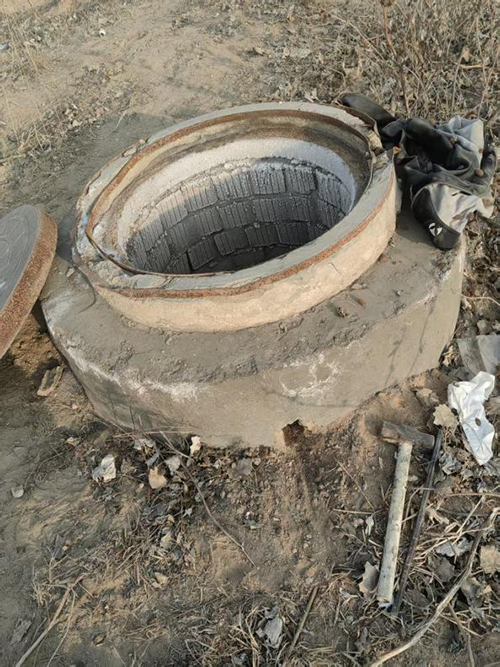
Intelligent features make water management more efficient: simultaneous monitoring of instantaneous flow, totalized flow, flow velocity, water level, and other parameters; support for 4G/5G and NB-IoT wireless communication for real-time data upload to smart water platforms; built-in storage retains months of data during network interruptions and automatically uploads after recovery. The maintenance-free design significantly reduces operational costs—only periodic probe cleaning is required. Combined with remote calibration and fault self-diagnosis functions, it makes maintenance of remote points and underground pipelines more convenient.
From rainwater-sewage separation retrofits and sewage discharge metering to flood warning and pollution source tracing, the ultrasonic Doppler flowmeter acts as the "smart eye" of urban drainage networks, helping water utility departments achieve "full-domain perception, intelligent transmission, and precise decision-making," laying a solid data foundation for winning the blue-water battle and building smart cities.
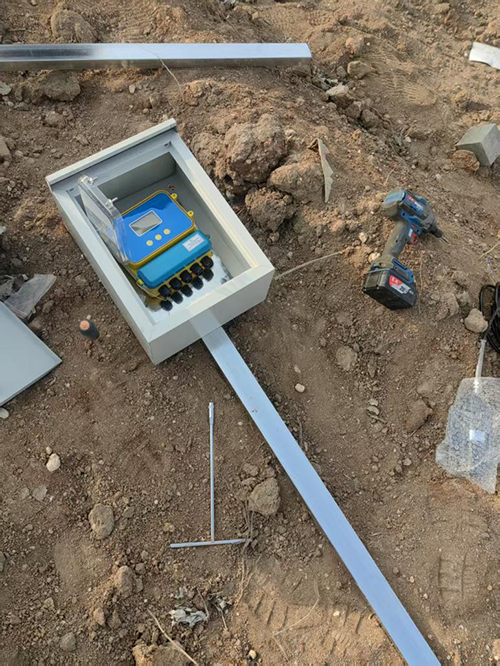
2. Installation precautions for the Doppler sewer flowmeter
Installation location selection
Stable water flow: Choose a straight pipe section with steady flow, free of vortices and backflow; avoid installing near elbows, valves, or pumps.
Straight pipe requirements: Typically, the upstream straight pipe length should be 10 times the pipe diameter (10D), and downstream 5 times the pipe diameter (5D), to ensure fully developed fluid flow.
Space requirements: No obstacles within 1 meter in front of the probe; the bottom of the probe should be at least 15 cm above the water surface to avoid interference from surface fluctuations. Preparation before installation
Pipeline cleaning: Thoroughly clean the inner wall of the pipe before installation, removing rust, oil, and impurities to ensure measurement accuracy.
Site survey: Measure pipe diameter and wall thickness; understand water flow velocity, water level variations, and impurity conditions to select the appropriate model and accessories.
Tool preparation: Prepare wrenches, screwdrivers, coupling compound, and other tools; underwater installation requires diving equipment. Sensor installation
Installation direction: The sensor probe should be installed facing upstream, with the angle to the flow direction typically 45°~60° to ensure accurate measurement.
Angle calibration: The sensor should be perpendicular to the horizontal plane; if the pipe is inclined, fine adjustments can be made, with errors generally not exceeding ±5°.
Coupling compound use: Apply coupling compound (such as salt-free grease) between the sensor and the pipe contact surface to ensure efficient ultrasonic transmission. Electrical connections
Signal cable and power: Use shielded twisted-pair cable, avoid running parallel to high-voltage cables, ensure correct polarity, and add a termination resistor to the RS485 interface.
Lightning protection and grounding: The device must be reliably grounded with a grounding resistance not exceeding 4Ω; surge arresters should be installed in lightning-prone areas. Commissioning and maintenance
Zero calibration: Perform zero calibration under static water conditions to ensure zero output when there is no flow.
Regular inspections: Check the device appearance, cable connections, and bracket stability monthly; underwater equipment should have sensor surface deposits cleaned quarterly.
Troubleshooting: If the signal is lost or fluctuates significantly, first check the power supply and signal cables, then perform device self-diagnostics.
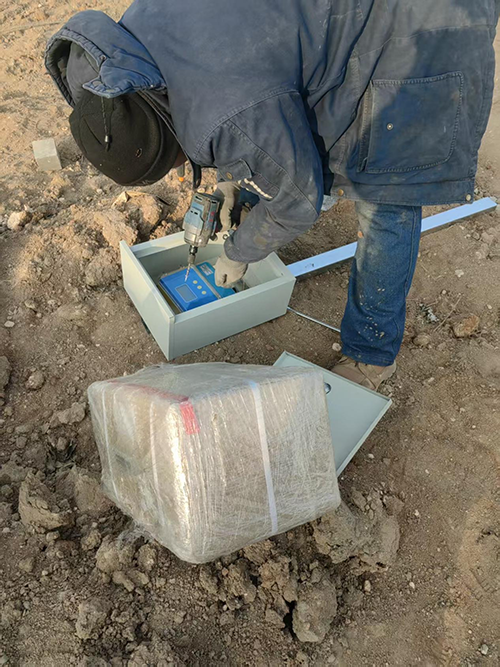
Daily operation and maintenance management
Inspect the device appearance, cable connections, and bracket stability monthly, and check whether the host display is normal or has alarm messages; clean deposits from the underwater probe quarterly to prevent scaling from affecting measurement.
Regularly compare data accuracy and calibrate the device against manual test results; perform a comprehensive calibration annually to ensure compliance with metrological standards.
For troubleshooting, first check power and signal cable connections; if the signal is lost or fluctuations are significant, systematically inspect for probe contamination, installation displacement, abnormal flow conditions, etc., using the device's self-diagnostic functions to locate faults.
Summary
The Doppler sewer flowmeter, with its high precision, intelligence, and adaptability to complex environments, has become an essential tool for modern urban drainage management. Installation must strictly follow specifications—from location selection, pipe preparation, sensor installation, electrical connection, to commissioning and maintenance—every step is crucial to ensure long-term stable operation and maximum benefit.
For more detailed manufacturer installation manuals or industry standards, you can further search for "Doppler sewer flowmeter installation specifications" or contact the manufacturer for technical support.
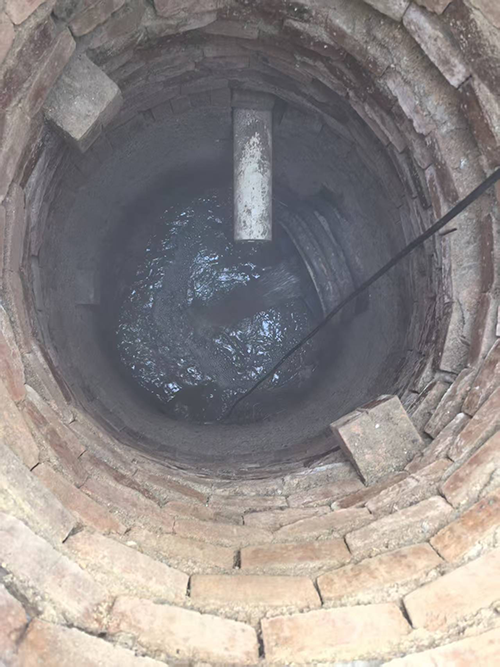
In this on-site installation, the water level was initially incorrect; after our engineer's on-site inspection, parameter adjustment, and optimization of the installation environment, it now fits the application perfectly.