
Application Case of Doppler Flowmeter in Urban Stormwater Pipe Network Monitoring [Dayu Electronics]
I. Project Background
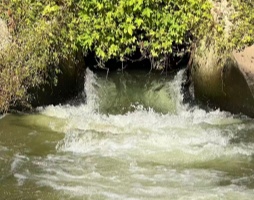
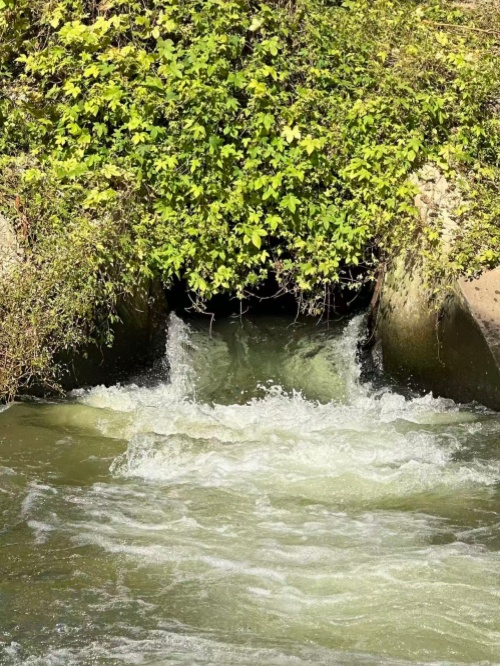
Urban stormwater pipe networks are the core infrastructure for flood control, stormwater-sewage separation, and sponge city construction. Traditional stormwater pipe network monitoring generally suffers from complex operating conditions, difficulty in measuring low flow velocities, significant interference from sand and impurities, inconvenient installation and maintenance, and delayed data. In the old urban area of a southern coastal city, the stormwater pipe network is aging, with diverse pipe diameters (DN300–DN1500), widespread cross-connections and silting, and heavy rainfall during flood season easily triggers localized waterlogging and overflow pollution. There is an urgent need for a stable, accurate, and easily deployable online flow monitoring solution to achieve real-time perception, intelligent warning, and refined dispatch of the stormwater pipe network.
Core Project Requirements:
1. Suitability for partial-full / full pipe, low flow velocity (starting from 0.03 m/s), high sand content, and high bubble conditions in stormwater;
2. Non-invasive installation, no pipe cutting, no interruption of discharge, reducing construction and safety risks;
3. Synchronous multi-parameter monitoring (flow velocity, flow rate, water level, temperature) with stable data upload;
4. Integration into smart water platform to support waterlogging warning, pipe network assessment, and stormwater-sewage separation regulation.
II. Equipment Selection
(I) Selection Principles
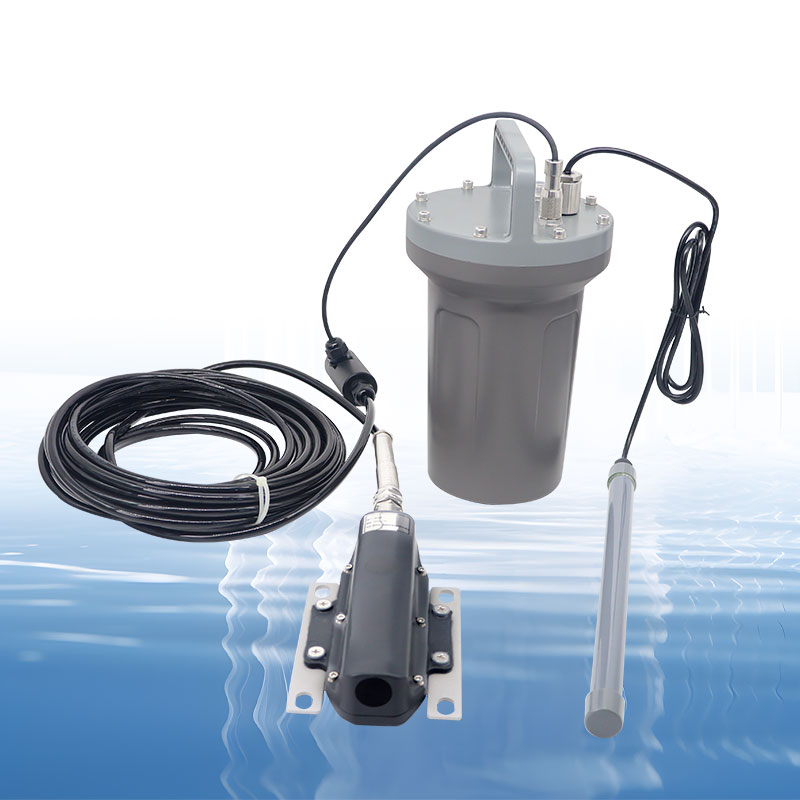
With condition adaptability, measurement stability, installation convenience, and long-term reliability as the core criteria, electromagnetic flowmeters, transit-time ultrasonic flowmeters, radar flowmeters, and Doppler ultrasonic flowmeters were compared, and the Dayu Electronics compact Doppler flowmeter was ultimately selected.
(II) Selection Basis and Equipment Advantages
1. Measurement principle suited to complex stormwater conditions
Based on the ultrasonic Doppler effect, flow velocity is calculated from echoes reflected by suspended particles and bubbles in the water, requiring no clean fluid and, unaffected by sediment or debris, perfectly matching the high turbidity and high impurity content of stormwater; flow velocity range 0.03–5 m/s, covering both dry-season low flow and flood-season high flow, with pipe fullness monitoring from 5% to 100%, eliminating the blind spot of partial-full measurement.
2. Non-invasive installation for cost reduction and efficiency improvement
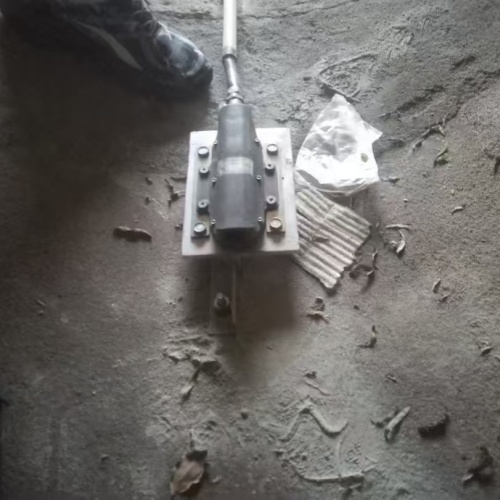
Clamp-on outside the pipe wall or non-contact installation in the manhole, requiring no pipe cutting or water shutdown during construction; single-point installation time ≤1 hour, reducing construction costs by approximately 60% compared with insertion-type devices, suitable for renovation of aging pipe networks and operations in dense urban areas.
3. High accuracy and stability
Flow velocity accuracy ±(V*1%+0.01) m/s (accuracy calibrated by hydrological verification center); water level accuracy ±0.03 m; IP68 protection, corrosion-resistant and wear-resistant design, durable in humid, corrosive, and silting environments, with an annual failure rate ≤3% under harsh conditions and long-term online rate ≥98%.
4. Intelligent integration capability
Supports RS485/Modbus-RTU, compatible with NB-IoT/4G/LoRa communication, and can be directly integrated into smart water platforms; features local data storage, breakpoint resume, and abnormal threshold alarms, meeting real-time flood control dispatch needs.
(III) Comparison Conclusion
The Dayu Electronics Doppler flowmeter solves the core shortcomings of traditional devices, namely "inaccurate measurement, inconvenient installation, and easy damage," and is the optimal choice for online stormwater pipe network monitoring.
III. Implementation Plan and Deployment
(I) Monitoring Point Layout
Sixteen key nodes were selected, including main road stormwater trunk lines, low-lying waterlogging-prone areas, pipe network confluences, and pump station inlets, covering mainstream pipe diameters such as DN500, DN800, DN1200, and DN1500, forming a citywide sensing network.
(II) Installation and Deployment Key Points
1. Points are located on straight pipe sections without sudden slope changes, away from silting and debris accumulation areas, with a distance of ≥5 times the pipe diameter from elbows/tees to ensure stable flow field;
2. For manhole operations, ventilate and test for toxic gases first, clean the pipe wall, apply couplant, secure the sensor, and calibrate the angle;
3. Equipped with waterproof RTU and solar power modules for stable operation in scenarios without external power;
4. Integrated into the municipal smart drainage platform, with collection frequencies set to once every 5 minutes during flood season and once every 30 minutes during dry season; exceeding thresholds automatically increases upload frequency and triggers warnings.
(III) System Architecture
Perception layer (Dayu Doppler flowmeter) → Transmission layer (NB-IoT/4G) → Platform layer (smart water platform) → Application layer (real-time monitoring, warning push, data analysis, operation and maintenance management).
IV. Application Results
(I) Stable and reliable monitoring performance
After 12 consecutive months of operation, the equipment online rate reached 98.7%; peak flow measurements during rainstorms were accurate, with no data loss or drift in the low-flow range, and data consistency and repeatability met municipal monitoring specifications.
(II) Significantly improved flood warning capability
During flood season, high water level and high load conditions in the pipe network can be identified 20–40 minutes in advance, with automatic warning push; since project implementation, response time for localized waterlogging points in the jurisdiction has been reduced by 40%, with no large-scale water accumulation or overflow incidents.
(III) Supporting refined pipe network management
1. Long-term flow data used for hydraulic model calibration of the pipe network, accurately identifying silting, bottlenecks, and cross-connection points, guiding desilting and renovation, with maintenance efficiency improved by 35%;
2. Quantifying total stormwater discharge and peaks, providing data support for sponge city effect evaluation and runoff pollution control;
3. Aiding in identifying stormwater-sewage cross-connections and illegal discharges, promoting stormwater-sewage separation rectification, with significant improvements in water environment governance.
(IV) Substantial reduction in operation and maintenance costs
No mechanical rotating parts, no clogging risk, only regular inspection and cleaning required; annual maintenance workload reduced by 70%, with lifecycle costs lower than traditional equipment.
V. Project Summary
(I) Core Value
1. Technical adaptability: Doppler principle + non-invasive installation, perfectly suited to complex stormwater pipe network conditions, solving the challenges of low flow velocity, high sand content, and partial-full measurement;
2. Engineering friendliness: fast construction, no disruption, easy maintenance, suitable for renovation of old urban areas and dense pipe networks;
3. Management empowerment: data-driven flood control dispatch, pipe network operation and maintenance, and water environment governance, achieving a shift from "passive emergency response" to "active prevention and control."
(II) Promotion Significance
The successful application of the Dayu Electronics Doppler flowmeter in stormwater pipe networks verifies the universality and reliability of this technology in municipal drainage, smart flood control, sponge city, and stormwater-sewage separation scenarios, and can be scaled and replicated in various urban stormwater pipe network monitoring projects, providing a mature solution for the intelligent upgrading of urban underground pipe networks.