
Dayu Electronics: Why Is a Higher Echo Amplitude in Ultrasonic Transducers "Always Better"?
In the design and selection of ultrasonic anemometers, the transducer serves as the core sensing component, and its parameters directly determine the performance foundation of the entire system. Among these, "echo amplitude" is a key but often oversimplified indicator. We are frequently asked by customers and partners: "In the parameters of ultrasonic transducers, is a higher echo amplitude always better?"
From the perspectives of circuit design, system reliability, and final measurement performance, a higher echo amplitude generally means better signal quality, which brings multiple significant advantages. In simple terms, the higher the echo amplitude, the simpler and more reliable the design of the backend processing circuit can be.
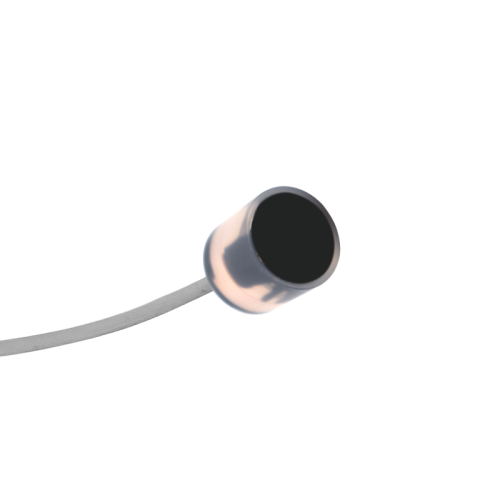
Echo amplitude refers to the strength of the acoustic signal received by the ultrasonic transducer after it is emitted from the opposite probe and travels across the measurement path. It directly reflects the residual energy of the ultrasonic wave after propagating over a fixed distance in air. A high-amplitude echo signal is the starting point for high-quality measurement.
In wind speed and direction measurement, the transducer emits ultrasonic waves that propagate through the air medium and are received by the opposite transducer (or reflected back and received by the same transducer). The strength of this received signal is the echo amplitude. It directly reflects the receiving sensitivity and signal conversion efficiency of the transducer.
Why is a higher echo amplitude better?
Higher Signal-to-Noise Ratio (SNR)
The signal-to-noise ratio is the ratio of signal strength to noise strength. A higher echo amplitude means a stronger effective signal, and with relatively fixed background noise (such as circuit thermal noise and environmental interference), the SNR becomes higher. A high SNR translates to more stable measurements and a lower bit error rate. Especially under harsh weather conditions (such as rain, snow, fog, or dust), a large echo amplitude ensures the signal can penetrate interference and accurately reach the receiving end.
Stronger Anti-Interference Capability
Industrial sites are often subject to various electromagnetic interferences. If the echo amplitude is small, the weak useful signal can easily be drowned out by interference noise, causing measurement data to fluctuate or even be lost. A large echo amplitude allows the effective signal to "stand out," making it easier for the system to extract real data from interference and ensuring the equipment's reliability in complex environments.
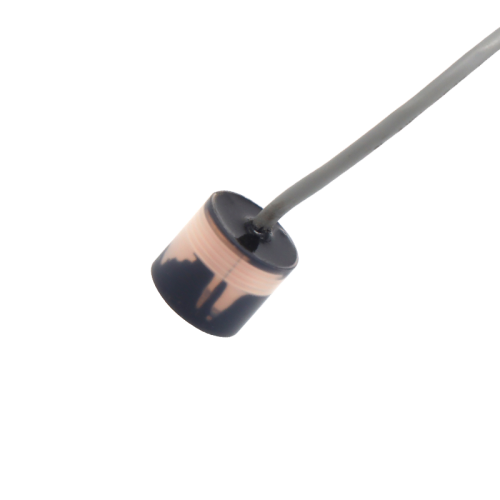
Simpler and More Economical Circuit Design
This is the core point mentioned by customers—"the circuit is easier to design." It is reflected in the following aspects:
Lower amplifier requirements: Large signals do not require high-gain pre-amplification, reducing circuit complexity and cost.
Clearer threshold judgment: The receiving circuit needs to set a threshold to determine whether a signal has arrived. A large echo amplitude keeps the effective signal well above the threshold, avoiding false triggering or missed triggering due to weak signals.
More relaxed power supply and routing requirements: There is no need for complex shielding and filtering for weak signals, allowing more flexibility in PCB layout and power supply design.
Larger Measurement Range and Design Margin
A large echo amplitude means that even with signal attenuation over distance, the far end can still maintain sufficient strength. This provides a larger design margin for the system, making it easier to extend measurement distance or cope with attenuation variations in different environments.
What Problems Can Insufficient Echo Amplitude Cause?
If the transducer's echo amplitude is too small, engineers must consider the following when designing the circuit:
1. Adding high-gain amplifiers, which also amplify noise
2. Implementing more complex filtering algorithms, increasing the MCU load
3. Increasing the transmit voltage, leading to higher power consumption and circuit stress
4. Reducing the measurement range, sacrificing product performance
5. Higher risk of data loss or anomalies in harsh environments
These issues will ultimately be reflected in the product's stability and user experience.
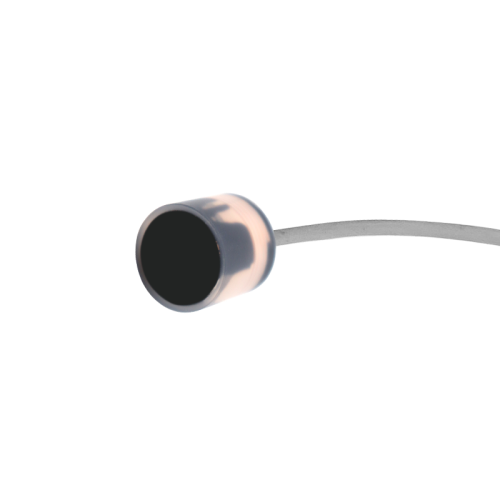
As a professional ultrasonic transducer manufacturer, Dayu Electronics always regards echo amplitude as a core quality control indicator in the design and production of transducers. We achieve this through:
1. Selection of high-performance piezoelectric ceramic materials
2. Optimization of acoustic matching layer design
3. Precision assembly process control
4. 100% factory sensitivity testing
We ensure that every transducer we ship has the highest possible echo amplitude, providing ample margin for your backend circuit design, and making your final product perform better and develop more smoothly. Although a higher echo amplitude is better, in actual selection, other parameters also need to be evaluated comprehensively, such as:
1. Center frequency: whether it matches the application requirements
2. Beam angle: whether it fits the measurement scenario
3. Dead zone size: whether it meets near-distance measurement needs
4. Weather resistance: whether it can withstand long-term outdoor use
Dayu Electronics' technical team can provide you with comprehensive selection support to help you find the most suitable transducer solution for your application.
If you have any questions about transducer selection or technical parameters, please feel free to contact our technical support team—we are always at your service!