
Hydrophone Operating Principle and Typical Application Condition Analysis [Dayu Electronics]
A hydrophone is the core sensor for underwater acoustic signal acquisition, primarily converting underwater acoustic energy into electrical energy. It is a key fundamental component for underwater detection, communication, monitoring, and engineering inspection. Its operating principle is centered on the piezoelectric effect, utilizing piezoelectric materials such as piezoelectric ceramics and PVDF as sensing elements. When an underwater acoustic wave acts on the sensing element, the material undergoes mechanical deformation and generates alternating charges. After pre-amplification, impedance transformation, and signal conditioning, a processable voltage signal is output, achieving precise conversion from acoustic signals to electrical signals. Hydrophones feature high sensitivity, stable frequency response, strong underwater sealing, and good anti-interference capability, enabling reliable acquisition of weak acoustic signals and meeting measurement requirements across various water depths and frequency bands.
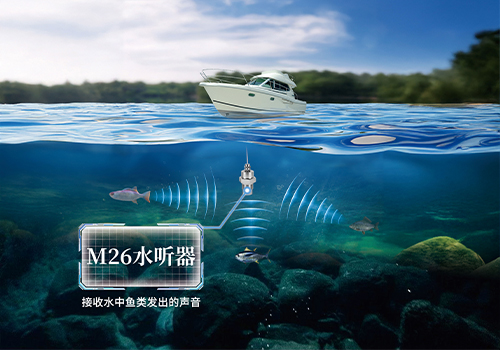
By structure and operating mode, hydrophones can be classified into vector hydrophones, scalar hydrophones, and array hydrophones, allowing flexible selection based on signal-to-noise ratio, detection range, positioning accuracy, and other specifications. Their operation strictly depends on underwater sealing and pressure-balanced design, with widespread use of waterproof potting and pressure-resistant housings to adapt to complex underwater environments such as shallow seas, deep seas, high-pressure, and low-noise conditions.
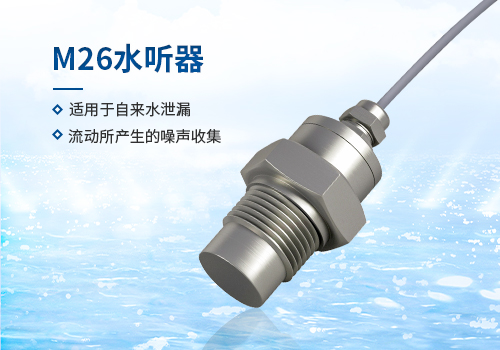
In terms of application conditions, hydrophones cover multiple fields such as marine monitoring, water conservancy engineering, industrial inspection, and security early warning. In the marine field, they are used for underwater acoustic communication, seabed topographic mapping, fish resource detection, tsunami and environmental noise monitoring; in water conservancy, they are used for leakage detection and structural safety monitoring of dams, embankments, and underwater pipelines; in the industrial field, they are used for fault diagnosis of underwater equipment, pipeline leak location, and ship noise detection; in the security field, they are used for underwater intrusion detection and port and waterway safety monitoring.
Compared to conventional sensors, hydrophones impose stringent requirements on underwater sealing, pressure resistance, corrosion resistance, and low-frequency response, enabling stable operation under complex conditions such as static hydrostatic water, dynamic flow fields, and high background noise.
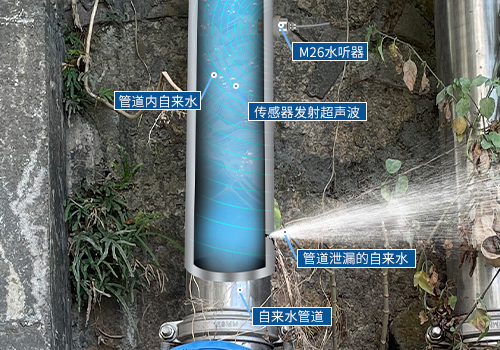
As a core device for underwater acoustic sensing, the hydrophone has become an indispensable key device for underwater information acquisition through its reliable acoustic-to-electrical conversion principle and broad suitability to various operating conditions, providing accurate and stable acoustic data support for underwater engineering, resource exploration, safety protection, and scientific research, holding irreplaceable engineering value in water-related fields.