
Fearless Against Strong Acids and Alkalis: The Core Anti-Corrosion Value of Externally Mounted Level Sensors [Dayu Electronics]
In process industries such as chemical, metallurgical, pharmaceutical, and environmental protection, level monitoring of strong acids, strong alkalis, and highly corrosive media has long faced pain points including easy corrosion of instruments, short service life, frequent maintenance, and high leakage risks. Externally mounted level sensors, centered on a non-invasive structure plus an anti-corrosion material system, fundamentally solve the corrosion challenge and become a stable and reliable monitoring solution under harsh operating conditions.
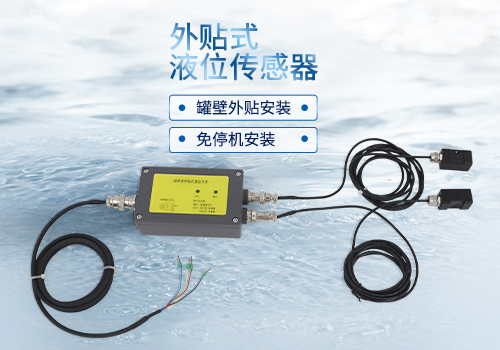
The core of its corrosion resistance lies in fully non-contact measurement. The sensor is installed on the outer wall of the container—no openings, no intrusion, no direct contact with the medium—completely isolating the contact path between the corrosive fluid inside the tank and the instrument body. Compared with contact-type instruments such as displacers, guided wave radar, and differential pressure transmitters, externally mounted types have no vulnerable parts like probes, diaphragms, or impulse lines, structurally eliminating failures caused by corrosion erosion, crystallization blockage, and medium contamination, significantly improving measurement stability and equipment service life.
At the material level, anti-corrosion performance is further enhanced. The sensor housing and coupling surface are standardly equipped with corrosion-resistant materials such as 316L stainless steel, PVDF, and PTFE, offering excellent chemical inertness and withstanding extreme environments like concentrated sulfuric acid, concentrated alkali, organic solvents, and salt spray. The housing is also treated with UV protection and anti-aging measures to adapt to long-term outdoor and complex field operation. The entire unit achieves IP67/IP68 protection ratings, withstanding on-site spray, humidity, and corrosive gas attack while maintaining electrical and structural integrity.
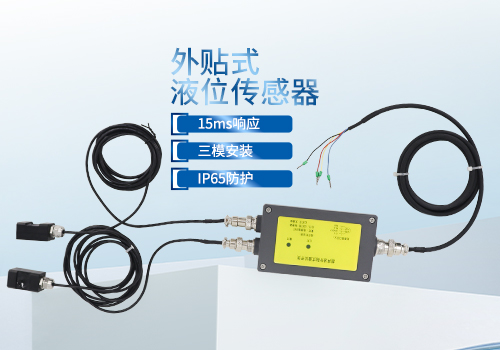
This technology is based on the ultrasonic external measurement principle, where sound waves penetrate the tank wall to complete level calculation, unaffected by significant fluctuations in medium concentration, viscosity, temperature, or pressure. It maintains high-precision output in sealed, high-pressure, highly toxic, and strongly corrosive storage tanks. Installation requires no shutdown, tank cleaning, or hot work, greatly reducing retrofit and maintenance costs while avoiding leakage and safety hazards caused by openings.
From the perspective of application effectiveness, externally mounted level sensors achieve long-term maintenance-free stable operation in scenarios such as acid/alkali storage tanks, reactors, electroplating baths, and hazardous waste treatment, significantly reducing instrument replacement frequency and downtime losses. Their corrosion resistance does not rely on surface treatment or partial protection but is a systematic solution combining structural design and material selection, offering safety, reliability, and economy.
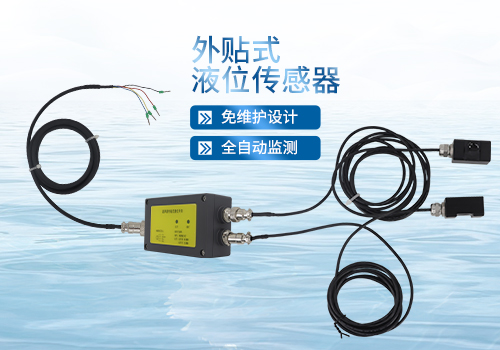
In summary, externally mounted level sensors, rooted in non-invasive design and supported by anti-corrosion materials, truly achieve fearlessness against strong acids and alkalis, providing a long-lasting, safe, and stable technical path for level monitoring of corrosive media—making them the preferred monitoring equipment under harsh industrial conditions.