
Doppler Flowmeter for Flow Measurement in Municipal Sewage Pipes [Dayu Electronics]
Doppler flowmeter application case study for flow measurement in municipal sewage pipes — using urban rainwater-sewage diversion renovation and flood monitoring as examples
I. Project Background: Key challenges and needs in municipal sewage pipe measurement
Municipal sewage systems serve dual functions of stormwater discharge and sewage collection; pipe flow monitoring is key to evaluating rainwater-sewage diversion effectiveness, flood early warning, and sewage treatment fee accounting, but the special working conditions pose multiple challenges to measurement technology:
1. Complex and variable working conditions: Storm-sewage mixed pipes contain sediment and floating debris (plastic bags, leaves), with flow velocities up to 3-5 m/s during flood season and as low as 0.03 m/s during dry season; traditional electromagnetic flowmeters are prone to clogging, and transit-time devices fail to produce signals at low flow velocities;
2. Wide range of pipe diameters + installation constraints: Municipal sewage pipes range from DN300 (community branch pipes) to DN3000 (main pipes), with some pipes buried deeper than 5m, and confined underground working spaces; cutting pipes for installation poses safety risks and affects traffic and residents' lives;
3. High long-term stability requirements: Pipes are mostly concrete or HDPE, with rough inner walls prone to scaling, and some areas contain corrosive sewage (e.g., food court areas with acidic/alkaline wastewater); equipment must withstand harsh environments including moisture, corrosion, and sediment abrasion;
4. Data integration needs: Integration with smart water management platforms, supporting simultaneous upload of flow, velocity, and water level parameters, to meet the demands of real-time flood warning (e.g., velocity exceeding 4m/s triggers overflow warning) and analysis of rainwater-sewage diversion flow ratios.
This case study selects two typical municipal scenarios: an urban old-town rainwater-sewage diversion renovation project (DN800 concrete sewage pipe, dry-season velocity 0.03-0.8 m/s) and an urban main-road flood monitoring project (DN1500 HDPE stormwater pipe, flood-season velocity 0.5-5 m/s), to verify the suitability and application performance of Doppler flowmeters.
II. Equipment Selection: Precision matching logic based on municipal scenarios
(I) Core selection principles
According to the "Technical Specification for Flow Measurement in Urban Drainage Pipes" (CJJ/T 200-2013), equipment selection for municipal scenarios must meet four key requirements: "anti-interference, wide range, and easy maintenance." Based on the conditions of the two scenarios, the selection was made as follows:
Selection DimensionRainwater-Sewage Diversion Renovation (DN800 Sewage Pipe)Flood Monitoring (DN1500 Stormwater Pipe)
Equipment TypeCompact Doppler flowmeterDual-channel Doppler flowmeter
Core ParametersVelocity range 0.03-5m/s, accuracy ±1.0%Velocity range 0.03-10m/s, accuracy ±1-3%
Installation MethodSensor installed at the bottom of a horizontal pipe section inside the manholeDual-channel sensors installed at the pipe bottom
Adaptation FeaturesAnti-scaling probe + anti-interference algorithmHeavy-duty housing + flow-velocity/water-level linkage algorithm
(II) Key selection decision points
1. Dual-channel / multi-channel is better than single-channel: The inner walls of sewage pipes are rough and the flow field is non-uniform; single-channel measurement errors exceed 8%. Dual-channel devices simultaneously sample velocities at different cross-sections, providing more accurate flow integration; stormwater pipes have turbulent flow fields during flood season, and four-channel devices cover the full cross-section velocity profile;
2. Domestic brands take precedence, with international brands as supplements: The rainwater-sewage diversion project involves a large number of pipes (over 120), and domestic brands cost about 12,000 RMB per unit (about 50% lower than imported devices), with faster local calibration services; flood monitoring is a critical public works project, so international brands were chosen to ensure stability under extreme weather conditions (heavy rain, high temperatures);
3. Must support low-velocity measurement: Dry-season sewage flow velocities often drop below 0.05 m/s, and traditional devices are prone to "zero drift." The selected devices use enhanced signal gain algorithms to output stable data even at 0.03 m/s, with errors ≤±1.5%.
III. Practical Application: Installation deployment and measurement performance
(I) Installation deployment specifications
1. Installation location selection: ① Rainwater-sewage diversion scenario: Choose a horizontal section at least 200DN away from septic tanks and discharge outlets, avoiding areas with abrupt slope changes, to prevent interference from fecal matter and debris; ② Flood monitoring scenario: Install upstream of the main stormwater trunk line, at least 300DN away from overflow outlets, ensuring an early warning response time ≥30 minutes;
2. Installation process (underground work): ① Ventilate and inspect underground gas levels in advance (toxic gas concentration ≤0.01%); ② Clean sediment and grease from the pipe's inner wall, and smooth the surface; ③ Apply high-temperature-resistant (-10°C to 60°C) coupling compound, secure the sensor, and calibrate the angle via wireless Bluetooth; ④ Connect a waterproof RTU module and configure LoRa/NB-IoT communication protocols (suitable for weak underground signals);
3. System integration: Connect to the city's smart water management platform, with data acquisition frequencies set to 1 minute per sample (flood monitoring) and 5 minutes per sample (rainwater-sewage diversion), with trigger conditions: ① flow velocity ≥4 m/s (flood overflow warning); ② dry-season sewage flow fluctuation exceeding ±30% (suspected illegal discharge warning); warning messages are pushed simultaneously to managers' mobile phone apps.
(II) Verification of application performance
1. Measurement accuracy comparison:
Rainwater-sewage diversion scenario: Compared with the standard volumetric method (calibrated at sewage pump station collection tanks), flow measurement error remained within ±1.3%, and at the dry-season low velocity of 0.03 m/s, the error was ≤±1.8%; the system accurately identified illegal discharges from 3 restaurant operators (nocturnal flow anomalies increased by 200%);
Flood monitoring scenario: Compared with combined ultrasonic water level gauges and flow velocity meters, during heavy rain (flow velocity 5.2 m/s), flow error was ≤±1.0%; in non-full-pipe conditions (water level at 60% of pipe diameter), measurements matched theoretical values by 96%, and the system successfully issued two overflow warnings (40 minutes in advance).
2. Operational stability:
Rainwater-sewage diversion equipment has run continuously for 18 months with no probe scaling (cleaning intervals extended to 6 months), and performance remained stable in acidic sewage (pH=3.8) near food courts;
Flood monitoring equipment has withstood 3 typhoon/rainstorm events without damage to the sensor housing; signal strength remained above 80%, and in offline mode, local caching supports 30 days of data storage, with automatic upload after reconnection.
3. Functional value realization:
Rainwater-sewage diversion renovation: Through flow data analysis, the diversion ratio of the pipe network was optimized; after renovation, sewage collection rate increased by 15%, and the balance of influent load at the sewage treatment plant improved by 20%;
Flood monitoring: Real-time understanding of main pipe flow changes allows scientific scheduling of pump stations; during the 2025 flood season, urban waterlogging duration was reduced by 40% compared with last year, saving about 8 million RMB in economic losses.
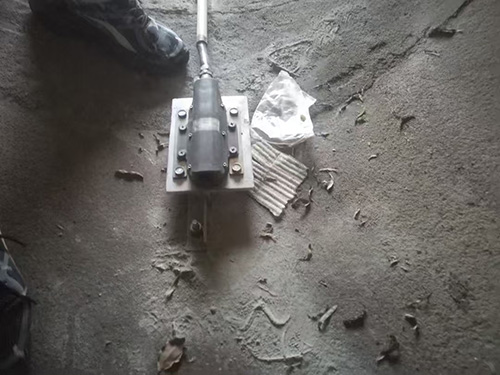
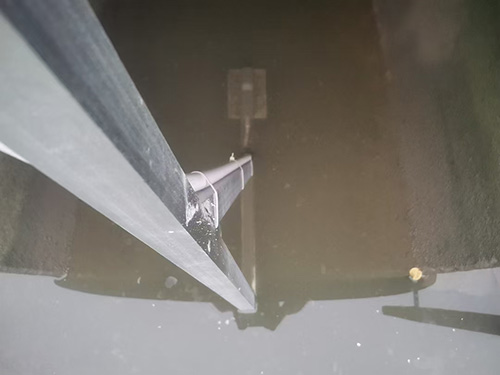
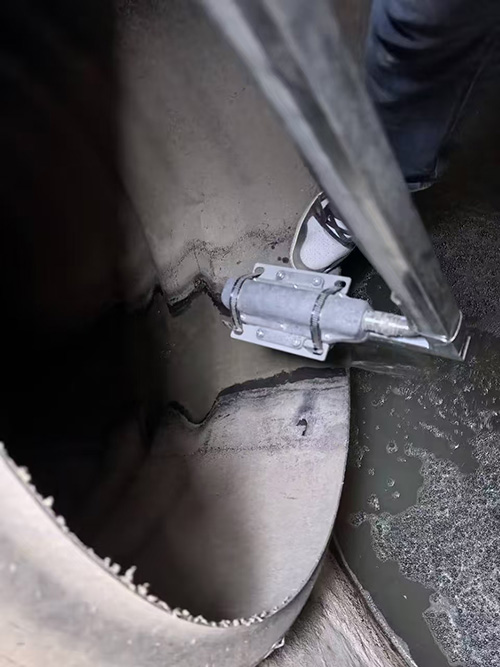
4. Field images:
IV. Application Summary: Advantages, Experience, and Promotion Scenarios
(I) Summary of key advantages
1. Excellent adaptability to municipal scenarios: Effectively solves issues such as storm-sewage mixing, low flow velocity, large pipe diameters, and underground installation, filling the gaps of traditional devices that often "cannot measure, are difficult to install, or are prone to damage";
2. Non-invasive installation reduces costs and improves efficiency: No shutdown or pipe cutting required; installation cost per pipe is 60% lower than insertion-type devices, and construction time is shortened by 70%, making it especially suitable for renovation of old urban pipe networks;
3. Wide measurement range + excellent anti-interference capability: Maintains high accuracy across a flow velocity range of 0.03-5 m/s, withstands sediment, grease, and corrosive media, with an annual failure rate ≤3% under harsh conditions;
4. Significant data integration value: Supports simultaneous upload of flow, water level, and velocity parameters, providing accurate data support for smart water management, and aiding flood warning, illegal discharge monitoring, and process optimization.
(II) Key application experience
1. Survey pipe conditions before installation: Municipal pipes may have issues such as scaling, deformation, or leaks; it is essential to inspect the pipes in advance using pipe inspection robots to ensure the installation point has a smooth inner wall without severe corrosion;
2. Prioritize low-power IoT communication protocols: Underground signal strength is weak; LoRa/NB-IoT protocols are more stable than 4G, with lower power consumption, allowing device battery life to reach 1 year (in scenarios without external power);
3. Regular maintenance should focus on probe cleaning and calibration: It is recommended to clean the sensor probe every 6 months (remove sediment and grease) and calibrate annually using a standard flow channel to ensure measurement accuracy; in rainwater-sewage diversion scenarios, check the coupling compound for aging and replace it promptly.
(III) Scenarios for promotion
Based on case study verification, Doppler flowmeters can be widely applied in the municipal sector for: ① urban rainwater-sewage diversion renovation projects (monitoring of sewage branch and main pipes); ② municipal flood prevention and drainage monitoring (flow monitoring of stormwater trunk lines and pump station inlets); ③ flow measurement at sewage treatment plant inlets and outlets; ④ supervision of industrial park drainage networks (illegal discharge monitoring); ⑤ renovation of old urban pipe networks (where non-invasive installation is required). With the advancement of sponge city construction, its integration with rain gauges and water level gauges will further expand its value in scenarios such as initial rainwater retention and pipe network capacity assessment.