
Field Installation and Precautions for Ultrasonic Transit-Time Flowmeters in High-Sediment Locations [Dayu Electronics]
Fuzhou Dayu ElectronicsUltrasonic Transit-Time Flowmeter
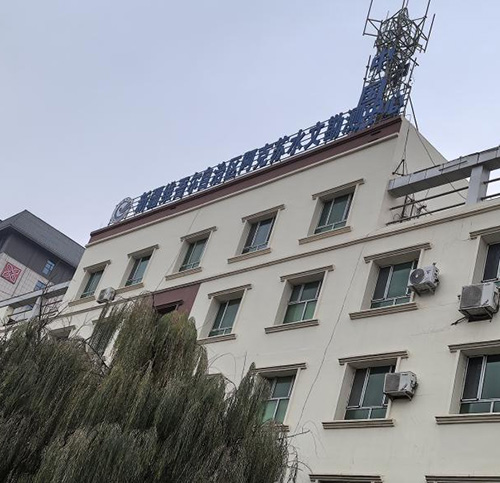
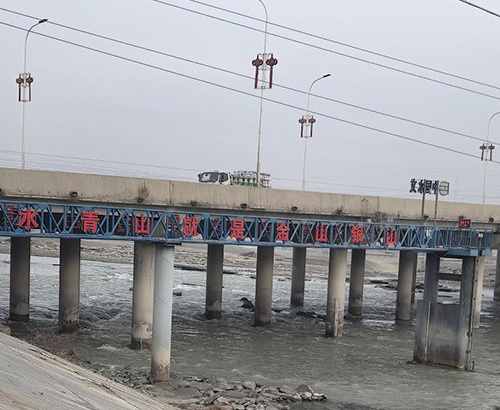
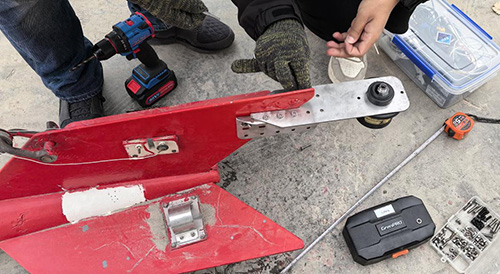
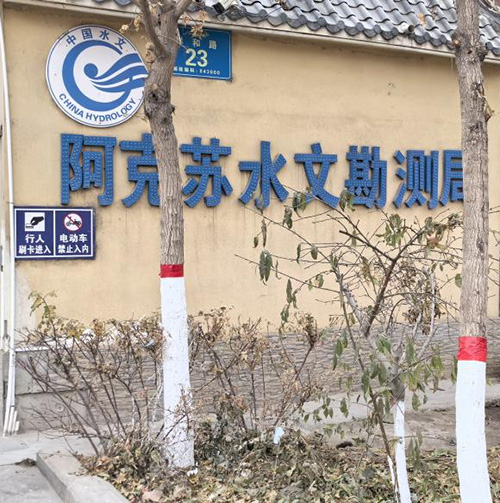
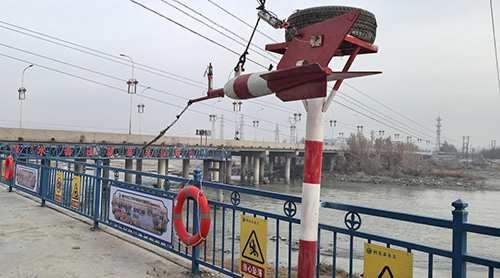
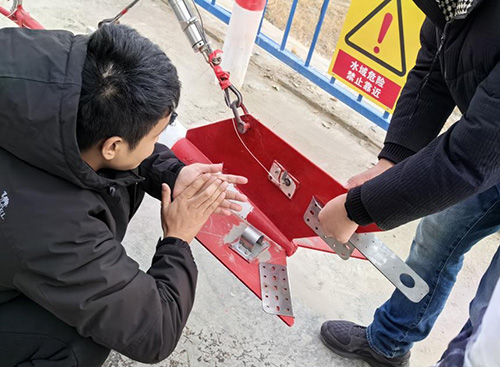
Field installation and precautions in high-sediment locations – case study of on-site installation and commissioning in Aksu, Xinjiang.
Below, I have organized the content according to the structure of “Specifications—Installation—Operation—Special Reminders for High Sediment Concentration” for your on-site reference.
1. First, the key conclusions (remember these points first)
The transit-time current meter is designed for specific sediment concentration levels: the industry standard SL/T 186-1997 “Ultrasonic Current Meter” specifies applicable sediment concentrations of 3, 5, 10 kg/m³, and requires that “the acoustic path should be free of severe air bubbles, and the water should be free of aquatic weeds and large suspended solids.”
During equipment selection, you must check the “maximum applicable sediment concentration”: different manufacturers and different transducer frequencies have different upper limits. If the limit is exceeded, you should consider alternative solutions or other flow measurement methods (such as Doppler, weirs and flumes, hydraulic structures, etc.).
The installation cross-section should avoid areas of rapid siltation/erosion and recirculation zones: on rivers with high sediment loads, cross-section changes and floating debris are often the main causes of transit-time method failure.
Comparative testing and periodic calibration are essential: before commissioning online flow measurement equipment, it must be compared against traditional methods (moving-boat ADCP, rotating-element current meters, etc.) for at least 30 measurements, and the error and uncertainty must meet the requirements of the technical guideline. Under high-sediment conditions, more frequent re-verification is recommended.
During operation, pay close attention to “signal quality indicators” and “drift”: if you notice degraded acoustic reception quality or large fluctuations in transit time, the first things to consider are dirty transducers, blocked acoustic paths, or a sudden increase in sediment concentration causing scattering/attenuation.
The following sections elaborate on these points.
2. Overall Process (from selection to operation and maintenance)
Reference
3. Key Specifications and Sediment Concentration Requirements (applicable standards)
1. Industry Standard SL/T 186-1997 “Ultrasonic Current Meter” (specifically for transit-time method)
Applicable scope: current meters that use the “ultrasonic acoustic pulse transit-time method” for velocity measurement, used for flow measurement in rivers, channels, etc.
Applicable ambient sediment concentration: the standard provides classification levels of 3, 5, 10 kg/m³ (different models can be selected as needed).
Other operating conditions:
The acoustic path should be free of severe air bubbles;
The water should be free of aquatic weeds and large suspended solids.
Accuracy:
When flow velocity > 0.5 m/s, the relative error should not exceed ±3%;
When flow velocity ≤ 0.5 m/s, the absolute error should not exceed ±0.03 m/s (at a confidence level ≥95%).
→ Practical implications:
If your cross-section has a high sediment concentration year-round, often exceeding 5–10 kg/m³, you should proceed with caution. Before selection, confirm the “maximum applicable sediment concentration” with the manufacturer, and if necessary, request test data or case studies from the manufacturer under the corresponding sediment concentration conditions.
4. Operating Guidelines for High-Sediment Locations
1. Feasibility Assessment (whether the transit-time method can be used)
It is recommended to perform the following self-check:
Step 1: Collect historical or flood-season maximum sediment concentrations, their durations, and frequencies.
Step 2: Verify with the equipment manual or manufacturer:
What is the maximum applicable sediment concentration stated in the manual?
What are the measurement error and effective distance at that sediment concentration?
Step 3: Compare with the 3/5/10 kg/m³ levels specified in SL/T 186-1997; if the sediment concentration at your cross-section is ≤5 kg/m³ most of the time, and occasionally reaches 10 kg/m³ for short periods, the transit-time method can be considered, but comparative testing and monitoring should be strengthened.
If the concentration frequently exceeds 10 kg/m³, the reliability and maintenance costs of the transit-time method increase significantly. Consider:
Switching to methods less sensitive to sediment (such as Doppler, weirs and flumes, hydraulic structures), orusing the transit-time method only during periods/segments with lower sediment concentration, and using other methods for the rest.
2. Ministry of Water Resources “Technical Guidelines for Water Quantity Monitoring at Provincial Boundary Sections (Trial)” (Ban Shui Wen [2020] No. 134)
Types of online flow measurement equipment: recommended types include fixed-point acoustic Doppler profilers, radar current meters, acoustic transit-time current meters, and imaging velocimeters for online flow measurement; water level–discharge relationships, slope-area method, and hydraulic structure methods can also be used for flow calculation.
Comparative testing and calibration requirements:
Comparative testing before commissioning: use moving-boat ADCP, rotating-element current meters, etc., for comparison;
Single discharge measurement random uncertainty ≤15%, systematic error –3.5% to +2%;
Cumulative comparative measurements should not be less than 30 times.
→ Practical implications:
Whether the transit-time method can be used in high-sediment locations depends not only on the sediment concentration limits in the standards, but also on verifying through on-site comparative measurements whether the uncertainty and systematic error still meet requirements at that sediment concentration level.
3. Common Requirements in Local Technical Regulations/Standards
Cross-section requirements: straight, stable, free of large vortices and recirculation, minimal scour and siltation, and a stable water level–area relationship.
For open channels, monitoring points should be selected in sections with lower sediment concentration—this is especially important in high-sediment projects.
If installed via flanges, the flange inner diameter should be large enough (generally recommended to be greater than 120 mm), and the connecting pipe length should be as short as possible.
Key conclusions to remember:
1. The transit-time current meter is designed for specific sediment concentration levels: the industry standard SL/T 186-1997 “Ultrasonic Current Meter” specifies applicable sediment concentrations of 3, 5, 10 kg/m³, and requires that “the acoustic path should be free of severe air bubbles, and the water should be free of aquatic weeds and large suspended solids.”
2. During equipment selection, you must check the “maximum applicable sediment concentration”: different manufacturers and different transducer frequencies have different upper limits. If the limit is exceeded, you should consider alternative solutions or other flow measurement methods (such as Doppler, weirs and flumes, hydraulic structures, etc.).
3. The installation cross-section should avoid areas of rapid siltation/erosion and recirculation zones: on rivers with high sediment loads, cross-section changes and floating debris are often the main causes of transit-time method failure.
4. Comparative testing and periodic calibration are essential: before commissioning online flow measurement equipment, it must be compared against traditional methods (moving-boat ADCP, rotating-element current meters, etc.) for at least 30 measurements, and the error and uncertainty must meet the requirements of the technical guideline. Under high-sediment conditions, more frequent re-verification is recommended.
5. During operation, pay close attention to “signal quality indicators” and “drift”: if you notice degraded acoustic reception quality or large fluctuations in transit time, the first things to consider are dirty transducers, blocked acoustic paths, or a sudden increase in sediment concentration causing scattering/attenuation.