
Core Installation Requirements for Ultrasonic Transformer Oil Conservator Level Transmitters [Dayu Electronics]
Ultrasonic Transformer Oil Conservator Level Transmitter – Key Installation Considerations
The installation quality of ultrasonic transformer oil conservator level transmitters directly determines measurement accuracy, equipment lifespan, and operational safety. Strict adherence to core principles of working condition adaptation, anti-interference, and precise fixation is required, with focus on the following key points.
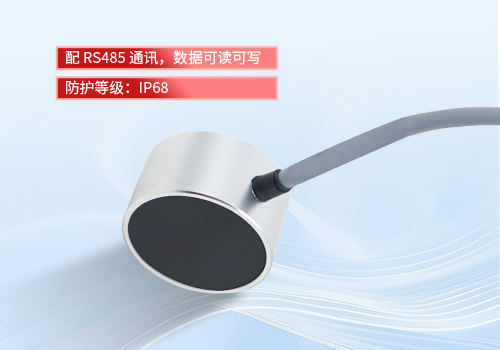
Before installation, three core preparations must be completed: first, verify equipment parameters to ensure the level transmitter's range and explosion-proof rating match the medium temperature and pressure conditions of the transformer oil conservator, and check that the probe has no scratches and the cable is undamaged; second, confirm site conditions by removing debris inside the oil conservator that may block signals, keeping away from strong electromagnetic interference sources such as frequency converters and high-power motors, and reserving sufficient installation and operation space; third, prepare special tools including a spirit level, multimeter, and explosion-proof wrench, and implement protective measures such as safety belts and helmets for high-altitude work.
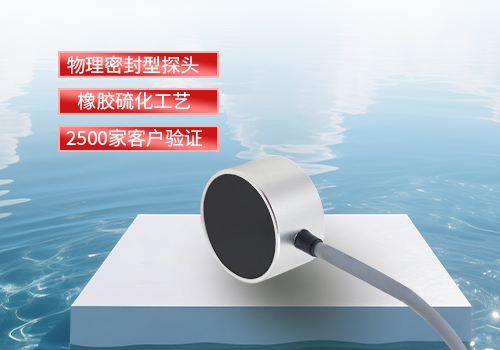
Installation position selection is the core of accuracy assurance: the probe must be vertically aligned with the liquid surface of the oil conservator, with an angle deviation not exceeding 3° to avoid acoustic reflection offset; the distance from the conservator wall should be no more than 1 cm, and it should be kept away from disturbance sources such as feed inlets and stirring devices to prevent liquid surface fluctuations or foam from interfering with signal propagation; also ensure that the minimum liquid level is within the measurement range to avoid exceeding limits. For circular oil conservators, installation at the center of the tank bottom is preferred. The probe surface must be kept clean and direct hand contact is prohibited. In environments with heavy dust or condensation, a protective cover should be installed without blocking ultrasonic beam propagation.
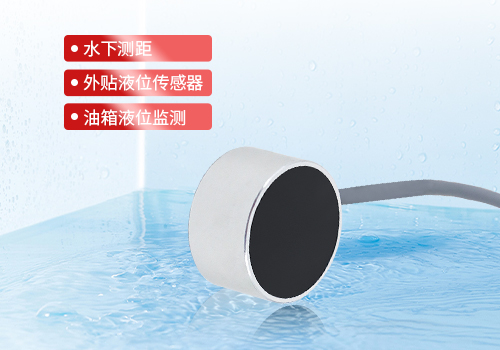
Electrical wiring must be performed in a standardized manner: strictly disconnect the power supply during wiring, verify the wiring diagram to ensure the positive and negative terminals are not reversed, and run the signal cable and power cable separately with a spacing of no less than 30 cm to avoid electromagnetic interference; the shielded cable must be properly grounded, and the junction box sealing joint must be firmly installed to meet waterproof and dustproof standards. After wiring, use a multimeter to check the power supply voltage to ensure it is within the equipment's allowable range (e.g., DC24V±10%).
After installation, calibration and commissioning must be completed: perform empty tank and full-scale calibration to correct measurement errors to within ±0.5%FS; use software to suppress false echoes from fixed obstacles, and adjust filtering parameters based on liquid surface fluctuation conditions; continuously monitor for 24-72 hours to confirm stable level data, proper alarm functionality, and no data jumps or signal loss, ensuring the equipment is suitable for long-term operation of the transformer oil conservator.