
Doppler Flow Meters Are Not Universal—Only the Right Fit Achieves Excellence [Dayu Electronic Technology]
How to select an ultrasonic sewer flow meter?
When improving drainage system efficiency and achieving precise stormwater and sewage control become essential needs for urban management, choosing a reliable ultrasonic sewer flow meter is the critical first step. With a wide array of products on the market, how can you avoid "data failure" caused by improper selection?
Step 1 in selection: Survey the site and clarify core conditions
Flow meters are not universal—only the right fit achieves excellence. First, be sure to clarify three basic site factors:
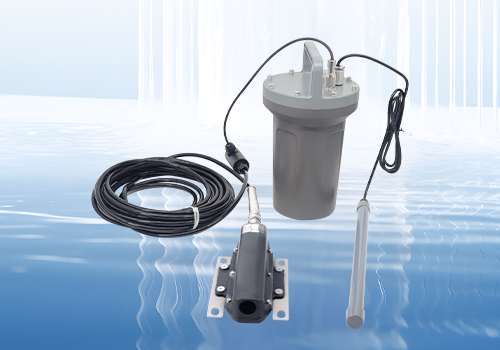
1. What is the channel type? Is it a circular pipe or a rectangular/trapezoidal open channel? This directly determines the measurement principle and installation method. For pipes, you need to know the material, inner diameter, and wall thickness accurately; for open channels, you need to define the cross-section dimensions and type (e.g., whether standard weirs or flumes are present).
2. What are the medium and operating conditions? Assess whether the flow is stable and whether the sewage contains large amounts of grease, sediment, or bubbles. These factors can affect the transmission and reception of ultrasonic signals.
3. Are there restrictions on installation conditions? Check whether the installation point has sufficient straight pipe length (upstream ≥10D, downstream ≥5D is recommended), whether the space is convenient for construction and subsequent maintenance, and whether the power supply is accessible.
Step 2 in selection: Match requirements and lock key performance
Different management objectives demand different performance priorities:
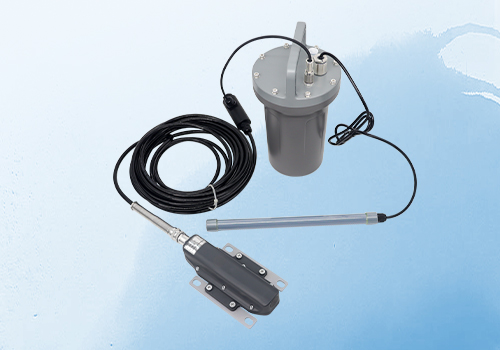
? If the core need is "precise monitoring and metering": Prioritize the product's comprehensive measurement accuracy (e.g., within ±1%) and long-term stability. Choose models with powerful signal processing algorithms that can automatically compensate for temperature and bubble interference, ensuring that the data can serve as a valid basis.
? If the core need is "smart monitoring and early warning": Remote data transmission is of paramount importance. Choose models that support wireless communications such as 4G/NB-IoT and can easily integrate with your existing monitoring platform, enabling remote real-time monitoring, over-limit alarms, and big data analysis.
? If the core need is "long-term durability and low maintenance": Focus on the sensor's protection rating (recommended IP68 or higher) and material corrosion resistance. At the same time, selecting equipment with a user-friendly interface and self-diagnostic functions can significantly reduce later maintenance costs.
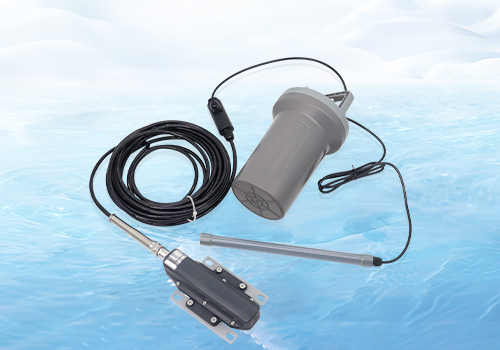
Step 3 in selection: Review details to ensure long-term value
After meeting basic functions, these details will determine the long-term user experience:
? Power supply and battery life: Based on site conditions, choose the best option among municipal power, solar power, or long-life battery power.
? Certification and compliance: Check whether the product has metrological certification from authoritative bodies and whether it complies with industry or local standards.
? Service and support: Can the supplier provide professional installation guidance, on-site calibration services, and timely technical support? This directly affects the final outcome of the project.
Fuzhou Dayu Electronic Technology Co., Ltd. has been specializing in ultrasonic instruments for 17 years, offering both non-contact open-channel flow meters and contact ultrasonic Doppler flow meters. We have also specially designed a flow meter that can measure at low water levels for sewer low-water scenarios. If you are also struggling with the selection of sewer flow meters or urban pipe network flow meters, please feel free to contact us for 1-on-1 selection guidance.