
Dayu Ultrasonic Level Meter Installation Mistakes: How Many Have You Made?
Hospital Sewage Treatment Level Monitoring
For routine sewage tank level monitoring, the accuracy requirement for sewage level measurement is not high; centimeter-level accuracy is sufficient for normal operation. Through the level monitoring of the sewage tank, high and low alarm points are set on the level transmitter. When the level reaches a high or low alarm value, a switch signal is sent to the pump, which then performs the drainage of the sewage inspection well, achieving automated monitoring and management of the sewage well.
During the installation of ultrasonic level meters in sewage inspection wells, the key issues to note are: avoiding concrete sidewalls, ladders inside the well, and other internal obstructions such as pipes. What specific clearance distances are required? These must be calculated based on the installation height and the emission angle of the ultrasonic level meter. Below are the radiation diameters calculated for a 10-meter range ultrasonic level meter at different installation heights (based on a 40 kHz ultrasonic transducer with a half-power angle of 11°):
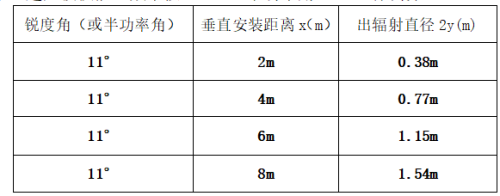
Next, let's take a look at some actual measurement sites:
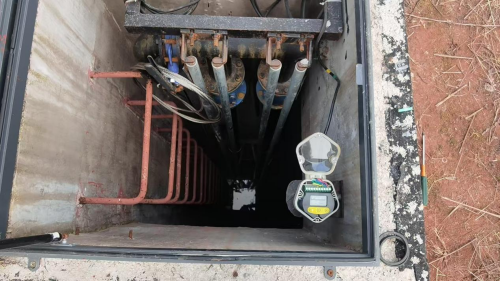
Figure 1: Ultrasonic level meter installed flush against the wall
Analyzing the installation according to requirements, the issue in Figure 1 is: the ultrasonic level meter is mounted flush against the wall, causing some sound waves to hit the concrete wall and be reflected back. At this point, the reflection signal from the concrete wall is the strongest, while the water level at the bottom is low, resulting in a weak reflection signal. Therefore, the ultrasonic level meter will judge the liquid level based on the signal from the concrete wall.
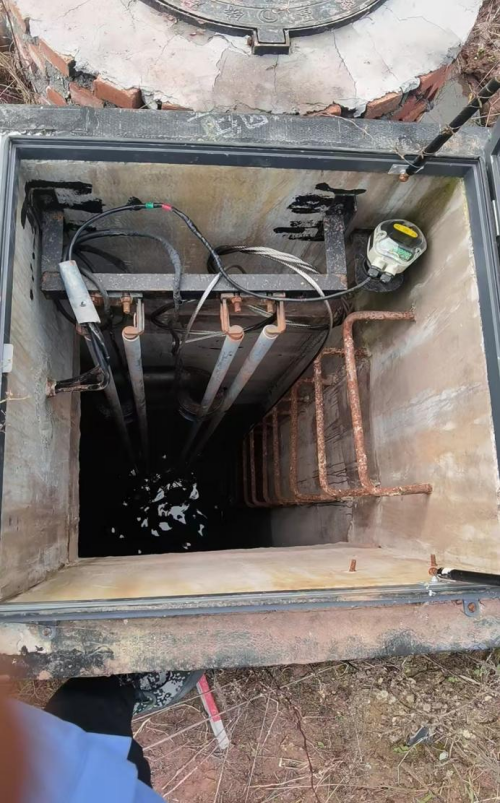
Figure 2: Ultrasonic level meter installed flush against the wall
Observing the installation in Figure 2: the ultrasonic level meter is installed in the upper right corner, mounted flush against the wall, with obstacles such as a ladder, cables, and pipes directly below. When the level meter emits sound wave signals, the strongest signal will come from the ladder, and the level meter will judge the level value based on the measured height of the ladder.
Installation rectification requirements:
1. Based on the installation height of the ultrasonic level meter, we know the distance from the sensor emission surface to the bottom of the tank. Using the emission angle of the 40 kHz ultrasonic transducer, we can calculate the obstacle-free space requirement for the minimum water level. After adjusting the installation position as much as possible, observe the echo signal of the level meter. If the obstacle signal is weak, it can be shielded through the level meter's settings.
2. If the installation height is high, adjust the level meter to the center of the obstacle-free area. If the interference signal cannot be shielded through instrument settings, a DN200 guide pipe can be added to isolate the interference signal. (This rectification method requires later observation; for sewage, PVC pipe interiors may accumulate dirt, and if data measurement issues arise, on-site flushing and cleaning will be needed.)
3. Since the level meter is installed underground, the cover is usually closed daily. The protection rating of the integrated level meter is IP66. After commissioning and confirming no abnormalities, tighten the top cover of the level meter and wrap the cable entry with waterproof tape. This prevents moisture from affecting the main board during long-term use, which could lead to rusted solder joints and damage to components, resulting in product failure.