
Non-Contact Precision Measurement: Industrial Applications of Ultrasonic Level Meters [Dayu Electronics]
In industrial production level measurement scenarios, the demand for non-contact measurement continues to rise. Ultrasonic level meters have become the preferred equipment in many scenarios due to their strong adaptability and stable measurement performance.
Ultrasonic level meter operates on the core principle of emitting ultrasonic pulses, receiving echoes reflected from the liquid surface, and calculating the liquid level height based on the time difference of sound wave propagation. The entire process requires no contact with the measured medium, fundamentally avoiding equipment damage caused by medium corrosion, adhesion, and abrasion, as well as the risk of medium contamination that contact-based measurement may introduce.
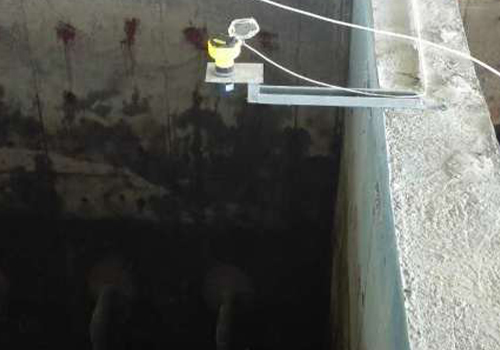
In industrial applications, its advantages are first reflected in adaptability to complex medium scenarios: in corrosive acid/alkali storage tanks in the chemical industry, viscous slurry storage tanks in the food industry, and high-temperature molten slag transfer bins in the metallurgical industry, contact-type level meters are prone to probe corrosion and adhesion-induced failure, whereas ultrasonic level meters can be installed non-contactly on the outer wall or top of the tank, adapting to media with varying temperatures, corrosiveness, and viscosity.
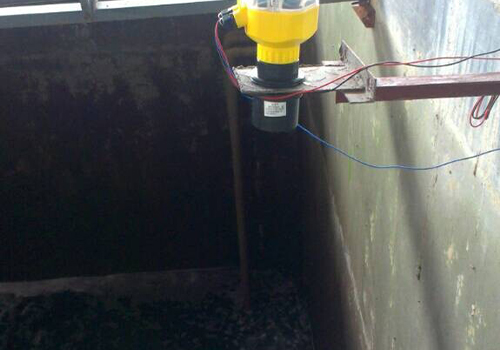
Second is measurement flexibility in large-range scenarios: in large-volume, open-type level measurement scenarios such as municipal wastewater tanks and circulating water reservoirs at power plants, ultrasonic level meters can cover measurement ranges from 0.1 meters to dozens of meters. The transmit power can also be adjusted to suit different liquid surface reflection characteristics, while supporting remote data transmission to meet the remote monitoring requirements of the Industrial Internet of Things.
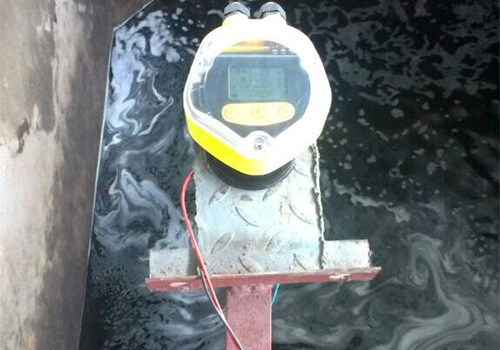
At the same time, its application must follow adaptation principles: scenarios with severe liquid surface fluctuation or excessive foam coverage should be avoided, as such conditions interfere with ultrasonic reflection signals. The installation position must avoid obstructions such as agitators and baffles inside the tank to ensure an unobstructed sound wave propagation path. In low-temperature, high-humidity environments, models with temperature compensation functionality should be selected to offset the influence of ambient temperature on sound wave propagation speed.
In industrial production level control, the non-contact measurement characteristics of ultrasonic level meters solve numerous pain points in scenarios that contact-type equipment cannot cover. The core of their application lies in selecting appropriate equipment parameters and installation positions based on operating conditions, thereby ensuring measurement accuracy and stability.