
Application Principles and Practice of Hydrophones in Pipeline Leak Monitoring [Dayu Electronics]
Hydrophones, as highly sensitive acoustic detection devices, have become core equipment for pipeline leak monitoring due to their precise ability to capture weak underwater acoustic waves. Based on acoustic propagation principles, they identify characteristic sound waves generated by leak points to locate and detect leaks in underground or concealed pipelines, providing scientific support for pipeline maintenance in municipal water supply, industrial fluid transportation, and other fields.
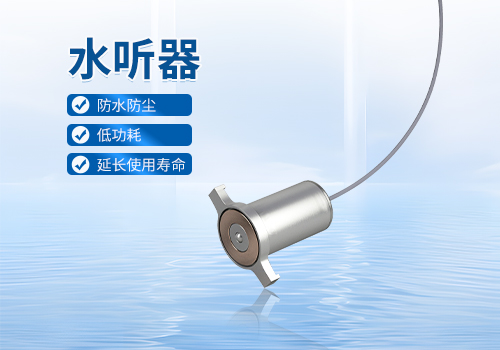
When a pipeline leaks, water escapes from the damaged area under pressure, colliding and rubbing against the pipe wall and surrounding media, generating characteristic sound waves in the frequency range of 20Hz-50kHz. These sound waves propagate three-dimensionally along the pipe wall, water body, and surrounding soil. The hydrophone converts acoustic vibrations into electrical signals through sensitive elements such as piezoelectric ceramics. After amplification, filtering, and other processing, key features such as frequency and amplitude of the leak sound waves are extracted and compared with acoustic baseline data under normal operating conditions to accurately determine whether a leak exists.
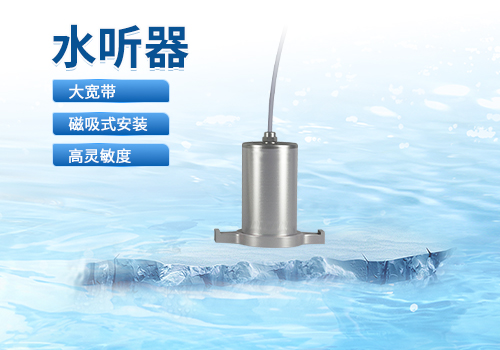
In practical applications, hydrophone monitoring modes fall into two core types. The first is fixed-point monitoring: hydrophones are installed at nodes such as pipeline valves or water meters, or attached to the outer pipe wall with coupling agents, enabling continuous monitoring of specific areas. Their high sensitivity can capture weak sound waves from minor leaks, effectively identifying leaks as small as 0.1L/min, and they are suitable for metal and plastic pipes of various diameters, from DN100 to DN2000. The second is mobile inspection: personnel carry portable hydrophones and probe point by point along the pipeline route, comparing signal strength and characteristics at different locations and using triangulation to pinpoint the leak, achieving location accuracy of ±1m and greatly improving leak detection efficiency.
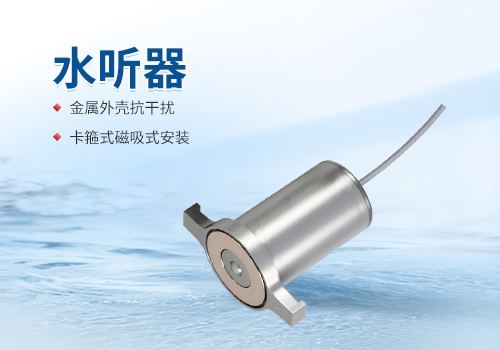
Hydrophone monitoring technology offers significant advantages in scenario adaptability. For deep-buried pipelines, concealed pipelines in tunnels, and other scenarios that are difficult for traditional detection methods to access, acoustic propagation is unaffected by obstructions and can penetrate soil, concrete, and other media for effective detection. In complex pipe network environments, the equipment features anti-interference algorithms that filter out environmental noise such as pipe water flow sounds and nearby traffic vibrations, accurately extracting leak characteristic signals. Additionally, some smart hydrophones can connect to IoT platforms for real-time data transmission and analysis, supporting automatic leak alarms and enabling rapid response and handling by maintenance personnel.
This technology is widely used in municipal water supply networks, industrial circulating water pipelines, oil and gas transmission pipelines, and other fields. By combining routine hydrophone monitoring with regular inspections, minor pipeline leaks can be detected promptly, reducing water waste and economic losses while avoiding secondary disasters such as road collapse and soil contamination caused by leaks, thereby ensuring the safe and stable operation of pipeline systems.