
Ultrasonic Anemometer: A Precision Wind Field "Stethoscope" for Multiple Scenarios [Dayu Electronics]
Ultrasonic anemometer has become a core monitoring device in meteorology, energy, transportation, environmental protection, and other fields thanks to its no-mechanical-wear design, high response speed, and high precision. It measures the time difference or phase difference of ultrasonic waves propagating through air to calculate wind speed and direction in real time, providing essential data support across industries.
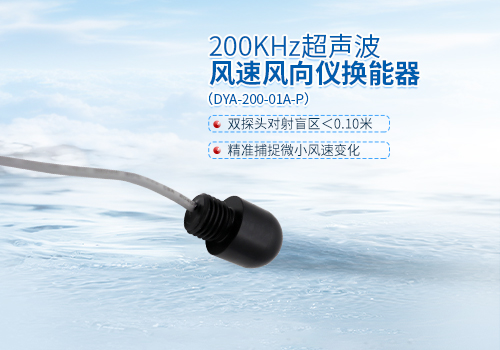
In meteorology and disaster warning, the ultrasonic anemometer acts as the "eyes and ears" of extreme weather prediction. During disastrous weather such as typhoons and tornadoes, it can capture wind speed variations at the 0.1 m/s level, feeding high-frequency data into numerical weather prediction models. For instance, coastal monitoring networks can issue warnings six hours ahead for winds exceeding Force 17, affording vital lead time for evacuations; in geological hazard response, when wind speed exceeds 10 m/s and cumulative rainfall surpasses 100 mm, the system can trigger landslide warnings, markedly reducing disaster risk.
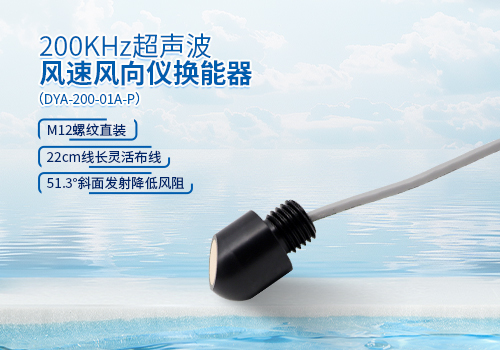
In the energy sector, its applications span the entire lifecycle of wind farms. During the layout and design phase, three-dimensional ultrasonic anemometers optimize turbine placement by measuring vertical and horizontal wind components, boosting power generation efficiency; in operations and maintenance, real-time turbulence intensity monitoring enables dynamic adjustment of blade angles, increasing electricity output by more than 15%; combined with AI models for wind speed prediction, power forecast errors can be reduced to below 8%, offering reliable inputs for grid dispatch. Additionally, photovoltaic plants integrate wind speed data to adjust tracking bracket tilt angles, further improving clean energy utilization.
In transportation and engineering safety, its role is equally vital. Airports deploy three-dimensional ultrasonic anemometers to monitor wind variations at different altitudes in real time, preventing flight accidents caused by wind shear; amusement parks use this technology to monitor wind conditions around high-altitude rides, automatically suspending Ferris wheels, roller coasters, and similar equipment when winds exceed 15 m/s; construction sites employ wind speed warning systems to halt tower cranes and curtain-wall cleaning platforms when winds surpass Force 6, ensuring worker safety.
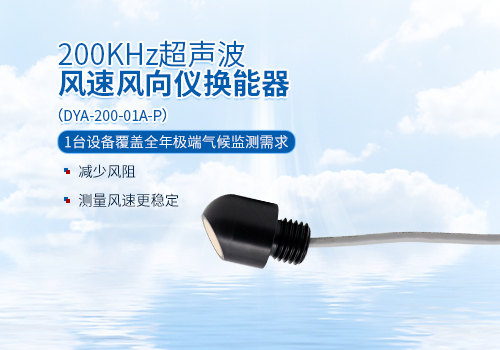
In environmental monitoring and scientific research, the ultrasonic anemometer provides foundational data for pollution dispersion modeling and climate studies. Around chemical industrial parks, it is paired with particulate matter sensors to visualize pollutant dispersion trajectories; in urban microclimate research, gridded deployments reveal airflow vortex streets between building clusters, offering a scientific basis for smart city ventilation design.