
Dayu Electronics Ultrasonic Level Sensor for Measuring Weir and Flume Liquid Level
I. Background
With stricter environmental regulations and the increasing demand for intelligent upgrades in wastewater treatment plants, flow monitoring has become a critical link in ensuring treatment efficiency and compliant discharge. Traditional manual measurement or contact sensors suffer from low accuracy and difficult maintenance, while open-channel flow meters, with their non-contact measurement and adaptability to complex water quality, have gradually become the mainstream choice.
II. Core Product: Ultrasonic Open-Channel Flow Meter
Technical Principle
· The ultrasonic level sensor measures the liquid level in the weir or flume, and combined with standard structures such as Parshall flumes or V-notch weirs, the instantaneous flow and cumulative flow are calculated using formulas.
· Advantages: No mechanical wear, corrosion resistance, and support for remote data transmission.
Key Parameters
· Measurement range: 0.1 L/s to 99999.99 m³/h, depending on the specific weir or flume used.
Accuracy: Parshall flumes and V-notch weirs that meet national standards: 1–5%.
Rectangular weirs that meet national standards: 10%.
Non-standard weirs and flumes: 10–50%.
· Protection rating: IP68, suitable for sewage environments.
III. Typical Application Scenarios
Inlet Flow Monitoring
· Real-time collection of inlet flow data to dynamically adjust treatment load (e.g., pump start/stop, chemical dosing) and avoid overload operation.
· Case: During a rainstorm, a plant used flow data to start backup pumps in advance, reducing overflow risk.
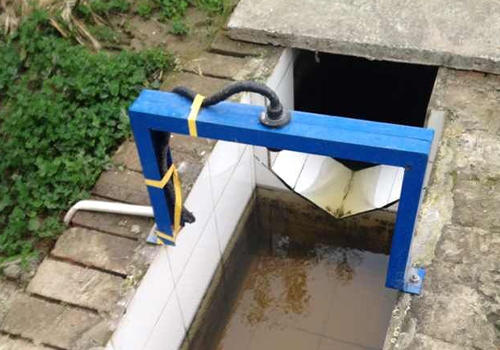
Outlet Discharge Monitoring
· Monitor the final effluent flow to ensure compliance with environmental discharge standards (e.g., average daily flow ≤ permitted value).
· Data is connected to environmental platforms for online monitoring and early warning.
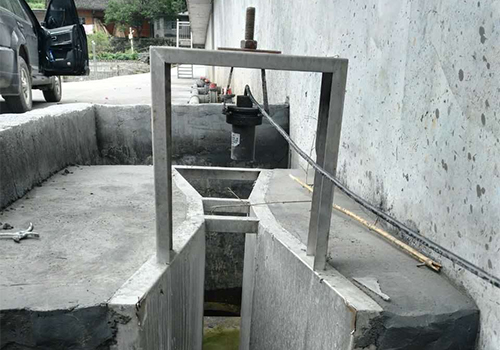
Internal Process Optimization
· Equalization tanks: Balance flow fluctuations across time periods to avoid shocks to the biological treatment system.
· Aeration tanks: Optimize dissolved oxygen control through flow distribution to reduce energy consumption.
Emergency Response Support
· In the event of sudden industrial wastewater surges, quickly identify abnormal flow peaks and coordinate emergency tank switching.
IV. Application Value and Summary
Core Benefits
· Management Efficiency: Reduces manual inspections; data is automatically uploaded to the system.
· Compliance Assurance: Accurate measurement avoids fines and supports environmental audits.
· Cost Optimization: Reduces chemical and energy consumption through flow balancing.
· Future Trends
Combining AI algorithms to predict flow changes and enable dynamic scheduling.
IoT Integration: Flow meter data linked with water quality sensors to build a smart water management system.
Conclusion: Open-channel flow meters significantly enhance the operational precision of wastewater treatment plants and serve as one of the technological pillars for achieving the goal of "pollution reduction and carbon mitigation."