
Sewage Treatment Plant / Pump Station Grating: Non-Contact Ultrasonic Level Differential Monitoring Solution by Dayu
I. Application Scenarios
The main applications of ultrasonic level differential meters on front and rear gratings (e.g., urban drainage pump stations, sewage treatment plants) include:
1. Water level measurement and level differential monitoring: used to measure the water level before and after the trash rack (grating), monitor the level difference in real time, and determine whether the grating is clogged or its flow capacity has decreased.
In municipal drainage, pump station automation, sewage treatment, and other fields, the level differential data automatically controls the operation of the grating cleaning machine, preventing system failures or overflows caused by clogging.
2. Non-contact advantages
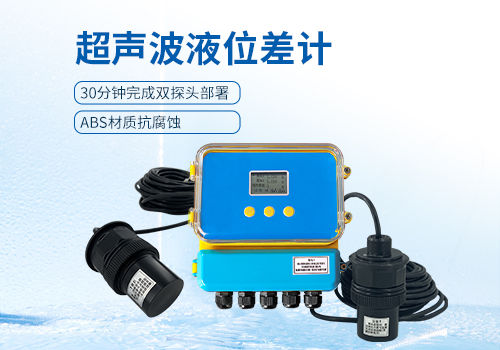
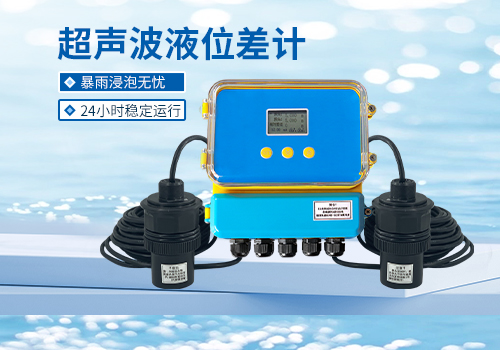
Because urban sewage is highly corrosive, contact-type level meters (e.g., pressure-type) have probes that are prone to corrosion and damage, while ultrasonic level differential meters are non-contact; the sensors do not come into direct contact with sewage, providing long service life and easy maintenance.
It can simultaneously measure water level, level difference, and flow rate, and is equipped with RS-485 and other standard interfaces, facilitating system integration and remote data transmission.
3. Suitable environments
Especially suitable for sewage, corrosive liquids, and occasions with floating debris or impurities, such as pump station inlets, grit chambers, and grating wells. During operation of a sewage treatment plant's grating tank, it is necessary to measure the liquid level before and after the grating, which can be done using an ultrasonic level differential meter. The grating is controlled based on changes in the liquid level. This site is applied in the grating tank of a large sewage treatment plant in Fujian, solving the problem of balanced measurement of liquid levels before and after the grating.
II. Installation Precautions
To ensure the measurement accuracy of the ultrasonic level differential meter on front and rear gratings and the long-term stable operation of the equipment, the following precautions must be taken during installation: Installation location selection
Keep away from obstacles: The sensor installation position should be far from uneven tank walls, ladders, liquid inlets, stirring blades, and other objects that may block sound waves, to prevent signal interference.
Vertical installation: The probe should be as perpendicular to the measured liquid surface as possible, avoiding tilt that could cause measurement errors.
Reasonable placement before and after the grating: Ensure that the installation positions of the front and rear sensors can truly reflect the actual liquid levels on both sides of the grating, avoiding dead zones or turbulent areas. Blind zone allowance
Ultrasonic level meters have a measurement blind zone (usually calibrated at the factory, typically several tens of centimeters). During installation, the probe must be at least 50 cm above the maximum liquid level to prevent the liquid level from entering the blind zone, which could cause measurement failure or equipment damage.
Before actual installation, be sure to determine the installation height based on the maximum liquid level on site and the equipment's blind zone parameters. Flange and nozzle requirements.
If installed with a flange, the flange inner diameter should be large enough (generally recommended to be greater than 120 mm), the nozzle length should be as short as possible (less than 100 mm), the inner wall should be smooth, and the lower edge should preferably be a smooth arc to reduce sound wave interference.
For closed container installation, the inner wall of the nozzle should be smooth and free of obstructions. Environmental interference protection: Avoid installing in locations with heavy foam, high steam, dense dust, or strong air currents, as these factors can affect ultrasonic propagation and signal reception. If the on-site environment is harsh, a protective cover or purge device can be added to keep the probe surface clean and dry. Electrical and wiring
Choose two-wire, three-wire, or four-wire configurations based on the on-site power supply, ensuring correct wiring for power and signal output to avoid interference.
Signal lines should use shielded cables and be routed separately from power lines to reduce electromagnetic interference.
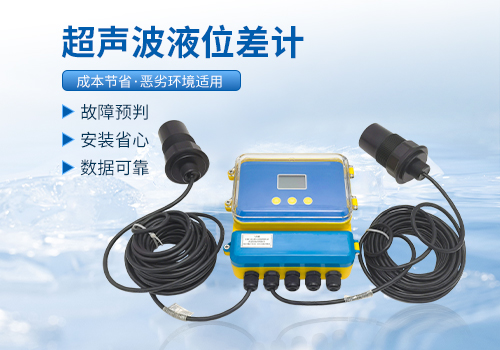
Ultrasonic level differential meters applied on front and rear gratings enable non-contact, high-precision, and high-reliability water level monitoring, greatly enhancing the level of automation control. During installation, it is essential to pay attention to location selection, blind zone allowance, environmental interference protection, and daily maintenance to ensure the long-term stable operation of the equipment and provide reliable data support for sewage treatment, pump station automation, and other systems.