
Ultrasonic Rail Monitoring: A Multi-Principle Defect Detection Solution [Dayu Electronics]
Ultrasonic rail crack monitoring is primarily based on two physical mechanisms:
Guided wave technology: The detector sends ultrasonic guided waves along the rail length. When encountering cross-sectional changes (such as cracks or corrosion), the guided waves reflect or scatter, and the damage location is identified by analyzing the reflected signals.
Reflection and scattering characteristics: As ultrasonic waves propagate through the rail, encountering defects such as cracks or slag inclusions generates reflected or scattered waves. The equipment receives these abnormal signals and determines the defect type, size, and depth through time differences and amplitude changes.
End-corner reflection principle: For special areas such as rail welds, the strong reflection characteristics of ultrasonic waves at end corners (such as crack tips) are utilized to improve the detection rate of micro-cracks.
I. Technical Features and Advantages
Compared with other inspection methods (such as radiographic testing), ultrasonic technology offers significant advantages:
1. High sensitivity: It can detect planar defects (such as fatigue cracks) without being limited by radiation direction, whereas radiographic testing is only sensitive to volumetric defects (such as porosity) parallel to the X-ray beam.
2. Wide applicability:
- Can identify various internal defects such as delamination, folds, white spots, and inclusions;
- Suitable for high-speed rail, conventional railway, and subway tracks, covering rails of different materials and structures.
Real-time performance and efficiency: Guided wave technology enables rapid long-distance scanning, reducing manual inspection time and improving maintenance efficiency.
II. Application Value
Rail crack monitoring is directly related to railway transportation safety:
1. Failure prevention: Fatigue cracks are the primary cause of rail failure. Ultrasonic technology can detect micro-cracks early (especially in weld areas), preventing fracture accidents.
2. Maintenance decision support: By quantitatively analyzing defect size and location, it provides a scientific basis for rail repair and replacement, extending service life.
Summary:
Ultrasonic rail crack monitoring achieves high-precision and high-efficiency detection of internal rail defects through guided wave propagation, reflected signal analysis, and end-corner reflection principles. Its sensitivity and applicability are significantly superior to traditional methods, making it one of the core technologies for ensuring safe railway operation. For technical details or equipment parameters, further reference to relevant research literature is recommended.
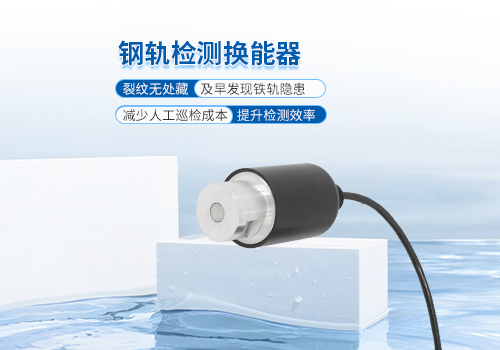
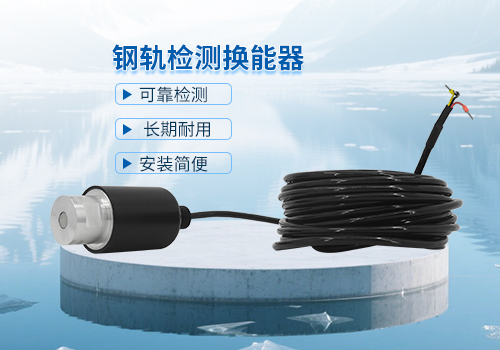
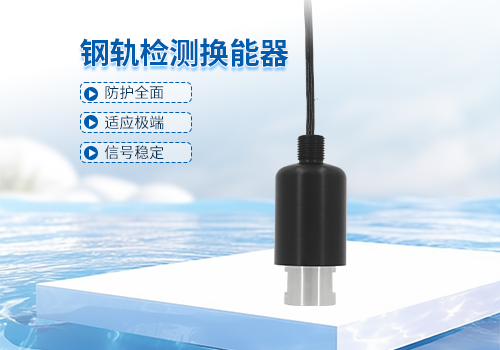
This ultrasonic rail inspection transducer has been applied on the Baoji-Chengdu railway line in Shaanxi Province, monitoring the railway rails for cracks through the monitoring system to ensure stable rail operation. This product uses the principle of acoustic wave transmission to monitor the occurrence of cracks in railway steel pipes. It has been installed on site for 8 years with stable operation, detecting 3 rail crack incidents, safeguarding the property safety of the people, recovering losses for the state, and avoiding major safety accidents.