
Analysis of Effective Detection Range of Hydrophones for Leak Sounds [Dayu Electronics]
Hydrophone as a pipeline leak monitoring device based on acoustic principles, its effective detection range is affected by multiple factors such as pipe material, leak acoustic wave characteristics, and environmental noise, requiring a comprehensive evaluation based on specific scenarios.
Pipe material directly affects the acoustic wave propagation radius. Experimental data show that in steel pipes, the propagation radius of leak acoustic waves can reach 60 meters, with high sound recognition, similar to the continuous noise of boiling water; whereas in plastic pipes, due to higher material damping, acoustic waves attenuate significantly, and the propagation radius typically shortens to a few meters. This difference stems from the low absorption characteristics of steel pipes for acoustic waves and the high energy loss of plastic pipes.
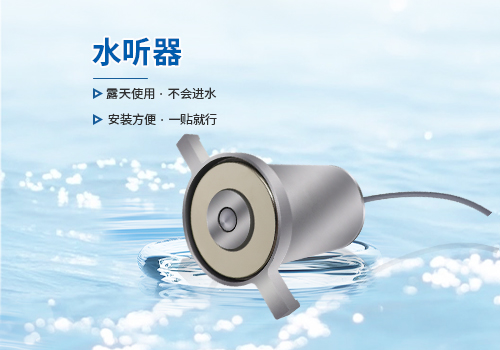
The characteristics of leak acoustic waves determine the frequency band coverage range. By capturing infrasonic to low-frequency acoustic waves (20Hz–2.5kHz) generated at the leak point, hydrophones can cover the leak characteristic frequency band throughout the entire lifecycle of the pipeline. For example, the friction sound of the leak orifice is concentrated in 300–2500Hz, the water hammer impact sound is 100–800Hz, and the medium friction sound is as low as 25–275Hz. Modern hydrophones adopt piezoelectric ceramics or fiber optic sensing technology, with frequency response range covering 10Hz–10kHz and sampling rates above 100kHz, ensuring precise capture of weak signals.
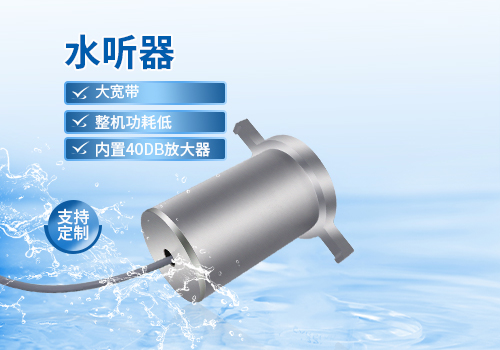
Environmental noise and localization algorithms enhance detection efficiency. In complex scenarios, hydrophones use time difference of arrival (TDOA) and cross-correlation algorithms to eliminate background noise. For example, one model of equipment uses dual probes to synchronously collect acoustic wave signals, controlling positioning error within ±0.1 meter within a 300-meter monitoring range. In practical engineering, this technology has achieved continuous monitoring within a 1000-meter range for large-diameter pipelines, with a false alarm rate below 0.5%.
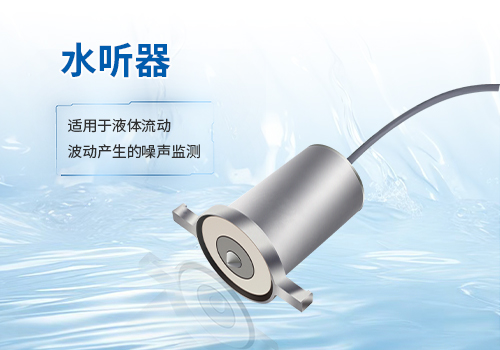
Distance parameters in typical application scenarios. In water supply pipeline monitoring, hydrophones with IP68 protection rating can withstand extreme temperatures from -20℃ to 60℃ and static pressure up to 100bar, enabling trenchless deployment via magnetic mounting. Combined with LoRa/NB-IoT low-power transmission technology, a single charge supports over 2 years of battery life, ensuring stable long-distance data transmission.