
Hydrophones vs. Transducers: An In-Depth Analysis of Functional Positioning and Technical Differences [Dayu Electronics]
Hydrophones and transducers, as core components of underwater acoustic systems, both involve the conversion between sound waves and electrical signals, yet they exhibit fundamental differences in functional positioning, technical principles, and application scenarios.
Functional Positioning: The Divide Between Passive Reception and Active Transmission
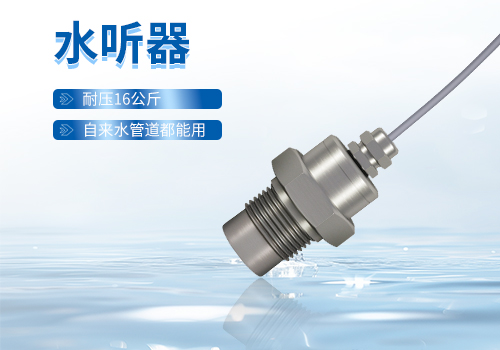
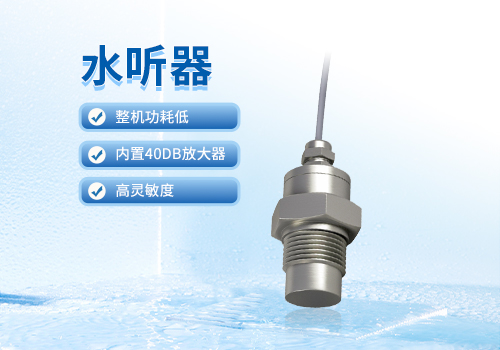
Hydrophones are essentially underwater acoustic receivers, whose core function is to passively capture acoustic signals from the environment, converting sound pressure variations into electrical signals via piezoelectric ceramics or fiber-optic sensing technology. Typical applications include ocean noise monitoring, underwater target localization (e.g., submarine detection), and pipeline leak acoustic analysis. For instance, in deep-sea oil and gas exploration, hydrophone arrays can capture weak acoustic waves reflected from geological formations, providing data support for subsurface imaging.
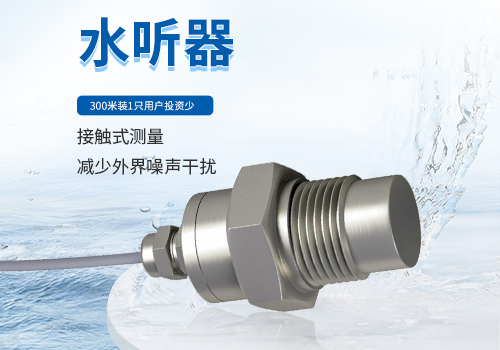
Transducers, on the other hand, are integrated devices for both sound wave transmission and reception, possessing bidirectional conversion capability between electrical energy and acoustic energy. Their active transmission function is achieved through the inverse piezoelectric effect of piezoelectric ceramics, converting electrical signals into high-frequency sound waves (e.g., ultrasound), while they can also receive echo signals via the direct piezoelectric effect. Typical scenarios include underwater communication (e.g., sonar phones), target detection (e.g., forward-looking sonar), and ranging (e.g., Doppler flow meters). For example, in unmanned underwater vehicle navigation, transducers can emit acoustic pulses and receive seafloor echoes to achieve centimeter-level positioning accuracy.
Technical Principles: Differences Between Unidirectional Reception and Bidirectional Conversion
The technical core of hydrophones lies in high-sensitivity sound pressure sensing, with design emphasis on low-noise, wide-bandwidth reception capabilities. For instance, fiber-optic hydrophones detect sound pressure through optical phase changes, achieving sensitivity up to -180dB re 1μPa/√Hz, suitable for extremely low signal-to-noise ratio environments.
The technical key of transducers lies in bidirectional energy conversion efficiency, requiring a balance between transmission power and reception sensitivity. For example, medical ultrasound transducers use 1-3 type piezoelectric composite materials, capable of both emitting MHz-level high-frequency sound waves for tissue imaging and receiving weak echo signals. Their frequency response typically covers the kHz to MHz range to meet various detection needs.
Application Scenarios: Complementarity Between Environmental Perception and Interactive Control
Hydrophones primarily serve environmental acoustic monitoring, such as marine bioacoustics research, earthquake and tsunami early warning, and assessment of anthropogenic noise pollution. Their advantage lies in non-invasive passive monitoring with minimal disturbance to ecosystems.
Transducers, in contrast, focus on active acoustic interaction, including underwater communication, target identification, and fluid measurement and control. For example, in intelligent dam systems, transducer arrays can emit sound waves and analyze echo characteristics to monitor water flow velocity and sediment concentration in real-time, providing a basis for operational decision-making.
Although the technical paths of the two differ, they often work in synergy. For instance, in underwater robot obstacle avoidance systems, transducers emit detection sound waves and receive echoes, while hydrophones assist in analyzing ambient noise, jointly constructing a highly reliable perception network.