
The "Sound Arrow" in the Deep Sea: Directional Magic of Unidirectional Underwater Acoustic Transducers [Dayu Electronics]
The deep sea is like a black cloth that even light cannot penetrate, but the ultrasonic beam of a unidirectional underwater acoustic transducer cuts through the darkness like a sharp "sound arrow"—this is the most incredible "directional technique" I have ever seen in the laboratory.
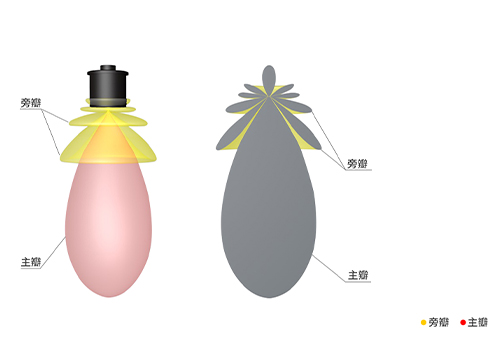
Its principle is actually quite "stubborn": when the piezoelectric ceramic elements inside the transducer vibrate, the sound waves are "squeezed" into a narrow angle (e.g., a -3 dB beam width of only 8°) through array design (e.g., multiple ceramics arranged in a circular array). Just like the focusing lens of a flashlight that turns scattered light into a strong beam, the ultrasonic energy is concentrated in the main lobe, with over 90% of the energy directed toward the target, while the side lobes (clutter) are so weak they are almost negligible.
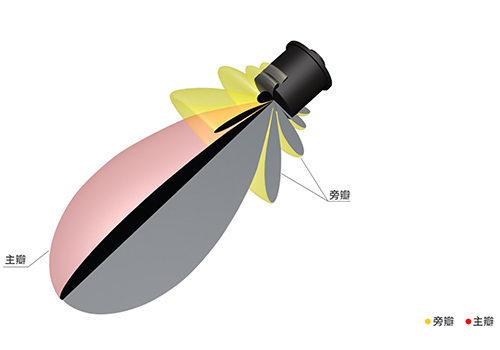
This "directional emission" capability makes deep-sea detection exceptionally precise: sonar uses it to locate shipwrecks, accurately locking onto iron hulls 3,000 meters away; fish finders use it to scan the sea without mistaking reefs for fish schools; even for underwater pipeline inspection, it can "shoot" a beam along the pipeline direction, like a doctor's stethoscope, precisely detecting cracks in the pipe.
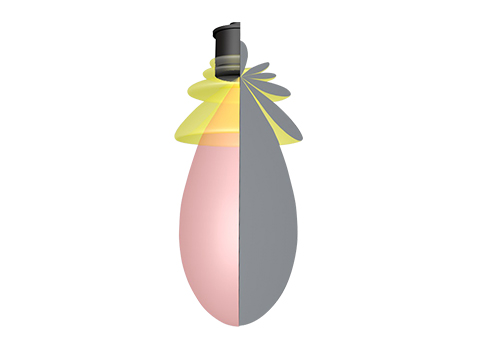
In the silent deep sea, the ultrasonic beam of a unidirectional transducer is humanity's "precise ear" installed for the deep ocean—it does not waste words, it only "calls out" toward the target, making the secrets hidden in the darkness "answer" one by one.