
Doppler Flowmeter Installation Guide Case Study [Dayu Electronics]
Installing an ultrasonic Doppler flowmeter in urban sewers for monitoring is an important measure to enhance the intelligent management level of urban drainage systems. The following is a detailed analysis from the aspects of working principle, installation features, monitoring functions, application scenarios, and advantages.
1. Working Principle
Ultrasonic Doppler flowmeter is based on the Doppler effect principle, measuring water flow velocity by emitting ultrasonic waves and receiving their reflected waves. When ultrasonic waves encounter suspended particles or bubbles in the fluid, the frequency of the reflected wave changes, and this frequency change is proportional to the fluid velocity. By precisely measuring the frequency difference and combining it with relevant parameters (such as the geometry of the pipe or channel), the water flow velocity and flow rate can be calculated.
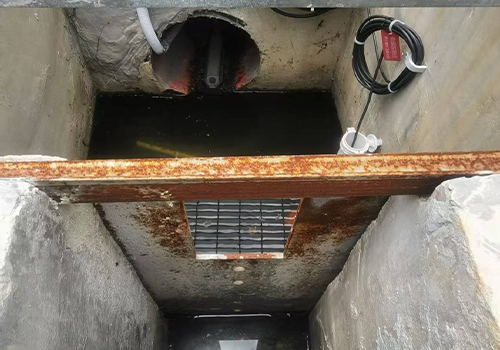
2. Installation Features
Non-contact measurement: No need to cut the pipe or install a flow interruption device; it can be installed directly on the outside or inside of the pipe, avoiding damage to the pipe structure.
Strong adaptability: Suitable for pipes of various shapes and sizes, including rectangular, trapezoidal, circular, etc., as well as complex environments such as open channels and irregular rivers.
Flexible installation position: The sensor is usually installed in locations that are easy to maintain and calibrate, such as pump stations, pipe junctions, and drainage outlets.
Easy maintenance: The equipment has automatic cleaning and anti-clogging functions, which can extend sensor life and reduce maintenance costs.
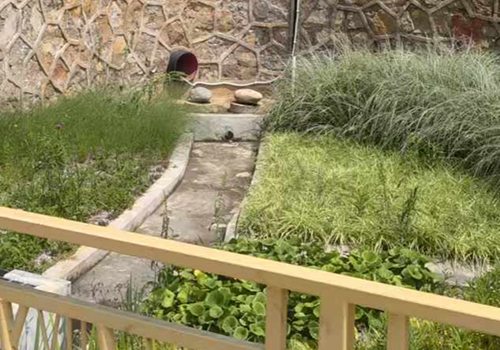
3. Monitoring Functions
Real-time flow velocity and flow rate monitoring: It can collect flow velocity and flow rate data in the drainage pipe network in real-time, helping managers quickly detect abnormal issues such as pipe blockages and leaks.
Rainwater and sewage diversion and scheduling: By precisely measuring the flow in different pipes, it enables automatic switching and diversion management of rainwater and sewage, avoiding system overload during heavy rain.
Pipe network health management and early warning: Continuous monitoring of flow changes, issuing early warning signals in a timely manner, helping to identify pipe abnormalities such as flow fluctuations and leaks.
Data transmission and analysis: Monitoring data is uploaded to the cloud platform via 4G/5G/NB-IoT and other communication methods, combined with algorithmic analysis to generate trend charts, abnormal annotations, and alarm records, facilitating traceability analysis and decision-making.
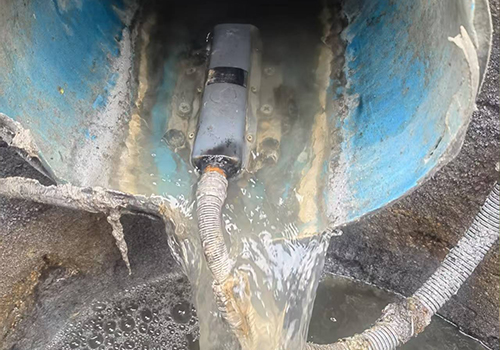
4. Application Scenarios
Urban drainage pipe network monitoring: Installing flowmeters at key nodes of the municipal drainage network (such as pump stations and pipe junctions) to monitor the operating status of the drainage system in real-time, enhancing the city's flood prevention and drainage capacity.
Rainwater and sewage diversion management: Through flow monitoring, it helps achieve rainwater and sewage diversion, avoiding overflow pollution of the environment.
Pipe network fault early warning: Timely detection of pipe blockages, leaks, and other issues to optimize pipe network maintenance plans.
Water resource management: Provides scientific data support for urban flood prevention, drainage, and sewage treatment scheduling.
5. Advantage Summary
High-precision measurement: The flow velocity measurement error range is usually between ±1% and ±3%, meeting the monitoring requirements of urban drainage systems.
Adaptability to complex environments: It can operate stably in dark and humid sewer environments and is insensitive to water turbidity.
Intelligent management: Data visualization is achieved through the cloud platform, supporting multi-terminal access (such as computers and mobile phones), improving operational efficiency.
Reduced operation and maintenance costs: Non-contact installation and automatic cleaning functions reduce manual intervention and extend equipment service life.
6. Practical Case
In Anshun City, the municipal department installed an intelligent pipe network drainage monitoring system, using ultrasonic Doppler flowmeters to monitor water level, flow rate, and water quality in the drainage network in real-time. This system can immediately issue early warnings during heavy rainfall or flood disasters, helping the municipal department transform from "passive rescue" to "active prevention and control," significantly improving the safety and reliability of the urban drainage system. Through on-site technical guidance for installation and commissioning, the measurement point was adjusted to accurately measure the sewer flow velocity at that specific point.
7. Summary
The application of ultrasonic Doppler flowmeters in urban sewers not only improves the intelligent management level of drainage systems but also provides a scientific basis for urban flood prevention, rainwater and sewage diversion, and pipe network health maintenance. Its high precision, easy installation, and strong adaptability make it an indispensable technical tool in urban drainage monitoring. If you need further information...