
Underwater Distance Sensor Principle Analysis [Dayu Electronics]
Underwater distance sensors are crucial in marine exploration, underwater robot navigation, and other fields. They are primarily based on sonar technology and are divided into active and passive types. Active sonar emits sound waves and captures echoes to detect targets, while passive sonar listens to ambient sounds for detection.
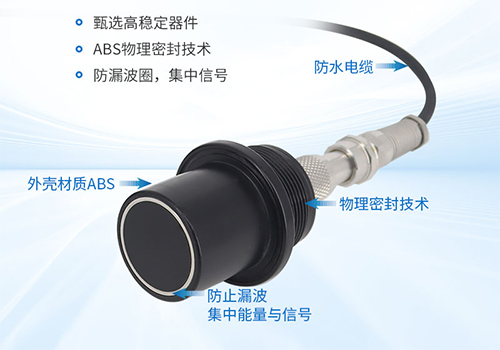
The principle of this sensor is to utilize the propagation and reflection characteristics of sound waves in water. The sound wave generator inside the sensor (such as a piezoelectric crystal) vibrates and emits sound waves when voltage is applied, with a frequency range from several kilohertz to several hundred kilohertz. The emitted sound waves are reflected by target objects in water, and the receiver (such as a hydrophone) receives the reflected sound waves, causing the internal piezoelectric crystal to vibrate and generate electrical signals.
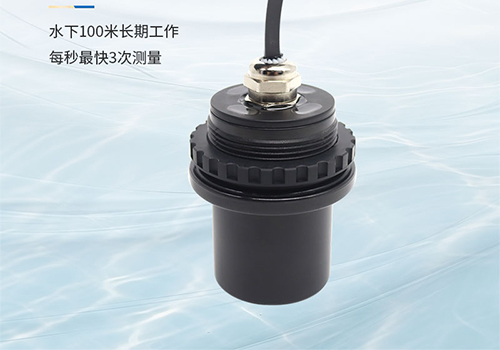
Because sound waves travel in a straight line in water, are more directional than electromagnetic waves, and attenuate less than electromagnetic waves like light, they are suitable for underwater detection. Their propagation speed is approximately 1500 meters per second. Based on the time difference between transmitting and receiving sound waves, combined with the formula D=C×t/2 (D is distance, C is sound speed, t is time), the distance from the sensor to the target can be calculated.