
Electromagnetic Flowmeter: A Reliable Choice for Precision Industrial Flow Measurement [Dayu Electronics]
In industrial production and resource management, flow measurement is a critical step to ensure stable production, rational resource utilization, and reliable equipment operation. As an advanced flow measurement instrument, the electromagnetic flowmeter plays an important role in multiple industries and scenarios thanks to its unique advantages.
Distinctive Performance, Clear Advantages
No Mechanical Parts, Resistant to Fouling and Corrosion
Traditional flowmeters, due to their mechanical rotating parts, are prone to wear, jamming, and other issues when handling liquids containing large amounts of impurities, dirt, or corrosive substances, leading to increased measurement errors or even equipment damage. The electromagnetic flowmeter, with no internal mechanical rotating parts, fundamentally avoids these problems. Whether it is the complex sewage in wastewater treatment plants or highly corrosive liquids in the chemical industry, it operates stably, effectively resisting fouling and corrosion, significantly reducing maintenance costs and equipment failure rates.
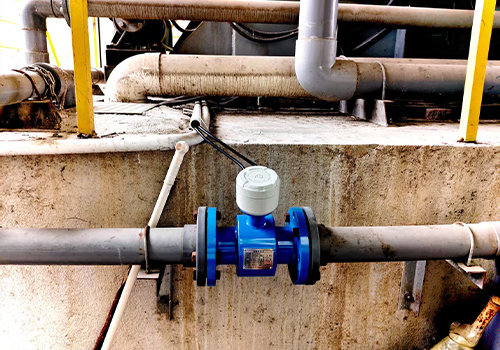
High-Precision Measurement, Bidirectional Monitoring
The measurement accuracy of the electromagnetic flowmeter reaches ±0.5%, providing precise data support for industrial production. In industries with strict flow control requirements, such as pharmaceuticals and food, accurate flow measurement helps ensure product quality and production efficiency. At the same time, it supports bidirectional flow monitoring. For systems with liquid backflow or circulation, such as heating pipe networks, it accurately records bidirectional flow data, providing a strong basis for energy management and system optimization.
High Protection Rating, Suitable for Humid Environments
Its protection rating reaches IP68, offering excellent dustproof and waterproof capabilities. In humid and harsh environments such as underground mines, ordinary flowmeters may be damaged by water ingress, but the electromagnetic flowmeter effectively resists moisture and dust erosion, ensuring measurement accuracy and equipment stability, and safeguarding the safety and efficiency of underground operations.
Supporting Equipment, Remote Monitoring
The electromagnetic flowmeter is equipped with a remote RTU transmission module, allowing real-time upload of measured flow data to the monitoring platform. Management personnel do not need to be on-site; they can view flow data anytime, anywhere via terminals such as computers or mobile phones. This feature improves work efficiency and management levels, facilitates timely detection of abnormal flow conditions, and allows for prompt action, such as quickly locating and resolving abnormal pipeline flow issues in water supply systems to avoid water waste or insufficient supply.
Usage Precautions, Ensuring Performance
Despite the significant advantages of the electromagnetic flowmeter, some issues need attention during use. Regularly check electrode scaling, because when the liquid contains large amounts of impurities or minerals, the electrode surface may scale, affecting measurement accuracy; the electrodes need regular cleaning and maintenance. At the same time, avoid installation locations where bubbles or sediment accumulation may occur. Bubbles affect the electrical conductivity of the liquid, and sediment accumulation may change the pipe's inner diameter, affecting the accuracy of flow measurement. Choose an appropriate installation location to ensure smooth liquid flow in the pipe.
Electromagnetic flowmeter, with its advantages of no mechanical parts, high-precision measurement, high protection rating, and supporting remote transmission functions, becomes a reliable assistant in industrial flow measurement. Paying attention to the related issues during use will better leverage its performance and provide reliable support for industrial production and resource management.