
Ultrasonic Sludge Level Meter Optimizes Sludge Layer Monitoring in Wastewater Treatment Plants [Dayu Electronics]
Sewage Tank Sludge Level Meter: Applications and Advantages of Ultrasonic Sludge Level Meters in Wastewater Treatment
1. Working Principle of Ultrasonic Sludge Level Meter
The ultrasonic sludge level meter emits high-frequency ultrasonic pulses and utilizes the differences in sound wave propagation characteristics across different media to achieve real-time monitoring of the sludge layer thickness and the interface with the clear water layer. Its core principle is:
1. Sound Wave Emission and Reflection: The sensor emits ultrasonic waves toward the liquid surface (frequency typically 20kHz-200kHz). When the sound waves penetrate the water layer and encounter the sludge layer, part of the energy is reflected back to form an echo.
2. Time Difference Calculation: By measuring the time difference (T) from emission to reception of the sound wave, combined with the propagation speed of sound in the medium (affected by factors such as temperature and density), the sludge interface position can be accurately calculated. The formula is:
Distance = (Sound Speed × T) / 2
3. Sludge Layer Thickness Calculation: By presetting the distance (L) from the sensor to the bottom of the tank and combining it with the measured sludge interface distance (L1), the sludge layer thickness can be derived:
d = L - L1
2. Technical Advantages of Ultrasonic Sludge Level Meter
1. High-Precision Measurement: Intelligent signal processing algorithms effectively filter out interference from bubbles, suspended solids, and other factors, ensuring measurement accuracy of ±1cm with a measuring range covering 0.5–15 meters, suitable for pools of various sizes.
2. Real-Time Monitoring and Data Transmission: Supports continuous monitoring of sludge interface height, with data displayed in both digital and graphical formats, allowing operators to monitor sludge settling conditions in real time.
3. Strong Anti-Interference Capability: The device automatically detects and suppresses on-site electrical interference, ensuring stable operation in complex industrial environments.
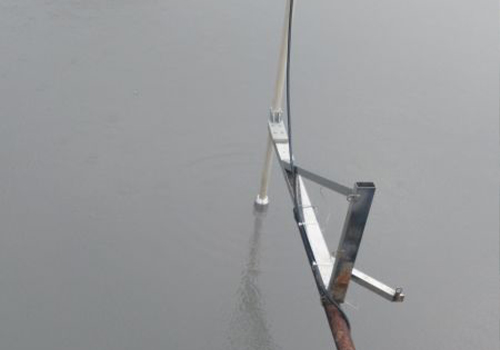
3. Application Scenarios of Ultrasonic Sludge Level Meter in Wastewater Treatment
1. Sedimentation Tanks and Thickening Tanks: Used to monitor sludge level height in primary clarifiers, secondary clarifiers, and sludge thickening tanks, optimizing sludge discharge operations and preventing reduced treatment efficiency due to sludge accumulation.
2. Sludge Dewatering Process: Real-time monitoring of sludge thickness controls the sludge feed rate to dewatering equipment, improving dewatering efficiency and reducing energy consumption.
3. Process Optimization and Cost Control: Accurate sludge level data helps adjust sludge discharge cycles and chemical dosing amounts, avoiding excessive sludge discharge or sludge accumulation and reducing operating costs.
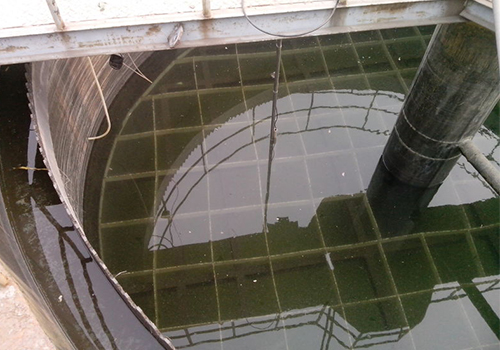
4. Installation and Maintenance Key Points
1. Installation Position Selection:
? Avoid turbulent areas such as mixers and water inlets; maintain a distance of at least 30cm from the tank wall to reduce the impact of water flow on sound wave propagation.
? Ensure the sensor emitting surface is parallel to the liquid surface with a deviation angle ≤3° to avoid measurement errors.
2. Regular Maintenance:
? Clean the probe surface quarterly to prevent sludge or impurities from adhering and affecting signal transmission.
? Inspect cable sealing to prevent water ingress that could damage the equipment.
3. Troubleshooting:
? If data anomalies occur, check power supply stability or use the companion software for echo curve analysis to quickly identify the problem.
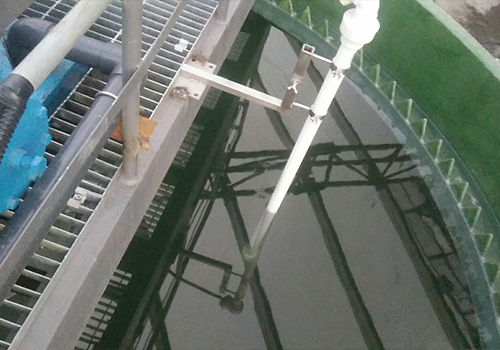
5. Future Development Trends
1. AI Algorithm Integration: Machine learning techniques distinguish reflection characteristics of different sludge types, further improving measurement accuracy.
2. Multi-Sensor Collaboration: Integration with turbidity meters, pH meters, and other devices creates a comprehensive water quality monitoring network for more complete process control.
3. Low-Power Design: Development of solar-powered versions suitable for remote areas or locations without stable power supply, reducing energy consumption.