
Ultrasonic Flue Gas Flowmeter: A New Revolution in Gas Flow Measurement! [Dayu Electronics]
Ultrasonic flue gas flowmeter as a new generation of gas flow measurement technology achieves precise monitoring of complex conditions such as flues and chimneys through the transit-time difference method. The following is an analysis from three dimensions: technical principles, core advantages, and industry applications:
1. Technical Principles and Innovation
1.1 Transit-Time Difference Measurement Mechanism
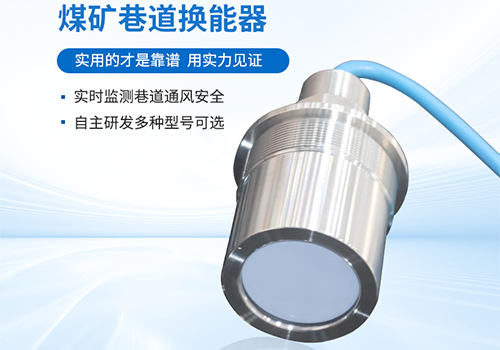
By using symmetrically installed ultrasonic transducers (transmitter and receiver), the time difference between downstream (t1) and upstream (t2) ultrasonic propagation is measured, and the flow velocity is calculated using the formula:
v = L/(2 cos θ) * (1/t1 - 1/t2)
Where L is the acoustic path length, θ is the angle between the acoustic path and the flow direction. This principle maintains an accuracy of ±0.2 m/s even at flow velocities as low as 0.1 m/s.
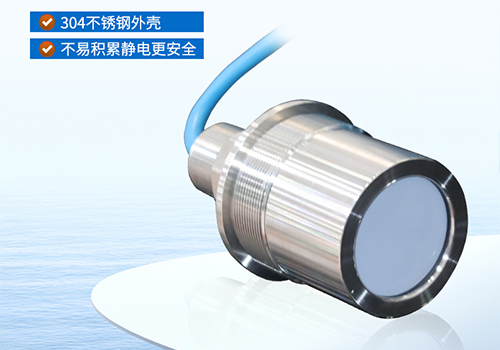
1.2 Multi-Channel Compensation Technology
Using a 4-8 channel cross-layout (such as the ISO17089 recommended scheme), the channel distribution is optimized through CFD flow field simulation, reducing errors caused by irregular flow fields from ±2.5% to ±0.8%. The typical product FLOWSIC100's multi-channel system enables layered modeling of flow velocity across the flue cross-section.
1.3 Structural Innovation Breakthroughs
• Flow Straightener Integration: Xintian Technology's patented technology (CN222761685U) incorporates a honeycomb flow straightener in the guide tube, improving gas flow field stability by 40% and reducing turbulent interference.
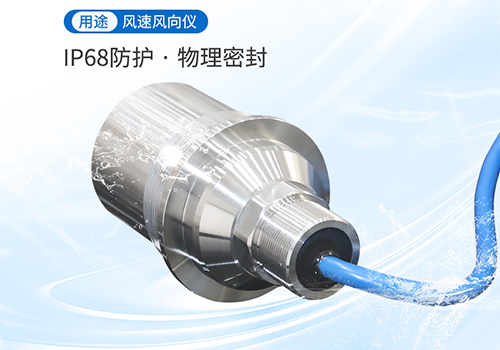
• Rotatable Housing Design: Supports 360° housing rotation for easy data viewing from different angles, with a seal life of up to 10 years (validated by accelerated aging tests).
2. Typical Application Scenarios
2.1 Environmental Emission Monitoring
Monitoring SO2 emission flow at the outlet of desulfurization towers in power plants, in conjunction with CEMS systems, achieves an accuracy of ±2% for total emission accounting. Field data from a Chongqing power plant shows a 35% improvement in data consistency compared to traditional pitot tube methods.
2.2 Industrial Process Control
Applied to flue gas monitoring at the sintering machine head in steel plants, capable of withstanding temperatures up to 150°C and dust concentrations of 20 g/m³. A Baosteel case shows that with four-channel compensation technology, the flow velocity distribution non-uniformity in a 4m × 6m rectangular flue is less than 8%.
2.3 Energy Metering Management
In urban gas metering scenarios, Xintian Technology's patented product achieves 0.5% metering accuracy in DN300 pipelines, and the rotatable housing design reduces meter reading and maintenance costs by 30%.
3. Technology Evolution Trends
3.1 Intelligent Upgrades
Integration of edge computing modules (e.g., FLOWSIC100 series) enables local 3D reconstruction of the flow field, reducing response time from minutes to within 10 seconds.
3.2 Multi-Parameter Fusion
The latest models have integrated temperature and pressure sensors (accuracy ±0.5°C / ±0.1 kPa), enabling automatic conversion to standard condition flow, meeting the new requirements of GB/T16157-2025.
3.3 Material Innovation
The use of aluminum nitride ceramic transducer substrates improves ultrasonic emission efficiency by 25%, ensuring stable operation in flue gas with 30% moisture content.
Selection Recommendations:
• For routine monitoring (flow velocity > 3 m/s), single or dual channel devices are preferred (e.g., UF200).
• For complex flow fields (flow velocity < 1 m/s or cross-section > 5 m²), four or eight channel systems are required (e.g., GLT-F-YLSC).
• For corrosive flue gas environments, models with PFA coating protection are preferred (PUF-100 has a demonstrated H2S corrosion life of 5 years).
The industry is moving towards multi-physics coupled measurement, such as Xintian Technology's ongoing development of an "ultrasonic + laser" composite flowmeter that can simultaneously acquire flow velocity and particulate matter concentration parameters. These innovations will continue to drive flue gas monitoring technology towards higher accuracy and greater adaptability.