
Dayu Electronics Low-Power Manhole Level Gauge for Urban Stormwater Pipe Network Water Level Monitoring
Low-power manhole level gauge is commonly used for water level, flow velocity, and flow rate monitoring in urban rivers, main canals of agricultural irrigation districts, urban sewage pipe networks, urban stormwater pipe networks, and other applications. An ultrasonic flow meter is a device used to measure the flow velocity of fluids in pipes or conduits, utilizing ultrasonic technology for measurement. This type of flow meter mainly consists of transducers and converters, and comes in various types, such as Doppler method, transit-time difference method, beam deflection method, etc.
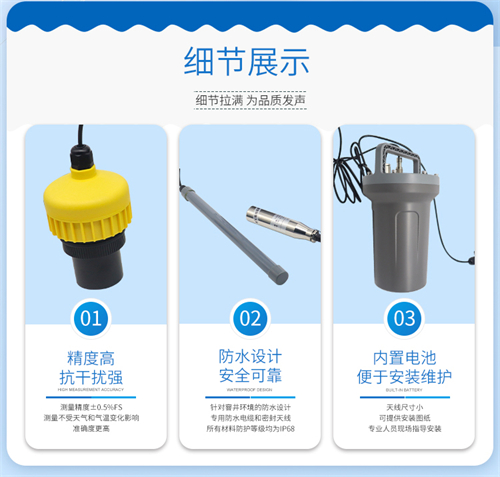
1. The 3.6V low-power manhole level gauge produced by Fuzhou Dayu Electronics features a low-power design that enables long-term operation without frequent battery replacement, with a battery life of up to 24 months and a maximum battery life of up to 60 months.
2. Multi-functional integration: These devices typically integrate multiple functions, such as data acquisition, storage, power supply, display, transmission, and alarm for water level, flow velocity, flow rate, temperature, and other parameters.
3. Wireless communication: These flow meters support various wireless communication methods, such as 2G/3G/4G, NB-IoT, LoRa, etc., making remote monitoring and data transmission convenient.
4. Suitable for various environments: These devices are applicable to sewage pipe networks, stormwater pipe networks, water supply pipe networks, and other environments, helping to promote the informatization and intelligent transformation of urban underground pipeline infrastructure.
5. High protection rating and corrosion resistance: These flow meters have a high protection rating and good corrosion resistance, making them suitable for various harsh field environments.
6. Easy installation and maintenance: These devices are typically easy to install and require low maintenance, and some even do not require external power supply.
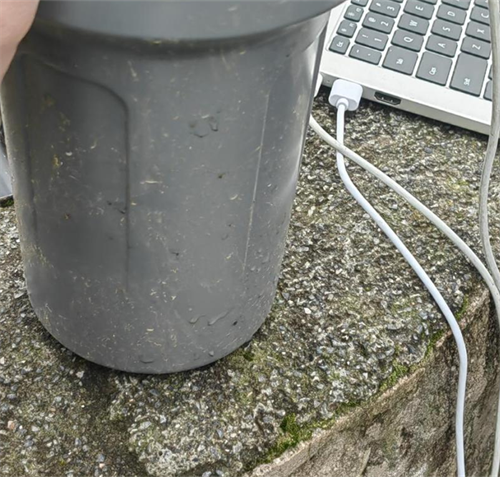
In summary, ultrasonic low-power manhole flow meters are widely used in urban underground pipeline flow monitoring and other applications due to their low energy consumption, multi-functionality, wireless communication capability, and strong adaptability.
Features of low-power urban flow meters:
1. Non-contact measurement: It can be installed without stopping flow or cutting pipes, and the transducer can simply be mounted on the outside of an existing pipeline.
2. No flow obstruction: It does not cause additional pressure loss.
3. Wide applicability: Suitable for large circular and rectangular pipes, and is not limited by pipe diameter in principle.
4. High accuracy: Measurement accuracy can reach within 1%.
5. Non-invasive: Most ultrasonic flow meters are non-invasive and do not come into contact with the fluid being measured, making them suitable for measuring corrosive, hazardous, or high-purity fluids.
6. Bidirectional flow measurement: Capable of measuring fluid flow in both directions.
Limitations:
1. Requirements for the fluid: Liquids containing large solid particles or bubbles may cause measurement failures.
2. Installation requirements: A straight pipe section before and after the meter is required to ensure accurate readings.
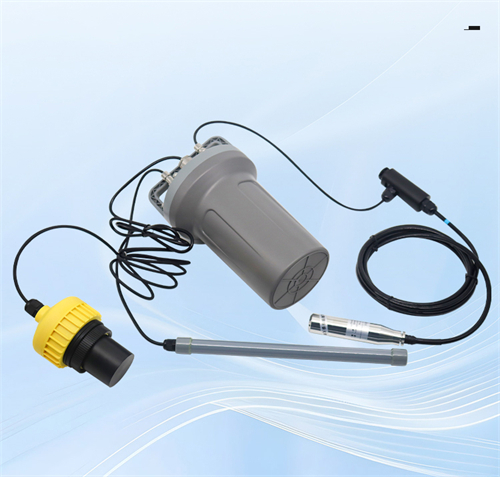
The following are some specific applications of ultrasonic flow meters in sewer flow velocity measurement:
1. Flow monitoring: Understanding flow variations in the sewer system helps optimize the sewage treatment process.
2. Clog prevention: By monitoring flow velocity changes, potential clogging issues can be detected in a timely manner.
3. Design evaluation: During the design phase of a sewer system, flow velocity data is crucial for determining pipe size and layout.
4. Environmental impact assessment: Monitoring the impact of sewer discharge on the environment.
Since the sewer environment can be harsh, the durability and ability of the device to withstand harsh conditions must be considered when selecting an ultrasonic flow meter.
Installation precautions:
Ensure that the flow meter has a sufficient protection rating to resist corrosive substances in sewage.
Ensure that the flow meter's sensor is properly positioned to obtain accurate measurement results.