
The New Favorite for Large-Diameter Flow Measurement: Full Analysis of the Non-Full-Pipe Doppler Flowmeter! [Dayu Electronics]
Application Analysis of Non-Full-Pipe Doppler Flowmeter in Large-Diameter Pipes
1. Working Principle
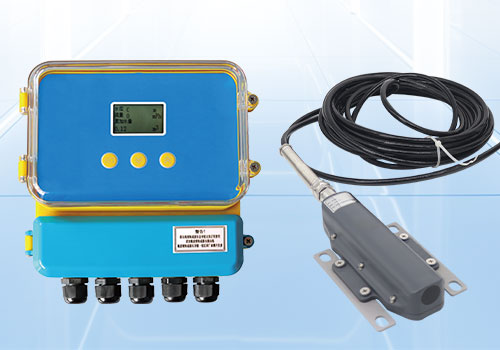
The non-full-pipe Doppler flowmeter measures flow based on the Doppler effect. When ultrasonic waves encounter suspended particles or bubbles in the fluid, the frequency of the reflected wave shifts due to the motion of the scatterers (Doppler shift). By measuring the frequency shift and combining it with parameters such as the sound speed in the fluid and the transmitted frequency, the flow velocity and flow rate can be precisely calculated. This method is not limited by pipe diameter and is suitable for both full and partially filled pipe conditions.
2. Core Application Scenarios
1. Urban Drainage Systems
Suitable for flow monitoring in partially filled sewage pipes, providing real-time drainage status and quickly detecting blockages or overflows, especially during extreme weather like heavy rain to ensure drainage safety.
2. Industrial Wastewater Treatment
Can accurately measure the flow of wastewater containing high concentrations of suspended solids and oils, unaffected by pipe wall attachments, and adaptable to complex fluid environments.
3. Agricultural Irrigation and Water Conservancy Projects
Used for flow monitoring in large open channels or trapezoidal pipes, supporting irrigation scheduling and water resource management, and adaptable to partially filled and irregular pipe shapes.
3. Significant Advantages
1. High-Precision Measurement
Through Doppler shift analysis and signal processing techniques, a measurement accuracy of ±2% is achieved under partially filled conditions, meeting industrial-grade requirements.
2. Strong Environmental Adaptability
Not limited by pipe shape (circular, rectangular, trapezoidal, etc.), and can operate stably in fluids containing impurities and bubbles.
3. Easy Installation
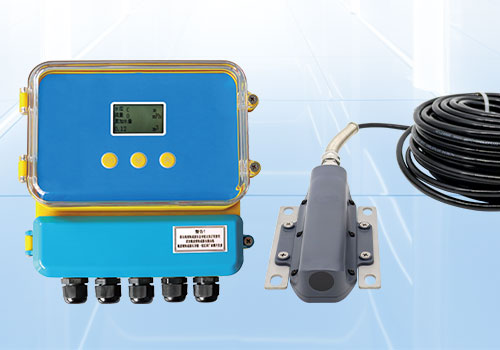
No complex construction is required; the probe can work when submerged just 3 cm in water, supporting rapid deployment.
4. Real-Time Monitoring and Remote Control
Fast data refresh (second-level response), supports RS485 communication for remote transmission, and can be easily integrated into smart water systems or Industrial Internet of Things (IIoT) networks.
4. Usage Precautions
1. Installation Requirements
Ensure a straight pipe section of at least 10 times the pipe diameter upstream and 5 times downstream of the sensor to stabilize the flow pattern and reduce turbulence interference.
2. Parameter Calibration
Before installation, measure the pipe inner diameter, fluid density, and scatterer concentration, and input these into the device's calibration algorithm to ensure calculation accuracy.
3. Maintenance Management
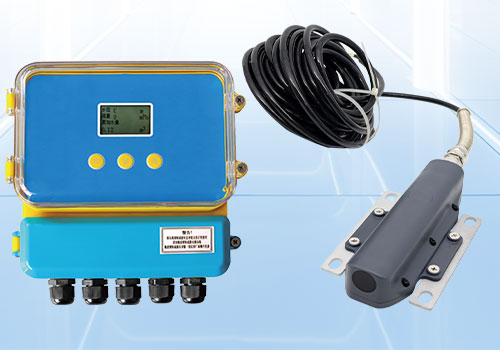
Regularly clean sediment deposits from the probe surface to avoid signal attenuation; in sediment-laden environments, it is recommended to use probes with wear-resistant coatings.
5. Technical Limitations and Improvement Directions
Limitations: Relies on scatterers (particles/bubbles) in the fluid; may fail in clean liquids. Accuracy decreases at extremely low flow velocities (<0.03 m/s).
Improvement directions:
1. Develop dual-mode probes (Doppler + transit-time) to expand application in clean liquid scenarios.
2. Optimize algorithms to enhance sensitivity at low flow velocities, such as using machine learning to improve signal analysis capabilities.
Non-Full-Pipe Doppler Flowmeter has become a mainstream solution for large-diameter flow measurement due to its high precision, strong adaptability, and real-time monitoring capabilities, especially suitable for complex scenarios such as urban drainage and industrial wastewater. With the continuous optimization of sensor technology and algorithms, its application scope will further expand to more extreme operating conditions.